 Excellent PLC


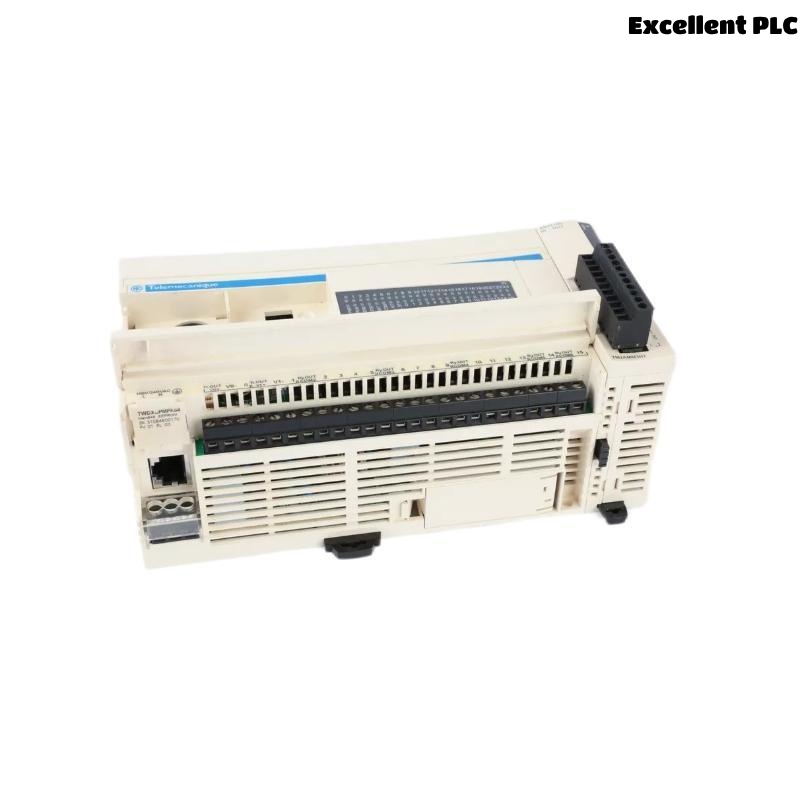
Recently, I was called to inspect a Schneider TWDLCAE40DRF compact logic controller (from the Modicon Twido series) that had completely stopped responding. The PLC didn’t power up, no LEDs were on, and communication with TwidoSuite was impossible. After removing it from the control cabinet, I discovered visible circuit board corrosion around the power supply area. This is how I successfully repaired and restored it to full operation.
Step 1: Initial Inspection and Confirmation of Fault
The first sign of trouble was that the controller showed no power indication despite verified 24VDC input. I checked the terminal voltage at the supply pins — a stable 24.1VDC — but the unit drew no current.
After removing the controller from the panel and opening the housing, I noticed a greenish oxidation layer near the lower left section of the PCB — exactly where the DC input terminals and voltage regulator are located. Moisture or condensation had likely entered the housing over time, causing electrolytic corrosion.
Step 2: Safe Disassembly and Cleaning
Before any repair, I took ESD precautions: used an antistatic wrist strap and worked on a grounded mat.
The corrosion had spread across several PCB traces and affected a few SMD resistors and capacitors near the power filter network. Here’s what I did step by step:
-
Brushed off the loose corrosion using a soft anti-static brush.
-
Applied isopropyl alcohol (99%) with a cotton swab to dissolve remaining oxidation.
-
Used a fiberglass pen to gently polish the corroded copper tracks until the metal was shiny again.
-
Inspected under magnification to ensure no track was fully eaten through.
A few thin traces looked weakened, so I decided to reinforce them in the next step.
Step 3: Circuit Trace Repair
Using a fine-tipped soldering iron and flux:
-
Re-tinned the cleaned copper tracks.
-
Where the trace was partially gone, I soldered a thin jumper wire (30 AWG) to bridge the damaged section.
-
Measured continuity with a multimeter to confirm each repaired path was fully restored.
I also desoldered two small SMD resistors (10 kΩ and 47 Ω) that showed corrosion on the leads and replaced them with new ones.
Step 4: Component Testing and Power Section Recovery
The TWDLCAE40DRF includes an onboard DC-DC converter that steps down 24VDC to the internal 5V logic supply. Corrosion often affects this area first.
I tested the main electrolytic capacitor (100 µF, 35V) using an ESR meter — it was within tolerance, so I kept it. However, the LM2596 regulator IC showed intermittent output (jumping between 0–3V). I replaced it with a new regulator module from our maintenance stock.
After that, I powered the board using a bench power supply limited to 24V / 0.5A. The controller immediately drew about 120 mA, and the Power LED lit up — a good sign that the logic board was alive again.
Step 5: Reassembly and Functional Test
After confirming basic power function, I reassembled the controller carefully:
-
Cleaned both sides of the PCB with alcohol one last time.
-
Allowed it to air-dry completely.
-
Reapplied conformal coating spray (acrylic-based) to the repaired area for future protection.
-
Closed the housing securely and reconnected to the PLC backplane.
Upon powering it up in the control cabinet, the RUN and ERR LEDs flashed briefly, then the RUN LED turned steady — indicating normal startup.
I connected via TwidoSuite software, and the PLC was fully detected. I could upload the program and monitor inputs/outputs without issue.
Step 6: Preventive Actions and Environmental Check
After confirming the controller worked correctly, I checked the environmental conditions inside the cabinet. The humidity level was above 70%, and there were no active dehumidifiers. The original cause of the corrosion was likely condensation from temperature fluctuations.
To prevent recurrence, I:
-
Installed a small cabinet heater (15W) to stabilize internal temperature.
-
Added a silica gel pack inside the cabinet door.
-
Ensured the enclosure gaskets were intact and properly sealed.
I also advised the maintenance team to inspect similar TWDLCAE40DRF units in adjacent panels for early signs of oxidation.
Step 7: Lessons Learned from the Repair
-
Corrosion spreads faster than expected — early visual inspection can prevent total board failure.
-
Always check the DC-DC converter section first when there’s no power-up response.
-
Jumper repair of corroded traces is reliable if properly cleaned and tinned.
-
Use conformal coating after repair to avoid repeat moisture damage.
-
Environmental humidity control is as critical as electrical maintenance in industrial PLC systems.
Final Thoughts
The Schneider TWDLCAE40DRF compact controller is a durable and efficient PLC, but like most Twido devices, it’s sensitive to long-term moisture exposure. With proper cleaning, trace repair, and voltage regulator replacement, even corroded boards can be fully revived.
Preventive measures — such as humidity control, sealing, and protective coatings — will dramatically extend the lifespan of these controllers in demanding industrial environments.