 Excellent PLC


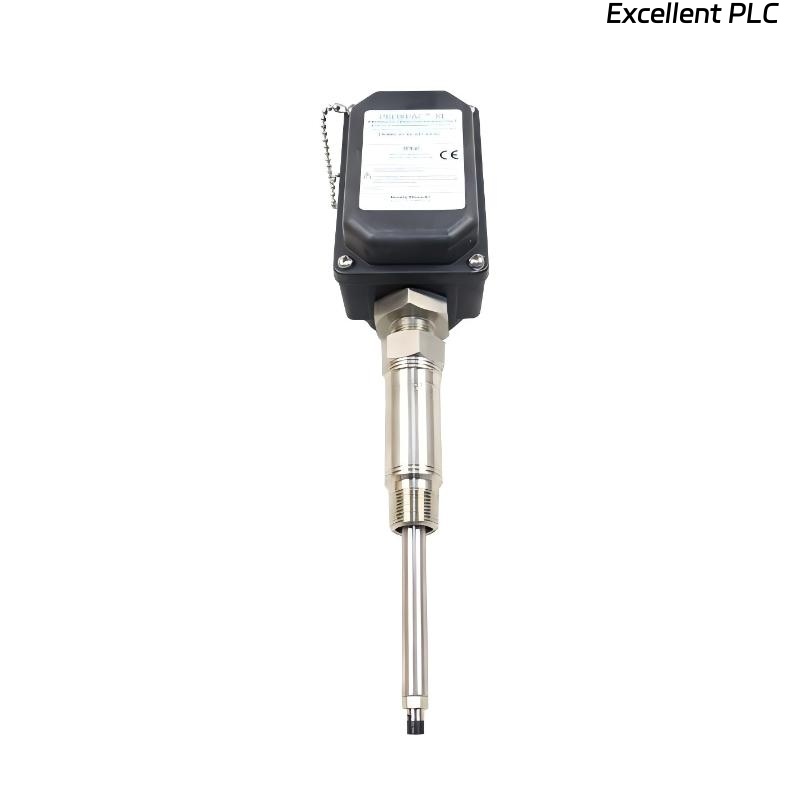
A few weeks ago, I was called to a turbine installation where a Bently Nevada 330800-16-00-039-03-02 PROXPAC XL proximity sensor was showing a persistent fault. The controller displayed a “No Signal” alarm, and the machine was in forced shutdown.
Here’s how I approached the issue step by step, based on real field experience.
Step 1: Confirming the Symptom
The first step is always to understand the fault clearly:
-
The machine controller showed: “Proximity Sensor 16 – Signal Lost”.
-
LED indicators on the PROXPAC XL module: Red LED steady.
-
No intermittent signal observed during manual shaft rotation.
At this stage, the problem could be electrical, mechanical, or sensor-related.
Step 2: Visual and Mechanical Inspection
I performed a careful visual check of the sensor and cabling:
-
No physical damage to the sensor probe.
-
Cable connectors clean and properly seated.
-
No signs of moisture ingress, corrosion, or abrasion.
-
Sensor clearance from the rotor confirmed according to OEM specs (0.010–0.030 inches).
Everything seemed fine physically, so the fault likely originates from the electrical or internal sensor circuitry.
Step 3: Checking the Wiring
PROXPAC XL sensors are differential eddy-current devices with shielded twisted pair cables.
-
Using a multimeter, I checked continuity from the sensor probe to the module input.
-
Measured insulation resistance to ground — >20 MΩ, acceptable.
-
Verified the shield continuity from sensor to chassis ground.
All wiring was intact; no open or short circuits were detected.
Step 4: Verifying Module Power
The PROXPAC XL module requires 18–30 VDC supply:
-
Measured DC voltage at module terminals: 24.1 V DC.
-
Observed module internal fuse (if present) — intact.
-
Other sensors on the same module were operating normally.
This confirmed the module itself was powered correctly and the fault was localized to this sensor channel.
Step 5: Sensor Signal Testing
Next, I performed a loop test using the Bently Nevada PROX tester:
-
Connected the tester to the sensor cable at the module side.
-
Moved the shaft manually.
-
Observed the signal output on the tester — no response.
This indicated the probe was either defective internally or damaged in a way that did not produce visible physical clues.
Step 6: Module Input Swap
To rule out module channel issues:
-
I swapped the faulty sensor cable to an adjacent channel on the PROXPAC XL.
-
The controller immediately recognized the new channel input correctly.
-
When the original sensor was connected to a working channel, the fault persisted.
This confirmed the sensor itself had failed.
Step 7: Replacement and Calibration
With a faulty probe identified, I installed a new Bently Nevada 330800-16-00-039-03-02 sensor.
-
Mounted the sensor carefully, maintaining correct axial and radial gap.
-
Reconnected the shielded twisted pair, ensuring proper grounding at both ends.
-
Powered the system and checked LED — green ON, normal operation.
-
Ran a calibration routine in the Bently Nevada 3500 monitoring system:
-
Confirmed zero baseline signal.
-
Performed gain adjustment as per OEM instructions.
-
Verified peak-to-peak signal with shaft rotation.
-
The system returned to normal operation within minutes.
Step 8: Root Cause Analysis
The root cause in this case was internal probe failure, likely due to:
-
Long-term thermal cycling in the turbine housing.
-
Possible minor moisture ingress over years, degrading the internal electronics.
-
No mechanical damage was found; cable shielding remained intact.
This aligns with historical failure modes for PROXPAC XL sensors — rare, but usually predictable with long service life.
Step 9: Lessons Learned
-
Always check both module and sensor separately before assuming full replacement.
-
Use a PROX tester or equivalent tool for loop testing — it isolates wiring vs sensor issues.
-
Maintain correct gap and alignment to prevent early sensor failure.
-
Keep a spare sensor on hand for critical machinery to minimize downtime.
Final Thoughts
The Bently Nevada PROXPAC XL proximity sensor is highly reliable, but field failures do occur.
Systematic troubleshooting — checking wiring, module, and probe individually — quickly identifies the issue.
“In rotating machinery, the smallest sensor gap matters most. Don’t skip the basics — measure twice, test once.”
Once replaced and calibrated, the turbine returned to normal operation, and the fault has not reoccurred over the last three months.