 Excellent PLC


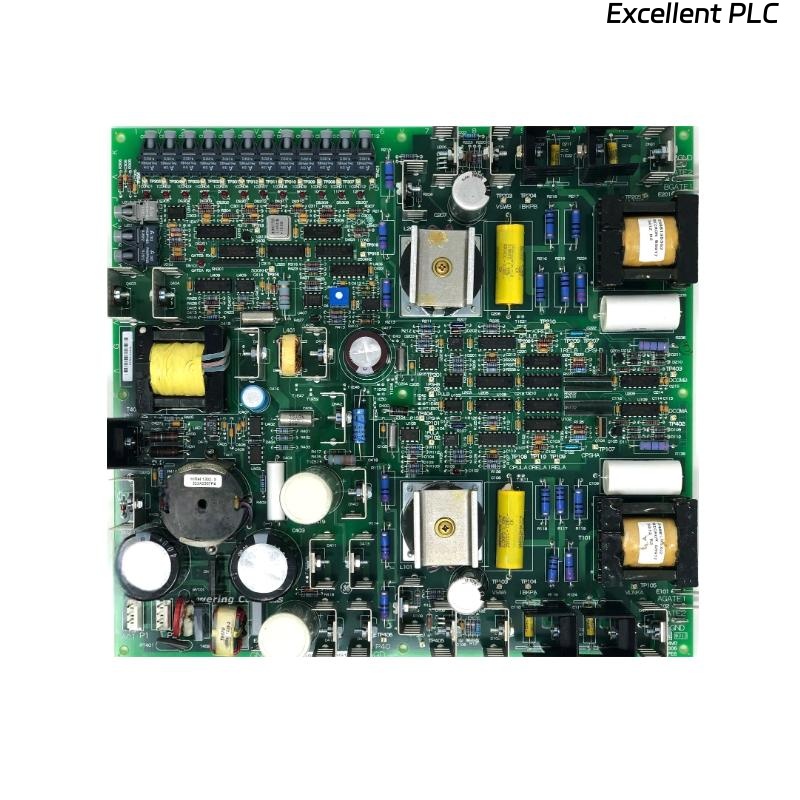
The GE DS200FGPAG1ALD is a Gate Pulse Amplifier Board commonly used in GE drive and turbine control systems.
When this board reports a fault, it often triggers secondary alarms elsewhere in the system, making the root cause appear more complex than it really is.
In practice, most DS200FGPAG1ALD issues fall into a small number of repeatable patterns—once you’ve seen them in the field, they’re hard to forget.
What a “Fault” Really Means on This Board
When technicians say the DS200FGPAG1ALD has “failed,” they’re usually seeing one of the following behaviors:
-
Drive will not enable or trips immediately
-
Gate pulses are missing or distorted
-
Companion boards report logic or firing sequence errors
-
Intermittent operation after warm-up
Importantly, the fault is not always detected on the FGP board itself. In many systems, the alarm originates from downstream power electronics that never received a valid gate signal.
Power and Reference Issues Are the First Things to Check
Before suspecting component failure, experienced engineers always confirm that the board is receiving clean and stable power.
Common findings include:
-
Low or unstable supply voltage due to aging power supplies
-
Reference ground offsets between control boards
-
Loose edge connectors causing momentary dropouts
One senior technician summarized it well:
“If the FGP board doesn’t see a clean reference, it won’t fire anything—by design.”
This board is particularly sensitive to marginal power conditions.
Visual Inspection Often Tells Half the Story
The DS200FGPAG1ALD usually shows clear physical signs when it has suffered electrical stress.
Typical indicators include:
-
Darkened areas around gate driver components
-
Heat-stressed resistors or cracked solder joints
-
Aging electrolytic capacitors with subtle bulging
-
Connector discoloration from long-term thermal cycling
These boards often live in hot cabinets, and thermal fatigue over years of operation is a very real failure mechanism.
Component-Level Repair: Possible, but Not Always Practical
In some maintenance shops, component-level repair is still common practice.
Repairs may involve:
-
Replacing degraded capacitors in the pulse amplification stage
-
Reworking cracked solder joints under magnification
-
Replacing damaged driver ICs if equivalents are available
That said, many engineers are cautious with repaired FGP boards.
Gate pulse timing and amplitude are critical, and even small deviations can lead to downstream device stress.
As one field engineer put it:
“A repaired FGP board might work—but you need absolute confidence before trusting it with power devices.”
When Replacement Is the Safer Choice
If the board shows:
-
repeated faults after warm-up
-
inconsistent gate pulse behavior
-
extensive thermal or electrical damage
then replacement is usually the preferred option.
When replacing a DS200FGPAG1ALD, attention to detail matters:
-
Verify the exact board revision and suffix
-
Inspect the backplane connector before inserting the new board
-
Avoid mixing old and new boards without verifying compatibility
-
Ensure the cabinet airflow and cooling are adequate
Many failures repeat simply because the environmental cause was never addressed.
Post-Replacement Checks That Experienced Engineers Don’t Skip
After installing a replacement board, seasoned technicians typically:
-
Monitor gate pulse waveforms if test points are available
-
Observe startup behavior across multiple cycles
-
Check cabinet temperature after the system reaches steady state
-
Keep the removed board for later forensic inspection
This extra time often prevents a second outage weeks later.
Practical Takeaway from the Field
Most DS200FGPAG1ALD faults are not sudden or mysterious.
They are usually the result of thermal aging, marginal power conditions, or long-term electrical stress.
In plain terms:
-
Check power and grounding before blaming the board
-
Visual inspection is more valuable than many diagnostics
-
Component repair is possible but must be treated cautiously
-
Replacement should include environmental and system checks
Or, as one GE specialist once said:
“The board failed for a reason—fix the reason, not just the board.”