 Excellent PLC


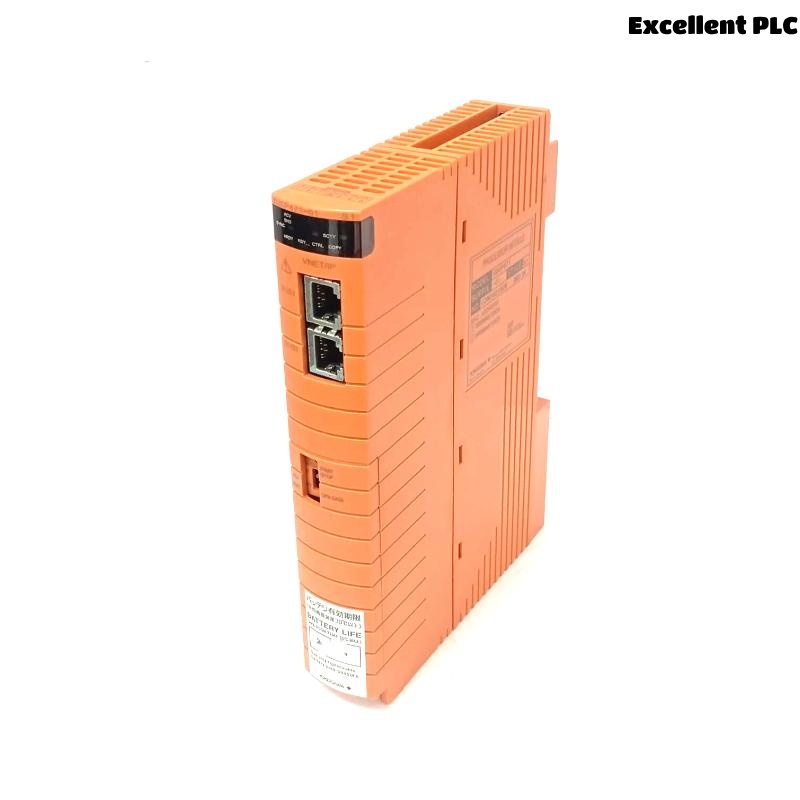
The Yokogawa S9112BL V net Connector Unit is normally one of the quietest components in a Yokogawa control system.
When it suddenly refuses to connect to V net, the issue is rarely dramatic—but it is almost always meaningful.
In field practice, a V net connection failure at the S9112BL level is less about “network down” and more about trust lost between nodes.
A V net Connection Is About Timing and Integrity, Not Just Cabling
Many engineers initially focus on the physical network cable, which is understandable—but often incomplete.
The S9112BL does not simply detect a cable presence.
It validates:
-
signal timing
-
electrical integrity
-
reference stability
-
protocol consistency
If any of these fall outside tolerance, the connector unit will stay silent rather than attempt partial communication.
As one Yokogawa network specialist once said:
“V net would rather not connect at all than connect incorrectly.”
Power Quality Subtly Affects Network Behavior
One of the most overlooked contributors to V net connection failure is local power instability.
The S9112BL may power up, show indicators, and still fail to communicate because:
-
supply voltage dips during initialization
-
internal references drift during warm-up
-
shared power rails inject noise
This is why some systems show a puzzling pattern: the unit connects after a restart, then drops out hours later.
From experience, when V net connectivity behaves inconsistently, power integrity deserves attention before network configuration.
Connector Units Are Extremely Sensitive to Ground Reference
Unlike Ethernet-based networks, V net relies heavily on a stable and shared ground reference.
Field investigations often reveal:
-
multiple ground points with slight potential differences
-
shields bonded inconsistently across cabinets
-
cabinet ground paths degraded over time
-
temporary grounding introduced during maintenance
The S9112BL may be electrically healthy but unwilling to communicate across an unstable reference plane.
In these cases, the network is physically intact—but logically rejected.
Configuration Mismatch Can Appear as a Physical Failure
Another subtle but common cause is logical incompatibility rather than hardware damage.
Examples include:
-
node address conflicts introduced during expansion
-
mismatched V net versions between system segments
-
legacy configuration assumptions applied to newer hardware
-
partial database updates after maintenance
To the engineer on site, it looks like “the connector won’t connect.”
To the system, it is simply refusing an inconsistent identity.
Environmental Degradation Often Shows Up First on V net
V net connector units are often early indicators of cabinet health issues.
Connection problems frequently correlate with:
-
rising humidity
-
conductive dust buildup
-
thermal cycling loosening connectors
-
long-term oxidation on network interfaces
These conditions rarely cause immediate failures elsewhere—but they affect high-integrity communication paths first.
Why Replacing the S9112BL Is Often a False Victory
In some cases, replacing the connector unit restores communication—temporarily.
But if grounding, power, or environmental conditions remain unchanged, the replacement may eventually exhibit the same behavior.
Experienced Yokogawa engineers therefore hesitate to declare success based solely on a restored link light.
They prefer to ask:
Why did the original unit stop trusting the network?
How Seasoned Engineers Diagnose V net Connection Failures
Instead of focusing only on the connector, experienced teams tend to:
-
verify ground potential across cabinets
-
observe power behavior during startup and steady state
-
inspect connectors under magnification
-
review recent configuration or topology changes
-
correlate failures with environmental conditions
This approach treats the S9112BL as a sensor of system health, not just a replaceable part.
A Broader Interpretation
From long-term field experience, the most reliable way to think about S9112BL V net connection failures is this:
-
the unit is conservative by design
-
connection refusal usually reflects detected risk
-
repeated issues indicate systemic weakness
As one senior Yokogawa engineer summarized it:
“When V net won’t connect, the problem is usually not the wire — it’s the environment the wire lives in.”