 Excellent PLC


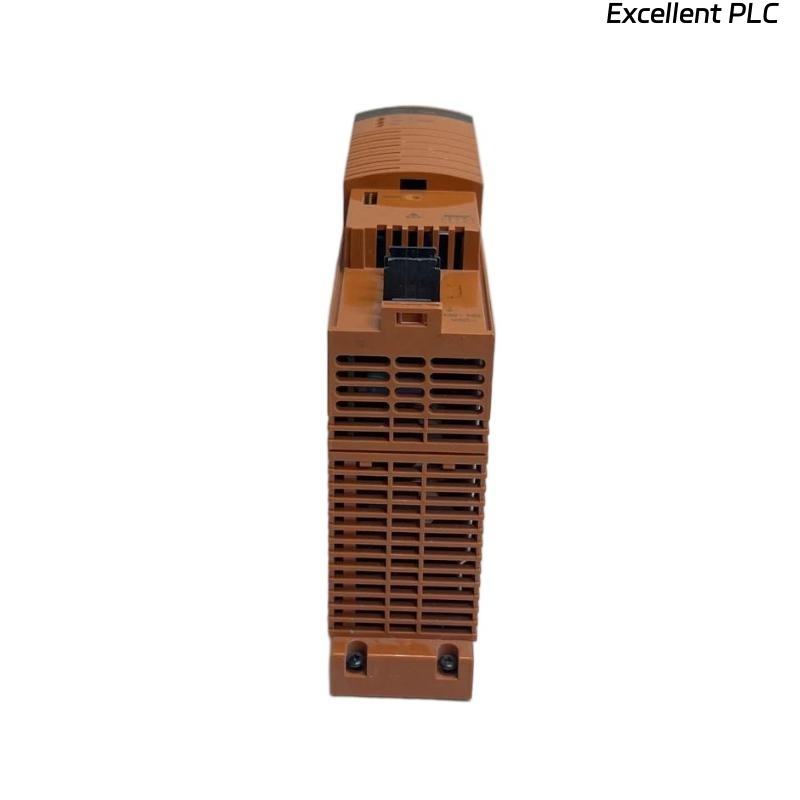
The question of whether a Yokogawa SPW481 power supply module can be temporarily substituted with another power supply model comes up frequently—usually under pressure, during outages, or when spare parts are not immediately available.
The short answer most experienced engineers give is cautious: sometimes it powers up, but that does not mean it is acceptable.
Understanding why requires looking beyond voltage and current ratings.
Power in Yokogawa Systems Is a Functional Component, Not a Utility
In Yokogawa control and safety systems, a power supply is not treated as a generic energy source.
It is a functional part of system behavior.
The SPW481 is designed to provide not only stable output, but also:
-
defined startup characteristics
-
predictable shutdown behavior
-
controlled fault signaling
-
compatibility with system diagnostics
When another power module is connected, even one with matching nominal specifications, these behavioral assumptions may no longer hold.
Why “It Fits and Turns On” Is a Dangerous Metric
In the field, engineers sometimes observe that an alternative power module:
-
physically fits
-
provides correct voltage
-
allows the system to boot
This can create a false sense of safety.
What is usually not visible immediately are differences in:
-
inrush current handling
-
response to transient loads
-
fault detection thresholds
-
recovery behavior after disturbances
These differences often surface hours or days later, typically as unexplained resets, communication instability, or intermittent diagnostics.
The Startup Sequence Matters More Than Steady State
One of the most critical differences between power modules lies in startup timing.
The SPW481 is designed to ramp power in a way that aligns with the expectations of Yokogawa controllers, bus modules, and I/O units.
A substitute power supply may:
-
rise too quickly
-
overshoot briefly
-
stabilize in a different sequence
The system may tolerate this once, but repeated startups under these conditions increase stress on internal components.
Fault Behavior Is Where Substitutes Usually Fail
Another overlooked aspect is how power supplies behave under fault conditions.
The SPW481 interacts with system diagnostics in a predictable way.
Alternative modules may:
-
latch faults differently
-
fail silently
-
recover automatically when the system expects a shutdown
From a maintenance perspective, this creates ambiguity.
From a safety and reliability perspective, it introduces unacceptable uncertainty.
When Temporary Substitution Is Sometimes Used
In real plants, temporary substitution does happen—usually under strict conditions:
-
for short-duration testing
-
under continuous supervision
-
outside of safety-related operation
-
with full awareness of the risks
Even then, experienced engineers treat the system as degraded, not restored.
The key point is that “temporary” must remain temporary.
Why Yokogawa Engineers Usually Advise Against It
From a design philosophy standpoint, Yokogawa assumes:
-
power behavior is deterministic
-
diagnostics reflect reality
-
system states are unambiguous
Using a different power module undermines these assumptions.
This is why official guidance tends to discourage substitution—not because it never works, but because it cannot be guaranteed to behave correctly under all conditions.
A Practical Field Perspective
After years of field experience, many senior engineers summarize the situation like this:
-
matching voltage is easy
-
matching behavior is hard
-
unknown behavior is the real risk
As one long-time Yokogawa system engineer put it:
“If a power supply is part of the control philosophy, replacing it with a ‘similar’ one changes the philosophy, not just the hardware.”
Bottom Line
From an engineering standpoint:
-
using a non-SPW481 power module may allow short-term operation
-
it should never be considered equivalent
-
it increases diagnostic uncertainty and long-term risk
If continuity matters more than convenience, the safest decision is to restore the system with the correct SPW481 as soon as possible.