 Excellent PLC


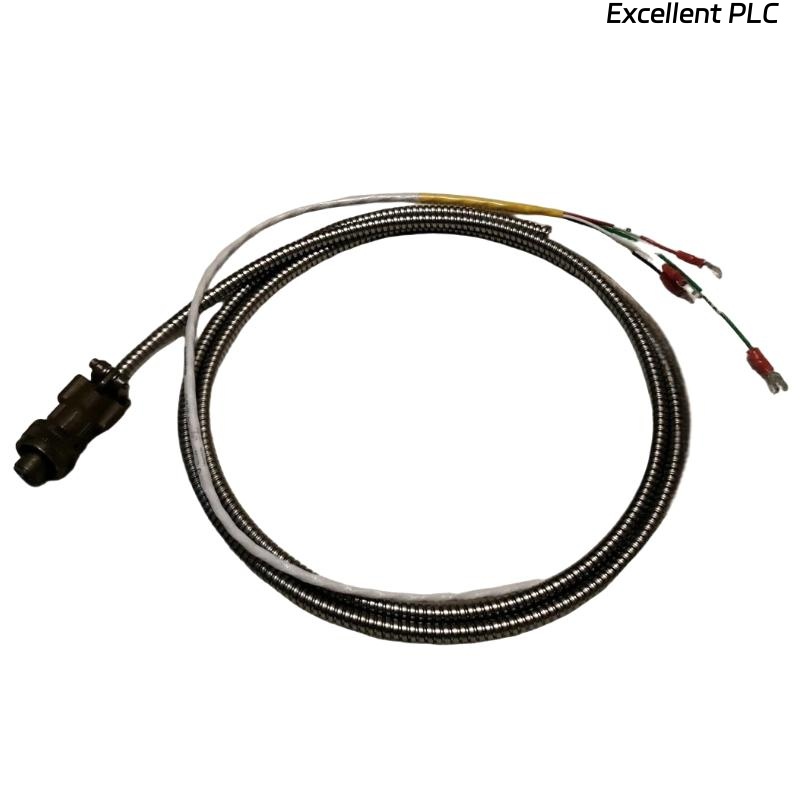
When dealing with the Bently Nevada 16710-70 interconnect cable, the length of the cable can be more critical than it initially seems. While the system might seem to work with longer cables, there are several engineering and performance factors to consider when faced with this issue.
Rather than just “shorten the cable,” we need to consider why the cable length can have adverse effects and the proper steps to mitigate any potential risks.
The Impact of Cable Length on Signal Integrity
One of the primary concerns with excessively long cables is signal degradation. The 16710-70 interconnect cable is designed to carry high-frequency signals from vibration sensors, typically to data acquisition systems or controllers.
-
Capacitance and Inductance: The longer the cable, the higher the chances of increased capacitance and inductance, which can introduce signal distortion, delay, or even signal loss. This is particularly crucial when measuring high-frequency vibrations, where data integrity is essential for predictive maintenance and system monitoring.
-
Voltage Drop: In systems where precise voltage levels are needed for correct operation, excessive cable length can cause a significant voltage drop over the wire, especially if the cable isn’t designed to handle longer distances. This will impact the performance and reliability of the connected sensors or systems.
System Timing and Delay Issues
Long cables can also introduce timing issues. In data acquisition systems, where multiple sensors may be involved, the delay in signal transmission due to the increased length can result in phase shifts in the measurements. For instance:
-
Synchronization Loss: If timing is critical to the system’s data analysis (e.g., in high-speed monitoring systems), the delay caused by long cables can create a misalignment of data from different sensors. This can affect not just accuracy, but also the system’s ability to trigger alarms or corrective actions in time.
How to Handle Excessive Cable Length
Instead of simply cutting the cable, here are more structured ways to handle the problem:
-
Use Signal Amplifiers or Repeaters
If the cable is too long, consider using signal amplifiers or repeaters at strategic points along the cable length to maintain signal integrity. These devices can help regenerate the signal, ensuring that it doesn’t degrade over the cable run. This is especially useful in long installations or systems spread across large areas. -
Cable Management with Proper Shielding
The use of shielded cables is often essential to protect against electromagnetic interference (EMI), which becomes more pronounced with longer cables. Proper grounding and routing are also critical to minimize noise, which can also distort the signal.-
Cable Routing: Ensure that cables are routed away from high-interference sources, such as large motors or power cables. These sources can induce noise into the sensor signals, especially in long cable runs.
-
Twisted Pair Cabling: Use twisted pair cables or cables with multiple shielded layers to reduce the risk of electromagnetic interference and signal loss.
-
-
Relocate the Equipment
If the cable length cannot be avoided, sometimes the best solution is to move the equipment closer to the source. Relocating the data acquisition unit or the sensor modules can help minimize the cable length while maintaining optimal signal quality and performance. -
Check Manufacturer Recommendations
Bently Nevada provides specific guidelines for the maximum recommended cable lengths for their devices, including the 16710-70 interconnect cable. It’s essential to check the manufacturer’s specifications and adhere to the recommended cable lengths or consider using their recommended solutions for long-distance installations.
Why Cutting the Cable Isn’t Always the Best Solution
You might think that simply cutting the cable to a shorter length is the quickest fix, but this can introduce additional issues:
-
Cable Termination: Cutting the cable requires proper re-termination to ensure that the signal is not compromised at the connectors. Poor terminations can result in intermittent connections or completely unreliable data.
-
Warranty and Certification: In some cases, altering the cable length could void warranties or certifications related to the system’s installation. Always verify with Bently Nevada or your system integrator before making such modifications.
A Field Engineer’s Final Advice
In the field, we’ve seen several cases where the solution isn’t as simple as shortening the cable. Here’s a quick summary of best practices for dealing with long interconnect cables:
-
Don’t compromise on signal integrity—use repeaters or signal amplifiers when necessary.
-
Avoid running cables over long distances unless absolutely needed. Consider redesigning the system layout.
-
Ensure that the cables used meet the specifications for shielding and length, and use cable management practices that limit interference.
-
Always consult the manufacturer’s guidelines for specific recommendations related to cable length, shielding, and termination.
As one senior engineer stated in the field:
“A longer cable doesn’t just mean a longer reach—it means a longer chance for things to go wrong.”