 Excellent PLC


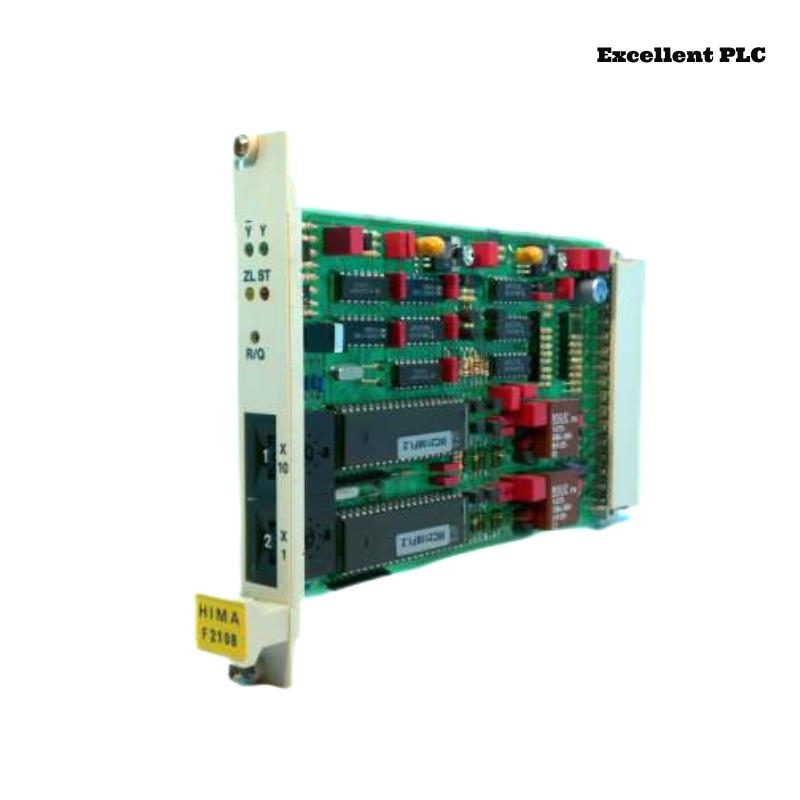
Every safety system has a personality.
Some systems are conservative to the point of frustration.
Others appear permissive, flexible, almost cooperative.
Very few behave randomly.
In Planar F architectures, much of that personality is shaped—quietly but decisively—by the HIMA F2102 safety-related application module.
Logic Is Not Neutral
A common misconception among less experienced engineers is that logic is neutral.
“If the logic is correct, the system will behave correctly.”
In safety systems, this assumption breaks down quickly.
The F2102 does not merely execute logic.
It interprets intent.
How permissive transitions are handled, how faults are escalated, and how uncertainty is resolved all emerge from how this module is designed and applied.
The F2102 as a Behavioral Contract
Unlike I/O modules that react to signals, the F2102 establishes rules.
It defines:
-
what constitutes a valid state
-
how long ambiguity is tolerated
-
when the system must withdraw permission
These rules form a contract between the designer and the real world.
Once deployed, the system will enforce that contract relentlessly.
Why Two Identical Systems Behave Differently
Field engineers are often puzzled by this situation:
Two plants.
Same hardware.
Same drawings.
Different behavior.
The explanation often lives inside the F2102 application logic.
Subtle differences in:
-
timing assumptions
-
interlock philosophy
-
fault escalation paths
accumulate into noticeably different system personalities.
The module becomes the system’s conscience.
Fault Handling Reveals Design Philosophy
The true nature of a safety system is revealed not during normal operation, but during abnormal conditions.
The F2102 decides:
-
whether the system fails immediately or degrades gracefully
-
how aggressively faults propagate
-
when recovery is allowed
A conservative design may halt frequently but predictably.
A permissive design may run longer—but closer to the edge.
Neither approach is inherently right or wrong.
What matters is that the choice is intentional.
Why Engineers Blame Hardware for Software Decisions
When systems behave “too strict” or “too lenient,” hardware often takes the blame.
In reality, the F2102 is faithfully executing the assumptions encoded into it.
If alarms feel excessive, it is because tolerances were defined that way.
If shutdowns feel abrupt, it is because escalation paths were designed to be uncompromising.
The module does not improvise.
It remembers.
Long-Term Operation Amplifies Small Assumptions
Assumptions that seem reasonable during commissioning may age poorly.
What was once a rare transient becomes routine.
What was once a conservative margin becomes a bottleneck.
The F2102 does not adapt on its own.
Over years of operation, small logic decisions harden into operational reality.
This is why mature plants periodically review application philosophy—not just hardware condition.
The Cost of Over-Optimization
Some projects attempt to extract maximum availability by tuning logic aggressively.
The F2102 will allow this—but it will also enforce the consequences.
Tighter margins mean:
-
higher sensitivity to drift
-
less tolerance for aging
-
greater dependence on perfect field behavior
In safety systems, optimization always trades resilience for efficiency.
The F2102 makes that trade permanent.
Why Replacing the Module Changes Nothing
When operational issues arise, replacing the F2102 rarely improves behavior.
Because the module is not the problem.
It is the expression of the problem.
Unless assumptions are revisited, the system will behave the same way—only with newer hardware.
Experienced engineers understand this and treat application modules with intellectual caution.
Systems With Character Age Better
Plants that respect the F2102 treat safety logic as living architecture.
They:
-
revisit assumptions periodically
-
document why decisions were made
-
resist incremental compromises
These systems develop character—predictable, understandable, and trusted.
Others drift into brittle complexity.
A Senior Engineer’s Reflection
After decades of safety system design and maintenance, one insight remains consistent:
Hardware enforces behavior.
Software defines values.
The F2102 is where those values become irreversible.
As one veteran safety architect once said:
“You don’t just program a safety system.
You teach it how to judge.”