 Excellent PLC


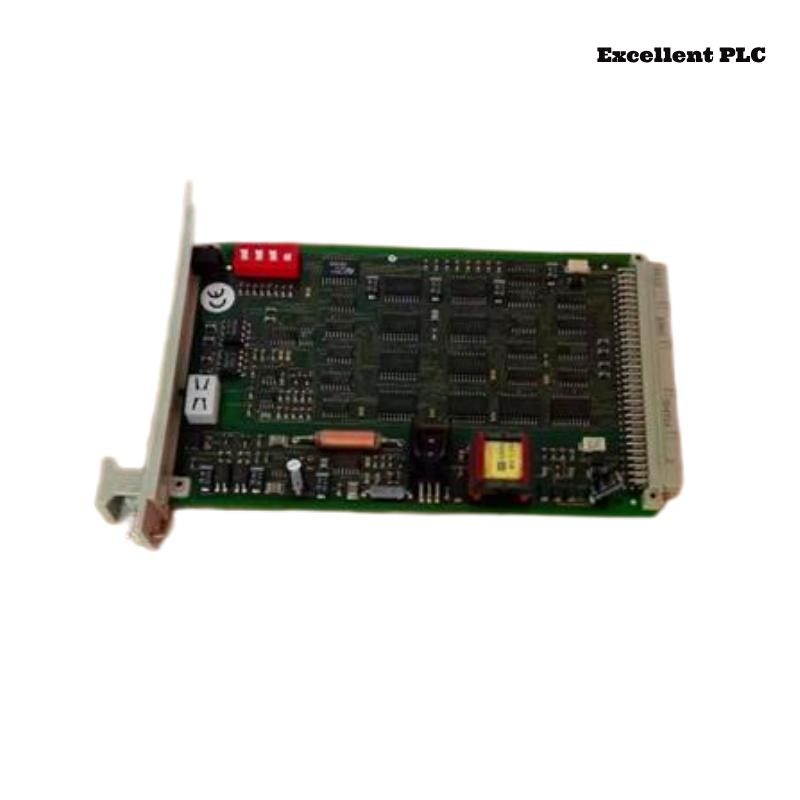
The HIMA F2103a timer module looks deceptively simple.
To many engineers, it is “just a timer.”
A delay.
A pause between cause and effect.
But in safety systems, time is never neutral.
Time is a decision variable.
Timing Is Where Intent Meets Reality
In process plants, signals rarely arrive cleanly.
Contacts bounce.
Valves hesitate.
Sensors disagree briefly before settling.
The F2103a exists to decide whether those moments matter.
Not every change deserves a reaction.
Not every fluctuation represents danger.
The timer is the judge.
Why Delays Are Not About Comfort
A common misunderstanding is that timers exist to “smooth” behavior for operators.
In safety logic, the opposite is true.
The F2103a defines how long uncertainty is tolerated.
That tolerance is not about convenience—it is about risk modeling.
A delay that is too short causes nuisance trips.
A delay that is too long allows hazards to mature.
Once configured, the module enforces that judgment without emotion.
Field Reality: The First Thing People Change
After commissioning, when a system trips unexpectedly, engineers rarely question logic first.
They adjust timing.
A few milliseconds here.
A second there.
The F2103a remembers every compromise.
Over years, these adjustments accumulate into a system that behaves very differently from its original intent.
Why Identical Timers Behave Differently in Practice
Two F2103a modules with the same settings can behave differently in the field.
Not because the hardware is inconsistent—but because the context is not.
Factors include:
-
signal quality upstream
-
mechanical response downstream
-
environmental stability
The timer becomes a lens through which all imperfections are magnified or suppressed.
Aging Does Not Break the Timer—It Changes the World Around It
Unlike relays, the F2103a does not “wear out” in an obvious way.
Failures are rare.
Drift is minimal.
Yet systems become more timing-sensitive over time.
Why?
Because field devices age, response times shift, and tolerances narrow.
The timer remains honest while the world around it changes.
A Subtle Trap: Using Time to Mask Design Issues
Experienced engineers learn this lesson the hard way.
If a safety function only works after extending a delay, the delay is not the solution.
It is a mask.
The F2103a will execute whatever decision you encode—but it will not fix poor signal integrity, weak actuation, or marginal design.
Time cannot compensate for physics indefinitely.
Why Timer Modules Define System Character
Some plants are strict.
They respond quickly, decisively, sometimes harshly.
Others are patient.
They wait, confirm, then act.
Much of that character is shaped by how modules like the F2103a are applied.
Operators feel it.
Maintenance teams adapt to it.
Management unknowingly relies on it.
Replacement Rarely Solves Timing Complaints
When timing-related complaints arise, replacing the F2103a is tempting.
It almost never helps.
Because the issue is rarely the module—it is the assumptions embedded in time.
Unless those assumptions are revisited, behavior will repeat.
A Long-Term Engineering Observation
After many years maintaining Planar F systems, one pattern is consistent:
Systems fail more often due to when they react than what they react to.
The F2103a sits quietly at that boundary.
As one senior commissioning engineer once said:
“Logic decides what is dangerous.
Timing decides when it becomes unacceptable.”