 Excellent PLC


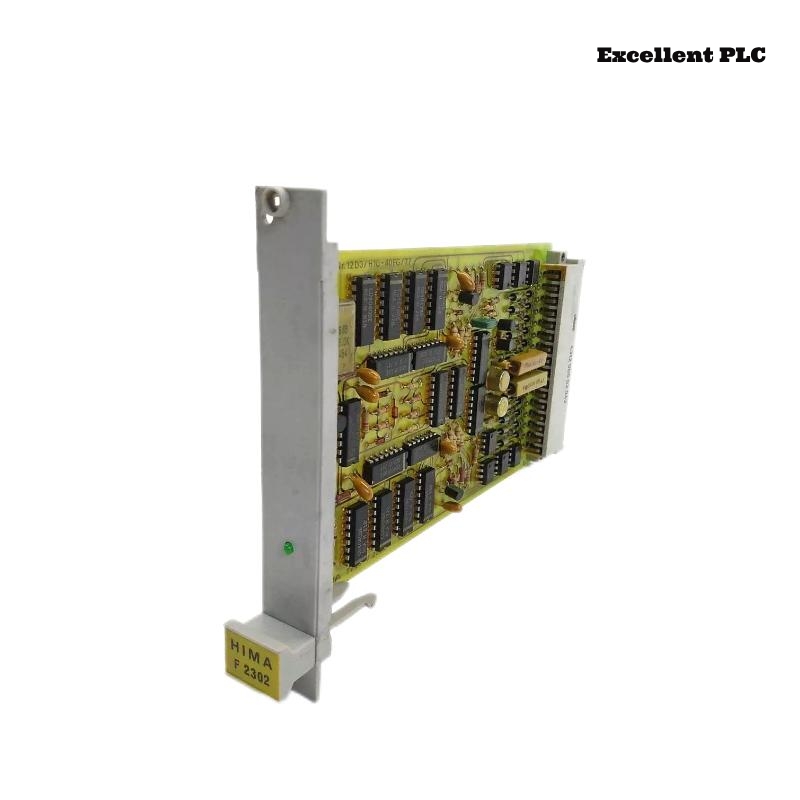
The HIMA F 2302 safety system module card rarely attracts attention.
It does not drive outputs.
It does not read field signals.
It does not “do” anything obvious.
And yet, if you want to understand how a Planar F system became what it is today, this is where you look.
Systems Remember More Than People Do
Engineers come and go.
Contractors change.
Documentation ages.
The system remains.
The F 2302 holds the accumulated assumptions, constraints, and compromises that define system behavior.
Not explicitly—but structurally.
Why This Module Feels Untouchable
In many plants, no one wants to touch the F 2302.
“It’s been there forever.”
“If it’s working, don’t touch it.”
“We don’t fully understand it.”
This hesitation is not superstition.
It reflects the understanding that this module anchors system identity.
Change it, and the system may no longer recognize itself.
Configuration as Historical Record
Unlike logic modules that can be reviewed line by line, the F 2302 expresses history through structure.
What options are enabled.
What paths are active.
What remains unused.
Each choice tells a story about a moment in the plant’s lifecycle.
Commissioning decisions.
Retrofits.
Emergency changes.
All leave traces.
Field Modifications Accumulate Here
Temporary changes have a way of becoming permanent.
A workaround becomes “normal.”
A bypass becomes policy.
The F 2302 absorbs these realities.
Over time, the original design intent is overwritten—not by a single decision, but by many small ones.
Why Problems Surface Years Later
When systems behave strangely after years of stable operation, engineers often suspect aging hardware.
Sometimes that’s true.
More often, the issue lies in historical layering.
The F 2302 is executing a structure that made sense under conditions that no longer exist.
The module is consistent.
The world has changed.
Replacement Is a Shock, Not a Repair
Replacing the F 2302 is not like swapping an I/O card.
It is a conceptual reset.
Suddenly, undocumented dependencies surface.
Assumptions break.
Latent inconsistencies reveal themselves.
This is why experienced engineers approach replacement cautiously—and with preparation.
Why Auditors Pay Attention to It
During safety audits, attention often shifts to the F 2302.
Not because it fails often—but because it reveals how change has been managed.
Clean, well-understood configurations suggest discipline.
Messy, unexplained structures suggest risk.
The module does not judge—but auditors do.
The Illusion of Stability
A system can appear stable while slowly drifting away from its original safety concept.
The F 2302 enables that drift by being reliable.
It executes faithfully—even when intent has been forgotten.
Stability, in this context, is not always a virtue.
A Reflection from the Field
After years of system upgrades, one lesson becomes clear:
The hardest problems are not technical—they are historical.
As one senior engineer once said during a migration project:
“We didn’t inherit a system.
We inherited a story—and nobody wrote the ending.”
The F 2302 holds that story quietly.