 Excellent PLC


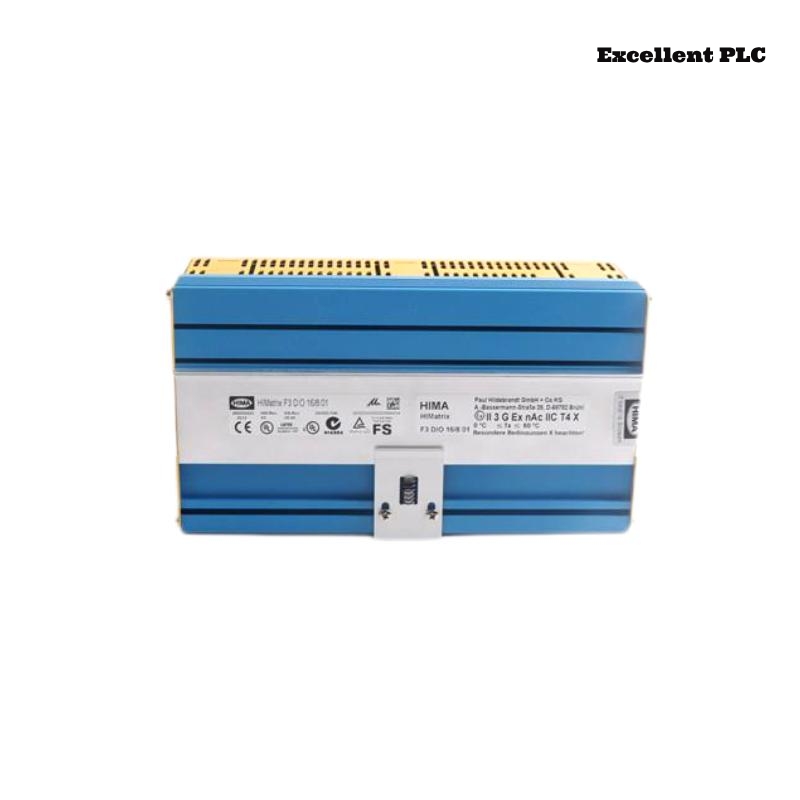
The HIMA F3 DIO 16/8 01 is the kind of module engineers trust instinctively.
Digital signals.
Clear states.
Simple diagnostics.
In many plants, it is treated as the most reliable part of the system.
And that trust is exactly why problems around it survive longer than they should.
Digital Signals Feel Honest
A digital input is either on or off.
No scaling.
No interpretation.
No nuance.
Or so it seems.
In reality, digital signals compress complex physical behavior into a single bit.
The F3 DIO 16/8 01 delivers that bit faithfully—but it cannot preserve context.
The Comfort of Binary Thinking
Binary signals encourage binary thinking.
Running or stopped.
Open or closed.
Safe or unsafe.
This clarity is useful—but dangerous.
Subtle degradation upstream is invisible until a threshold is crossed.
By the time the bit flips, the process is already in trouble.
Remote I/O Makes Assumptions Easier
Because the F3 DIO 16/8 01 sits remotely, engineers often assume:
-
wiring is short
-
contacts are clean
-
signals are local and simple
In reality, remote wiring often means:
-
long cable runs
-
shared trays
-
environmental exposure
The module does its job.
The assumptions around it quietly rot.
Why Digital Faults Appear “Sudden”
When a digital channel fails, it often feels abrupt.
“No warning.”
“It worked yesterday.”
But the degradation was gradual.
Contact resistance increased.
Noise margins shrank.
Bounce became more frequent.
The digital abstraction hid all of it—until it couldn’t.
Diagnostics Are Not Insight
The F3 DIO 16/8 01 provides diagnostics.
Status bits.
Channel states.
Module health.
These are useful—but they do not explain why behavior changed.
Engineers confuse diagnostics with understanding.
The module reports symptoms, not causes.
Channel Swapping Masks Patterns
A common field technique is swapping channels.
Sometimes the issue disappears.
That reinforces the belief that the module was at fault.
In reality, the new channel simply has more margin.
The underlying field problem continues elsewhere.
Why Digital I/O Ages Differently
Unlike analog systems, digital I/O does not drift gracefully.
It remains stable—then fails decisively.
This makes long-term trend analysis difficult.
The F3 DIO 16/8 01 is not forgiving, but it is honest.
Experienced Teams Look Beyond the Bit
Mature teams treat digital signals as indicators, not truths.
They:
-
correlate digital events with process behavior
-
inspect field devices proactively
-
question sudden changes even when diagnostics look clean
They understand that the bit is the end of a story, not the beginning.
A Familiar Maintenance Story
Across many HIMatrix F3 systems, the same phrase appears in maintenance logs:
“Intermittent—cannot reproduce.”
That is not a module problem.
It is a conceptual blind spot.
As one veteran technician once said:
“Digital signals don’t lie.
They just stop talking when things get complicated.”
The F3 DIO 16/8 01 is doing exactly what it was designed to do.