 Excellent PLC


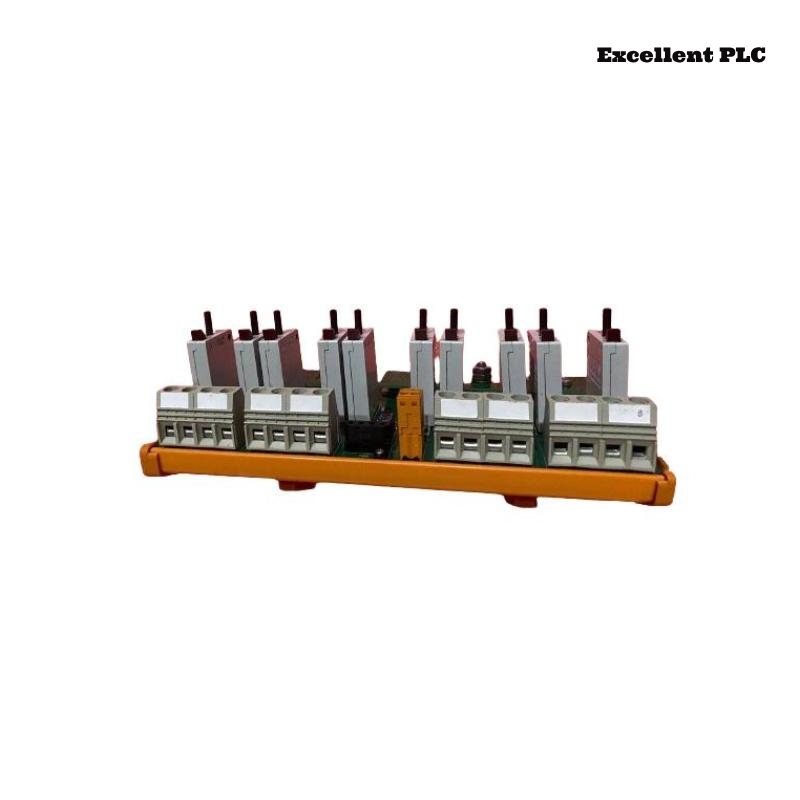
People rarely talk about the ICS Triplex T8292 Power Distribution Unit unless something has already gone wrong.
When the system runs, it is invisible.
When it doesn’t, it becomes the first suspect.
That reaction itself reveals a misunderstanding: the T8292 is not a power source, and it is not a passive splitter.
It is a discipline mechanism.
In safety systems, power is never neutral.
In conventional automation, power distribution is treated as plumbing.
As long as voltage arrives and current capacity is sufficient, the job is considered done.
Safety systems do not accept that simplification.
The moment power is distributed, priority is established.
The moment priority is established, authority follows.
The T8292 exists precisely at that boundary.
One of the most common field mistakes is assuming that all downstream modules are equal once power is present.
They are not.
Some modules must remain alive longer.
Some must fail earlier.
Some must collapse immediately when coherence is lost.
The T8292 encodes these expectations physically, not logically.
That is why replacing it with a “compatible” distribution approach almost always backfires later.
During incident reviews, I have repeatedly seen the same pattern:
A transient power anomaly occurs.
The safety controller behaves correctly.
One subsystem drops faster than expected.
Another remains powered just long enough to confuse diagnosis.
The root cause is rarely insufficient power.
It is misordered power decay.
The T8292 is designed to prevent exactly that.
Another misconception is that power distribution units age gracefully.
They do not.
Unlike processors or I/O modules, PDUs age structurally:
-
contact resistance increases
-
connector tension degrades
-
thermal margins shrink invisibly
Nothing “fails” outright—until coordination is lost.
When engineers replace CPUs before inspecting the T8292, they are treating symptoms, not structure.
What makes the T8292 uncomfortable for some engineers is that it exposes system truth.
If grounding philosophy is inconsistent, it will surface.
If cabinet thermal design is marginal, it will amplify consequences.
If redundancy assumptions were optimistic, it will enforce reality.
The module does not create these problems.
It removes the illusion that they were harmless.
I have seen plants temporarily stabilize a system by bypassing distribution logic—feeding modules directly, simplifying paths, reducing “complexity.”
The system often runs smoother afterward.
Until it doesn’t.
When the next abnormal condition arrives, there is no longer a controlled collapse—only fragmentation.
That fragmentation is far more dangerous than a clean shutdown.
Experienced safety engineers treat the T8292 with respect that borders on caution.
They rarely touch it casually.
They document every change.
They validate power sequencing as carefully as logic.
Because they understand something that is not written clearly in manuals:
In safety systems, power distribution defines who gets to speak, and for how long.
If the T8292 fails, the question is not “why did power drop?”
The real question is:
Did power drop in the right order?
If the answer is yes, the system did its job—even if production stopped.
If the answer is no, the system was already compromised long before anyone noticed.
That is why the T8292 is not an accessory.
It is part of the safety argument itself.