 Excellent PLC


1. Executive Summary
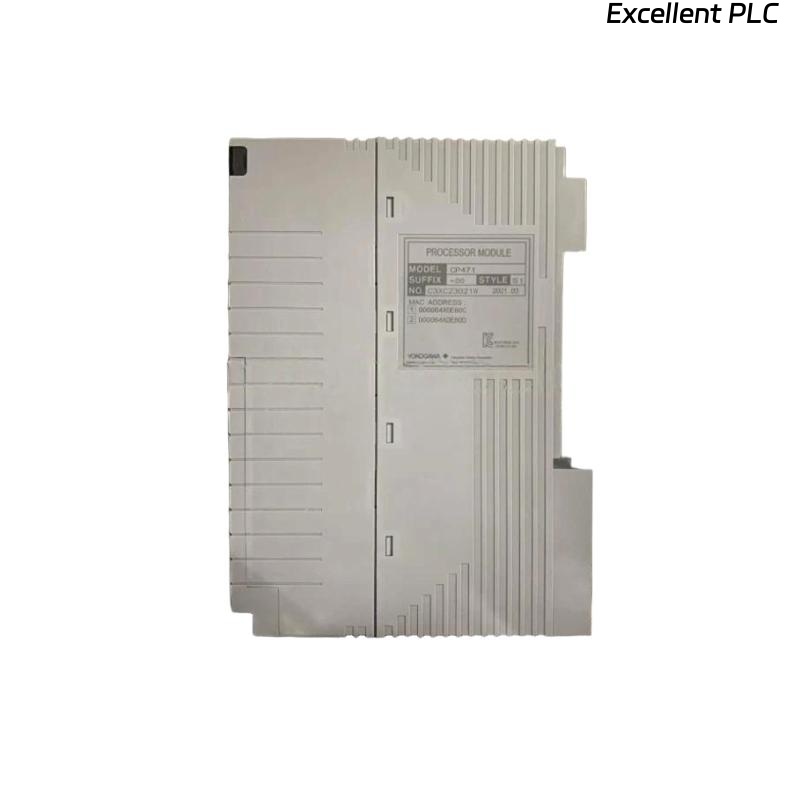
The Yokogawa CP471 processor module is designed for industrial automation systems requiring reliable control under continuous operation. However, temperature fluctuations and high humidity levels can degrade electronic component stability, leading to intermittent communication failures, unplanned resets, and delayed control responses.
This environmental stress report analyzes how thermal and humidity factors affect CP471 performance, based on field observations from a coastal power plant.
2. Operating Environment Profile
-
Facility Type: Coal-fired power generation
-
Geographic Conditions: Coastal, high salinity
-
Ambient Temperature: 28–41°C seasonal range
-
Relative Humidity: 60–88% average
-
Control Room Class: Semi-conditioned electrical control room
-
Enclosure Rating: IP20 cabinets without active dehumidification
While within general industrial ranges, high humidity and temperature cycling created stress conditions for sensitive modules.
3. Field Symptoms and Behavioral Patterns
The CP471 did not fail outright; instead, it exhibited intermittent instability that correlated with environmental changes.
Observed Symptoms
-
Random CPU communication latency spikes
-
SCADA data refresh delays during peak humidity periods
-
Unplanned reboots after rapid temperature increases
-
Intermittent CRC communication errors
-
Occasional failsafe I/O behavior during humidity peaks
SCADA Log Examples
Correlation Pattern
Real-time monitoring showed clear alignment:
| Condition | Behavior |
|---|---|
| High humidity | CRC errors & latency spikes |
| Rapid temp rise | Unplanned CPU reset |
| Cool-down cycles | Communication stabilizes |
4. Environmental Stress Mechanisms Identified
A. Temperature-Induced Component Drift
Electronic components such as:
-
Crystal oscillators
-
Timing circuits
-
PLL clocks
are sensitive to thermal expansion, causing drift in:
-
Timing accuracy
-
Clock synchronization
-
Bus signal integrity
This explains latency and CRC failures.
B. High-Humidity Impact on PCB Behavior
Humidity can cause:
-
Surface leakage currents
-
Contact oxidation
-
Reduced insulation resistance
Resulting in:
-
Momentary signal distortion
-
Logic instability
-
Oxidized backplane contacts
C. Cabinet Microclimate Effects
Inside IP20 cabinets:
-
Airflow is limited
-
Heat accumulates slowly
-
Condensation forms during cool-down cycles
Surface condensation worsened signal leakage on PCBs and connector terminals.
5. Diagnostic Methods Applied
1. Environmental Monitoring
Sensors installed inside cabinets:
| Parameter | Range Observed | Safe Range |
|---|---|---|
| Temp | 29–47°C | 0–50°C |
| RH | 61–88% | 10–80% |
| Dew Point | 15–33°C | — |
Humidity exceeded recommended electronics thresholds.
2. PCB Inspection
Infrared thermography showed non-uniform heating zones around:
-
CPU FPGA
-
Power regulation stages
Physical inspection revealed:
-
Mild oxidation on edge connectors
-
Dust accumulation forming hygroscopic layers
3. Network and Performance Logging
Packet latency logs were analyzed:
| Condition | Average Latency |
|---|---|
| Dry weather | 45–60ms |
| High humidity | 200–350ms |
Synchronization faults occurred during maximum humidity.
6. Corrective Actions Taken
To restore reliability, engineers implemented:
✔ Cabinet Modifications
-
Installed active dehumidifier modules
-
Improved airflow using filtered forced ventilation
-
Added thermal insulation against direct heat sources
✔ Environmental Control
-
HVAC upgrades in control room
-
Humidity monitoring with alarm thresholds
✔ Hardware Preventive Maintenance
-
Cleaned and treated PCB connectors with anti-oxidation coating
-
Applied conformal coating to exposed copper surfaces
-
Re-seated backplane modules
✔ Performance Validation
After modifications:
| Metric | Before | After |
|---|---|---|
| RH inside cabinet | 78–88% | 42–55% |
| Latency spikes | Frequent | None |
| CPU resets/month | 3–12 | 0 |
| CRC errors/day | >800 | <10 |
7. Reliability Lessons Learned
Field experience revealed that:
-
“Within spec” ambient conditions do not guarantee microclimate safety inside cabinets
-
Humidity is more damaging than temperature for control electronics
-
Coastal facilities require enhanced oxidation and condensation protection
-
Conformal coating dramatically reduces moisture-induced leakage currents
8. Preventive Recommendations
Engineering Standards
-
Maintain RH between 30–60%
-
Maintain internal cabinet dew point below 15°C
-
Use IP54 or higher for coastal plants
Design Measures
-
Cabling and connectors should use corrosion-resistant alloys
-
Forced ventilation with filtration should be standard
-
Avoid positioning near heat radiators
Maintenance
-
Annual PCB cleaning & connector servicing
-
Humidity log auditing every quarter
9. Conclusion
Environmental stress—especially humidity and thermal cycling—can destabilize Yokogawa CP471 modules without leaving obvious electrical fault signatures. By controlling microclimate conditions, applying oxidation prevention techniques, and monitoring cabinet dew point, facilities can significantly enhance operational stability and extend CPU module lifespan.