 Excellent PLC


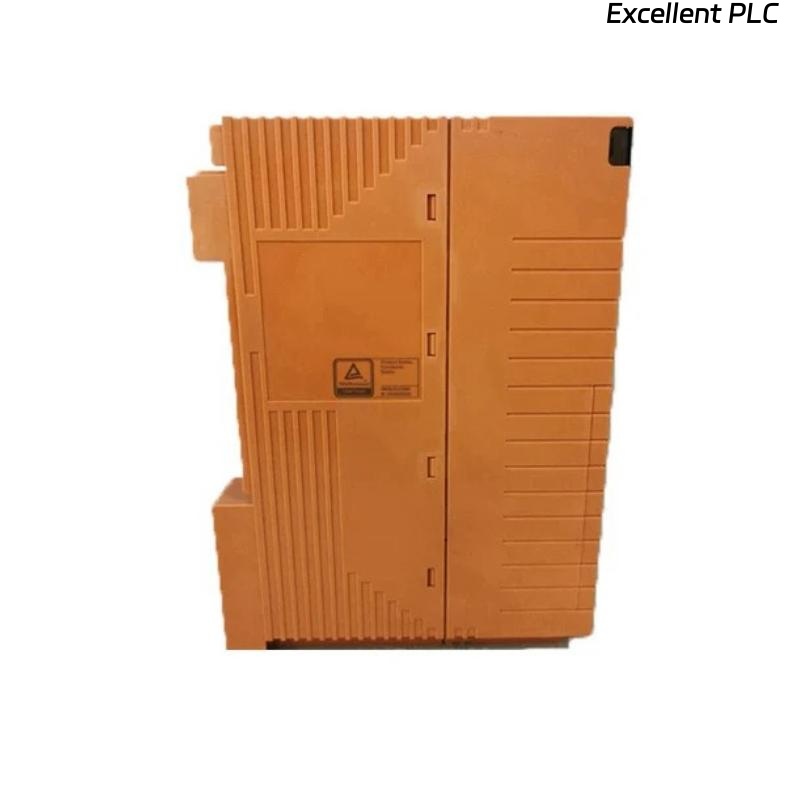
In modern process automation environments, the Yokogawa CP451 CPU module is widely deployed as part of the CENTUM DCS architecture. Although the CPU design meets rigorous industrial standards, field experience shows that Electrostatic Discharge (ESD) can cause intermittent or permanent module failure when environmental controls and grounding are inadequate.
This case study documents a real-world technical scenario, examining failure characteristics, diagnostic workflow, and prevention strategies.
1. Incident Summary
A petrochemical plant reported intermittent CPU resets and communication interruptions on a CP451 module located in the central control room. The resets occurred intermittently and without clear correlation to process load or power disturbances.
During final failure, the module entered a non-bootable state, with no complete startup sequence and no DCS communication.
Further investigation identified static discharge events originating from operator consoles and flooring as the root cause.
2. Failure Symptoms Observed
The failure presented as a progressive degradation rather than instant hardware death. Field technicians observed:
(A) Early-stage behavior
-
Vnet/IP alarms triggered occasionally
-
CPU module executed cold restart without operator request
-
Temporary “HIS offline” events lasting 1–3 seconds
(B) Mid-stage behavior
-
Loss of communication to remote I/O nodes
-
System dropping historical logs during spikes
-
Alarm burst during CPU reset cycles
-
Operator HMI freeze incidents
(C) Final failure condition
-
CPU failed POST (Power-On Self Test)
-
Module LEDs stuck in non-standard pattern
-
No communication handshake over Vnet/IP
-
Module not recognized by engineering station
3. Technical Root Cause Analysis
Field investigation identified the following contributing factors:
1. Electrostatic Discharge Exposure
Static buildup resulted from:
-
Dry seasonal climate (low humidity)
-
Synthetic flooring material
-
Frequent operator movement near CPU cabinet
ESD shock transferred via:
-
Cabinet doors
-
Unshielded panel openings
-
Operator console interactions
2. Insufficient Grounding Infrastructure
Grounding audit revealed:
-
Grounding straps not installed according to manufacturer spec
-
Cable shielding not terminated correctly
-
Cabinet earth impedance above recommended values
3. Lack of ESD Mitigation in Control Room Layout
No antistatic carpeting, no wrist straps for maintenance, and no ionization equipment.
4. Technical Inspection Findings
After removal and bench analysis, the following hardware damage was identified:
-
Burnt microcontroller I/O pins likely affected by discharge
-
Damaged communication PHY chips (Ethernet transceiver)
-
Partial PCB trace discoloration near grounding pad
-
IR scope detected irregularities in decoupling capacitors
No software or firmware abnormalities were detected, indicating purely hardware-induced damage.
5. Corrective Action Plan Implemented
The plant executed the following corrective measures:
A. Hardware Replacement
✔ CP451 CPU module replaced with new unit
✔ Vnet/IP network revalidated
✔ System redundancy verified
B. Grounding & ESD Controls
✔ Control cabinet grounding impedance normalized
✔ Copper earth bonding straps installed
✔ Shielded cable grounding re-terminated
C. Environmental Adjustments
✔ Antistatic flooring installed
✔ Humidity maintained at 40–55% RH
✔ Ionizing air blowers placed near critical consoles
D. Work Practice Enhancements
✔ ESD wrist straps for maintenance staff
✔ Revised SOP for opening cabinets
✔ Operator training on static control
6. Preventive Engineering Recommendations
Based on Yokogawa design guidelines and IEC 61340 ESD protection standards, the following are recommended for CP451 deployments:
| Category | Recommendations |
|---|---|
| Hardware | Use shielded CAT6 cables, ensure bonding continuity |
| Grounding | Maintain earth impedance < 1Ω for cabinets |
| Room Design | Avoid synthetic flooring, install ESD-resistant tiles |
| Environment | Maintain RH > 40% to reduce static generation |
| Tools & PPE | Wrist straps, conductive footwear, ESD mats |
| Maintenance | Never touch CPU frames during dry seasons without grounding |
7. Conclusion
Static discharge is a silent but highly destructive threat to industrial DCS modules, especially CPU-class components like the CP451. Although the Yokogawa hardware is robust, environments with weak grounding, improper shielding, and poor humidity control can induce intermittent faults or irreversible damage.
With proper preventive engineering—including grounding validation, environmental control, and maintenance discipline—plants can eliminate this failure mode entirely and greatly improve long-term system availability.