 Excellent PLC


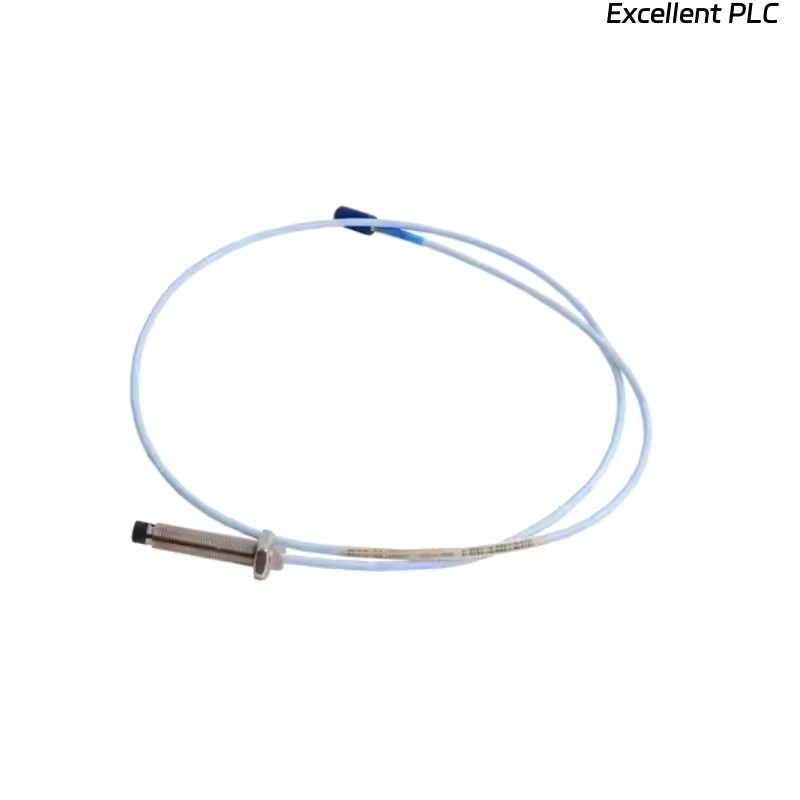
The Bently Nevada 109548-01 / P1407030-00100 from the 3300XL NSv proximity probe family is designed for precision shaft vibration and position monitoring in accordance with API 670 protection standards. While the sensor hardware is highly robust, probe tip contamination—especially from lubricating oil—can severely distort measurement accuracy and lead to both diagnostic and operational challenges.
This case documents a turbine bearing application where oil ingress and probe tip contamination caused signal attenuation, nonlinearity, and position drift, leading to misinterpretation of machine condition.
1. Field Symptom Summary
During normal operation, maintenance and vibration engineers reported:
-
Lower-than-expected shaft vibration amplitudes
-
Inconsistencies between X/Y proximity probes
-
Shaft centerline plots showing unrealistic motion
-
Slow drift in DC bias voltage
-
System 1® spectral data lacking typical peaks despite load changes
These symptoms strongly suggested measurement impairment rather than true mechanical improvement.
2. System Context
| Category | Details |
|---|---|
| Probe Model | 109548-01 NSv |
| Proximitor | 3300XL |
| Monitoring Rack | Bently Nevada 3500/42M |
| Machine Type | Gear-driven steam turbine |
| Bearing Type | Tilting-pad journal bearing |
| Environment | High oil vapor + splash lubrication |
Tilting-pad bearings often generate oil mist and splash, creating a common contamination pathway for exposed sensors.
3. Diagnostic Investigation
3.1 Electrical Signal Examination
Technicians measured DC bias voltage at the proximitor:
-
Normal bias range: -10 to -18 VDC
-
Field measurement: -7.2 VDC, trending downward over time
Bias voltage depression indicates probe tip obstruction affecting sensor linearity.
3.2 System 1® Spectral Data Review
Key observations:
-
Reduced fundamental (1×) amplitude
-
Attenuated harmonic content
-
Normal phase stability
-
No increase in noise floor
Interpretation: signal attenuation, not true mechanical damping.
3.3 Physical Inspection Findings
After shutdown and cover removal:
-
Probe tip observed with oil film & varnish residue
-
Surrounding probe cavity contaminated by bearing oil splash
-
Drainage pathway partially blocked by sludge
-
No mechanical rotor damage detected
Probe tip cleaning restored metallic sheen.
4. Root Cause Analysis
Root causes were determined as:
✔ Oil splash exposure from journal bearing housing
✔ Poor drainage design at probe mounting port
✔ Long inspection interval with no cleaning routine
✔ High oil vapor concentration during warm-up
✔ Lack of protective baffle or seal shield
Oil deposits alter the electromagnetic field between probe and shaft, resulting in:
-
Lower signal amplitude
-
Loss of linearity
-
Incorrect shaft position offset
-
Unstable bias voltage
5. Corrective Actions Implemented
-
Probe Cleaning
-
Non-abrasive solvent cleaning
-
Lint-free swab cleaning procedure
-
Visual verification of metallic surface
-
-
Bias Voltage Validation
-
Bias returned to -13.1 VDC
-
-
Mechanical Modification
-
Miniature splash baffle installed to block oil path
-
Drain groove cleaned and re-opened
-
-
Data Re-Baselining
-
Post-cleaning trends aligned with mechanical expectations
-
1× amplitude increased ~30–40%
-
Centerline plots returned to realistic shape
-
-
Maintenance Procedure Update
-
Oil ingress added to PM checklist
-
Interval adjustments based on oil vapor severity
-
6. Preventive Recommendations
To prevent probe contamination, the following measures are recommended:
| Recommendation | Benefit |
|---|---|
| Install splash shields or baffles | Prevents oil film formation |
| Maintain drainage pathways | Reduces pooling and mist condensation |
| Use solvent-safe cleaning schedule | Maintains sensing performance |
| Monitor bias voltage periodically | Early detection of contamination |
| Inspect during outages | Minimizes data degradation |
| Seal probe ports with proper grommets | Blocks vapor migration |
These practices align with OEM and API 670 maintenance guidelines.
7. Key Technical Takeaways
-
Oil contamination causes measurement attenuation, not real vibration reduction.
-
Bias voltage trends are a powerful diagnostic indicator for probe health.
-
Clean sensing surfaces are essential for maintaining eddy current linearity.
-
Improper interpretation can lead to false sense of mechanical stability.
-
Small maintenance actions can prevent incorrect operational decisions.
Conclusion
The Bently Nevada 109548-01 NSv probe itself demonstrated electrical reliability throughout this event; however, environmental cleanliness is critical for accurate vibration and shaft displacement monitoring. Routine inspection, bias validation, and contamination control significantly enhance measurement fidelity and machine protection reliability in oil-rich environments.