 Excellent PLC


By Natalie Lee – Vibration and Condition Monitoring Specialist
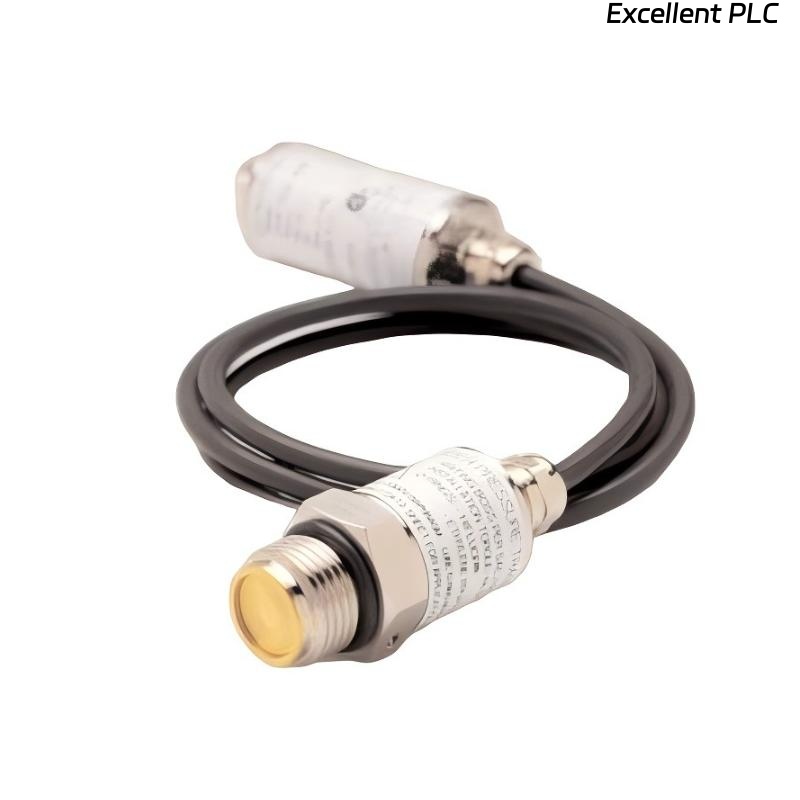
I’ve worked with Bently Nevada 165855-12-01 cylinder pressure sensors for years, but I’ll be honest, this one took me by surprise. In my mind, pressure sensors were always reliable — simple, straightforward devices that read the force of combustion.
That’s until one day, when I discovered how easily high-pressure peaks could cause signal saturation — and that can be a silent killer for any monitoring system.
The Scenario
It was just another routine testing of a reciprocating compressor. The machine had been in operation for months, and the customer was requesting a standard performance check on the cylinder pressure sensors. Everything appeared fine initially.
-
Pressure readings were in line with expectations during low to moderate load conditions.
-
During peak load testing, however, something strange happened — the pressure data started showing flat, spiked readings.
I initially thought there might be a mechanical failure, but a closer look told me a different story. The 165855-12-01 sensor was still functioning, but the output had flattened at the high-pressure peaks. This was a classic case of signal saturation.
What Exactly Is Signal Saturation?
Signal saturation happens when the sensor receives a pressure reading that exceeds its measurement range, and as a result, it can no longer accurately track pressure changes. For the Bently Nevada 165855-12-01, the maximum pressure capacity is designed to handle high-pressure events, but pushing beyond the limits causes the output to “max out” — giving us a flat signal instead of accurate pressure data.
This is particularly tricky because it doesn’t show up as a fault. The sensor is still technically working — it just can’t measure the extreme peaks anymore.
How Did We Catch It?
Here’s the interesting part: No alarms. No fault codes. Nothing.
But during the high-load tests, the pressure data wasn’t behaving as expected. The pressure trace simply stopped responding during peak events, and it was clearly a signal issue. After swapping in a different sensor, the issue became evident.
Root Cause
-
Excessive peak pressure during testing exceeded the sensor’s rated maximum limit.
-
The sensor was still within its normal operating range during all other conditions, but it couldn’t handle the peak pressures during full load.
-
There were no immediate mechanical failures, just over-stressed conditions.
Solution
-
Replace the sensor with one capable of handling higher peak pressures.
-
Adjust pressure limits in the control system to account for transient pressures that might exceed normal operational limits.
-
Implement a buffer zone: Set up thresholds in the system to flag when pressure readings are approaching the sensor’s limit, allowing for more proactive management of peak pressure events.
-
Review machine parameters: Check if the compressor is consistently reaching these high-pressure peaks during normal operations, or if there’s a system flaw contributing to over-pressurization.
Key Takeaways
-
Don’t assume all pressure sensors can handle the same extremes — even if they’re designed for high-pressure environments. Every sensor has a limit.
-
Saturation isn’t failure — it’s subtle, but it can lead to major problems in monitoring and diagnostics.
-
Prevention: Set up proper pressure limits and buffer zones to avoid hitting those extreme ranges during operation.
-
Calibration is key: Regular calibration against known pressures can catch this issue before it becomes a problem.
Conclusion
The Bently Nevada 165855-12-01 performed exactly as it was supposed to. It just couldn’t handle a specific scenario — high peak pressures during full load operation. The lesson here isn’t about the sensor’s failure, but about understanding your equipment’s capabilities and limitations.
A little extra care and understanding can go a long way in preventing errors down the line.
— Natalie