 Excellent PLC


By Jonathan Hale – Senior Automation Systems Engineer
One of the most dangerous assumptions in RS485 networks is this:
“We already have termination resistors.”
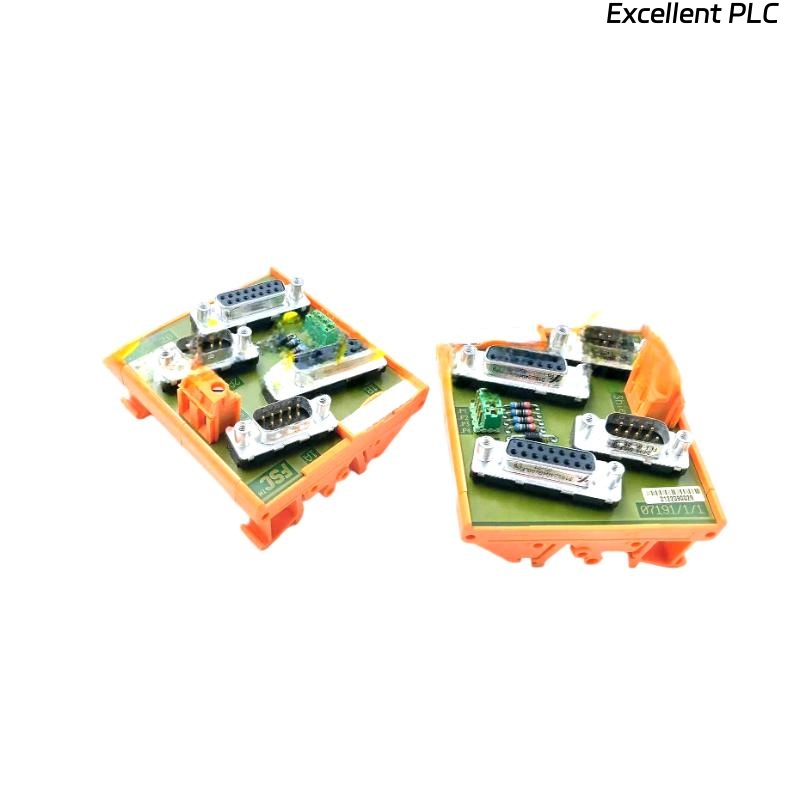
In a system using the Honeywell 07191/1/1 RS485 communication board, that assumption cost weeks of troubleshooting time — not because termination was missing, but because it was wrong.
The Symptoms Nobody Agreed On
Depending on who you asked, the problem was different:
-
Operators: “Data updates feel random.”
-
Maintenance: “Sometimes it works perfectly.”
-
Engineering: “No clear communication fault.”
There were no hard failures. No consistent alarms. Just unpredictable behavior that refused to reproduce on demand.
What the Network Looked Like on Paper
-
RS485 multidrop topology
-
Cable length within specification
-
Shielded twisted pair
-
Termination resistors installed
Everything passed the checklist.
That was the problem.
What Was Actually Installed
Upon inspection:
-
One termination resistor at the control cabinet
-
Another termination resistor installed mid-line
-
Several devices with internal termination jumpers left enabled
-
Total effective termination far below design impedance
In other words: over-terminated and incorrectly placed.
Why This Breaks RS485 Quietly
RS485 expects termination at both physical ends of the bus.
When termination is:
-
Placed mid-line → reflections return late
-
Duplicated → signal amplitude collapses
-
Too low in resistance → noise margin disappears
The 07191/1/1 board could still transmit and receive — but reflections distorted edges just enough to cause bit ambiguity.
Not errors.
Ambiguity.
Observed Effects on the 07191/1/1
-
Increased retries at the protocol layer
-
Irregular response timing
-
Occasional missed frames
-
No hardware fault indication
From the DCS point of view, the board was “alive.”
From the signal’s point of view, it was fighting echoes.
How We Proved It
We disconnected all field devices except the far-end node.
Communication became perfect.
We added devices back one by one.
The problem returned before the maximum node count.
That’s the signature of termination-induced reflection, not bandwidth or addressing issues.
Corrective Actions
Physical layer correction
-
Removed all mid-line termination
-
Disabled internal termination jumpers on intermediate devices
-
Installed termination resistors only at true bus endpoints
-
Verified resistance across A/B lines matched design spec
Validation test
What This Case Reinforced
-
Termination presence ≠ termination correctness
-
RS485 failures don’t need noise — reflections are enough
-
Communication boards are blamed for topology mistakes
-
Mid-line termination is worse than no termination
Final Thought
The Honeywell 07191/1/1 RS485 communication board didn’t struggle because of distance, noise, or firmware.
It struggled because the signal kept coming back to haunt itself.
RS485 doesn’t forgive topology mistakes — it just hides them until you stop trusting your data.
— Jonathan Hale