 Excellent PLC


By Victor Lehmann – Industrial EMC Specialist
Most communication problems are blamed on protocols.
Few are traced back to ground.
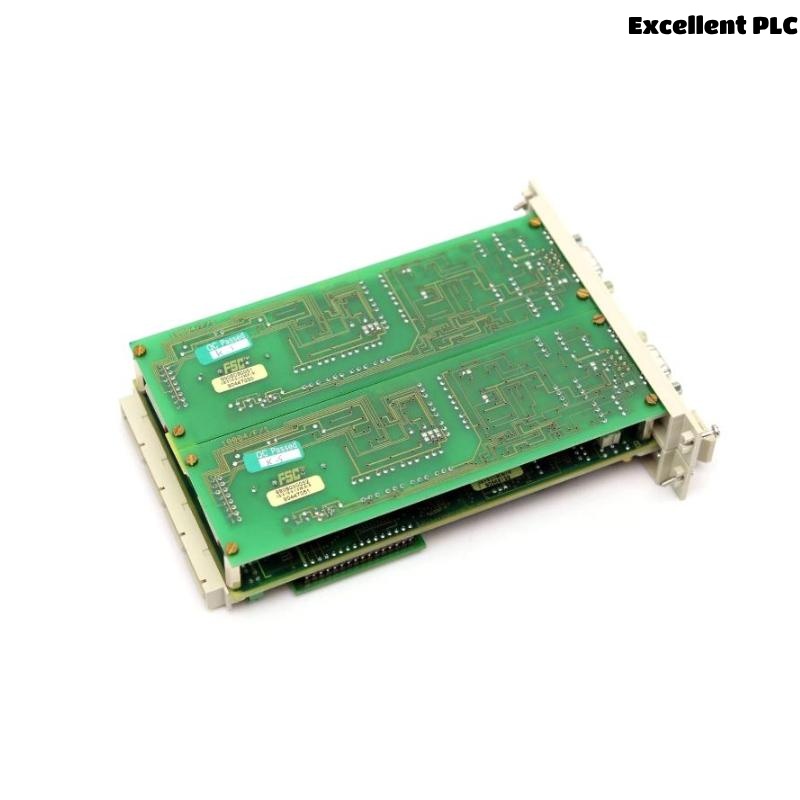
In one audit of a control cabinet built around the Honeywell 10014/1/1 dual-port module, communication instability was eventually linked not to software, topology, or traffic — but to how “ground” was implemented.
Why Dual-Port Modules Are More Sensitive
A dual-port module introduces:
-
Two reference paths
-
Two shield termination points
-
Two potential ground potentials
When grounding is inconsistent, the module becomes a bridge not only for data — but for noise.
Observed Phenomena
-
Both ports experienced synchronous jitter
-
Link quality degraded simultaneously
-
Noise correlated with high-current equipment switching
-
No permanent faults recorded
The key clue: both ports degraded at the same time.
That ruled out independent port failure.
The Electrical Mechanism
Poor grounding and shield termination created:
-
Ground loops
-
Common-mode voltage fluctuations
-
Induced noise on communication lines
The 10014/1/1 did not isolate this noise completely.
Instead, noise propagated across ports.
Why This Is Often Missed
Diagnostics tend to focus on:
-
Packet errors
-
Link status
-
Protocol retries
Ground noise does not always produce clean “errors.”
It produces instability.
Instability is hard to log.
How We Verified the Hypothesis
Temporary bonding changes were made:
Once ground reference was stabilized, communication quality improved immediately.
Corrective Measures
-
Single-point grounding implemented
-
Shield terminations standardized
-
Separation of power and signal grounds enforced
-
Cabinet bonding reviewed
No module replacement was required.
Key Technical Takeaways
-
Dual ports amplify grounding mistakes
-
Common-mode noise affects all channels simultaneously
-
EMI issues masquerade as “random” communication faults
-
Electrical discipline is part of network reliability
Final Observation
The Honeywell 10014/1/1 dual-port module didn’t malfunction electrically.
It revealed a grounding architecture that was never designed for dual-channel communication.
In industrial networks, data quality is inseparable from electrical quality.
— Victor Lehmann