 Excellent PLC


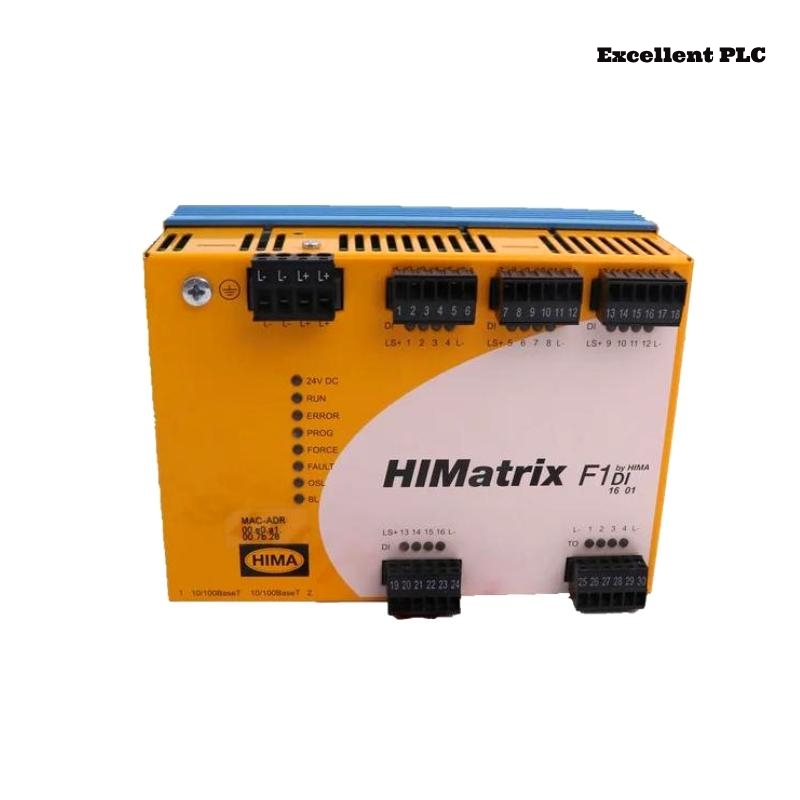
Incident Description
During normal plant operation, the remote I/O station suddenly disappeared from the control system. Operators reported that all digital inputs associated with the Black Horse F1 DI 16 01 module froze at their last known states. No field changes were reflected in the PLC interface, and the remote node was flagged as “offline.”
This type of communication failure is particularly disruptive in distributed architectures, as it affects not just one channel, but the entire data path between field devices and the controller.
First Response Actions in the Control Room
When a remote I/O module appears offline, the initial response should focus on differentiating between a network-level problem and a module-related fault.
If multiple modules at the same remote station are offline, the root cause is more likely related to network infrastructure or station power. If only the F1 DI 16 01 is impacted, module-specific communication interface faults become more probable.
Field-Level Troubleshooting Strategy
At the remote cabinet, the following checks help narrow down the fault domain:
Intermittent oxidation on connectors or marginal grounding often leads to unstable communication, especially in electrically noisy environments.
Technical Root Cause Insights
In several documented cases, communication loss involving the F1 DI 16 01 module was not caused by the input circuitry itself, but by interface-level degradation on the remote I/O backplane. Micro-level corrosion on connector surfaces increased contact resistance, leading to unstable data exchange between the module and the remote station controller.
Another contributing factor observed in the field is electromagnetic interference from nearby variable frequency drives (VFDs) and high-current switching equipment. In cabinets without proper cable segregation and grounding, communication channels become vulnerable to transient disturbances.
Recovery and Stabilization Measures
After restoring communication, continuous monitoring is recommended:
If the remote station continues to drop offline sporadically, replacing the affected module or the remote I/O coupler should be considered to eliminate hidden interface degradation.
Long-Term Reliability Considerations
Repeated communication losses often indicate systemic design weaknesses rather than isolated component failures. Improving cabinet layout, separating communication cables from power lines, and upgrading grounding practices can dramatically reduce the recurrence of similar incidents.
From a maintenance strategy perspective, periodic inspection of communication connectors and proactive replacement of aging remote I/O components can help maintain stable system availability in distributed automation networks.
Final Thoughts
Communication faults involving the Black Horse F1 DI 16 01 Remote I/O Module highlight the importance of viewing remote I/O issues as part of a broader system interaction, rather than purely as a single-module defect. A combination of structured first-response actions, targeted field diagnostics, and long-term infrastructure improvements is key to ensuring reliable remote I/O performance.