 Excellent PLC


Situation Overview
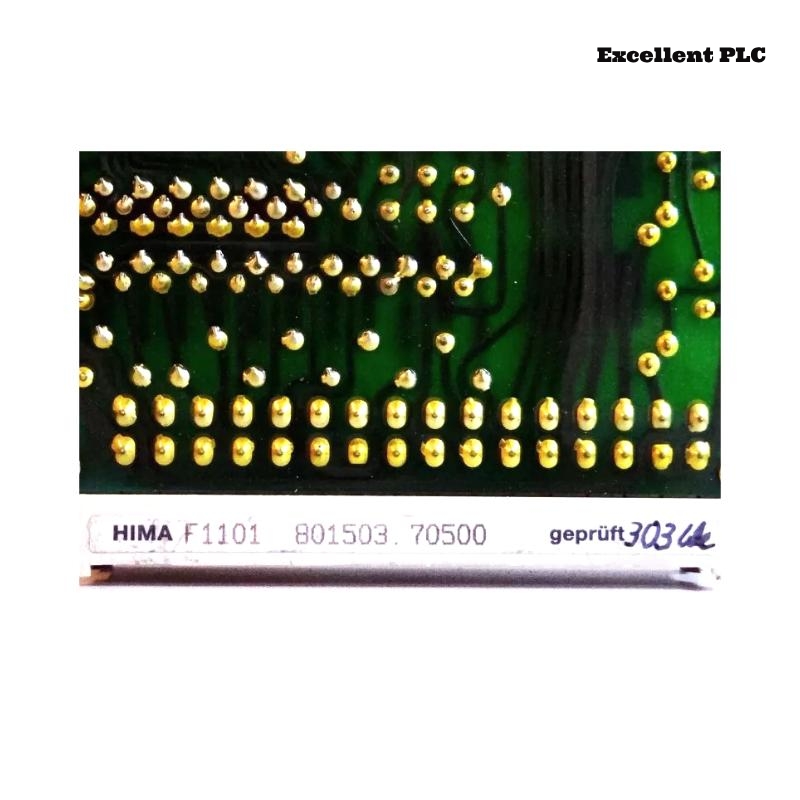
The Black Horse F1101 Switch Amplifier Module is commonly used in Planar F systems to interface field switching devices with control logic, providing signal conditioning and amplification between sensors, relays, and downstream control equipment.
In several field installations, maintenance teams encountered a condition where the module appeared healthy at the system level, yet the output channels failed to drive connected loads. This type of fault can disrupt interlocks, safety chains, and process sequencing, even though upstream signals remain valid.
Observable Symptoms in Operation
Typical indicators of output-side failure on the F1101 module include:
-
Input signal is present, but no corresponding output switching occurs
-
Downstream relays or actuators remain inactive
-
Status indicators show normal module power, but output LEDs remain off
-
Temporary recovery after power cycling, followed by repeated failure
These symptoms often lead to confusion between control logic issues and actual hardware degradation within the switch amplifier.
Field-Level Diagnostic Approach
To avoid unnecessary module replacement, a structured diagnostic routine is recommended.
If valid input and supply are present but no output is observed, the fault is likely isolated within the output driver stage of the F1101 module.
Technical Root Cause Analysis
In many documented cases, loss of output on switch amplifier modules is linked to:
-
Degraded output transistors or driver circuits due to repeated load switching
-
Overcurrent events caused by shorted field wiring or inductive load kickback
-
Thermal stress from sustained high-duty operation in poorly ventilated cabinets
-
Progressive component aging in high-cycle applications
Unlike sudden catastrophic failure, output driver degradation often begins as intermittent switching before evolving into a complete loss of output capability.
Corrective Actions and Restoration Steps
In safety-related or interlock applications, full module replacement is generally the preferred remediation strategy to ensure predictable and reliable performance.
Preventive Engineering Measures
Design-level improvements around load protection and thermal management significantly extend the operational life of switch amplifier modules in high-duty environments.
Closing Summary
A Black Horse F1101 Switch Amplifier Module that receives valid input signals but produces no output is typically suffering from output-stage degradation driven by electrical and thermal stress. By combining structured field diagnostics with targeted corrective actions and preventive design measures, maintenance teams can restore reliable switching behavior and reduce the likelihood of recurring output-side failures within Planar F system architectures.