 Excellent PLC


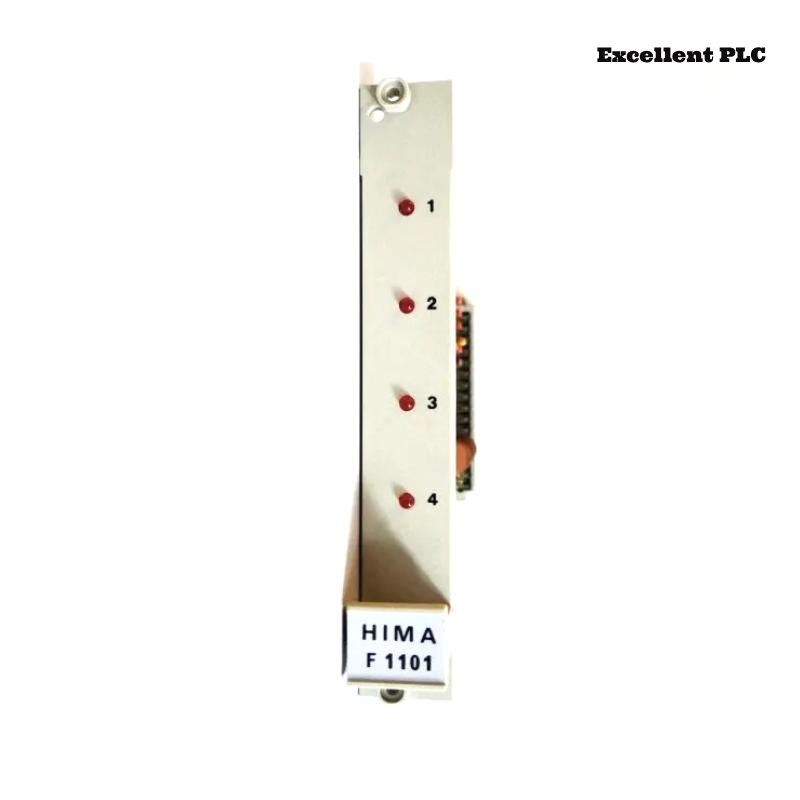
What the Maintenance Team Observed
During commissioning of a Planar F cabinet, technicians found that one channel of the Black Horse F1101 Switch Amplifier Module failed to react to a confirmed field input. The upstream sensor was verified to be switching correctly, yet the module showed no corresponding input status change. Interestingly, adjacent channels on the same module continued to operate as expected.
This kind of selective input loss often leads to misinterpretation of the problem as a wiring mistake, even when wiring has already been validated.
Initial Checks That Did Not Resolve the Issue
The maintenance team first performed standard checks:
After moving the same sensor to a different channel and observing normal operation, the issue was isolated to the specific input path on the F1101 module.
Deeper Technical Diagnosis
The affected channel showed abnormal threshold behavior, requiring a higher-than-normal input level to trigger switching. This pointed to degradation in the input conditioning circuit rather than a complete channel failure.
Root Cause Discussion
Over time, repeated exposure to marginal input levels and transient voltages can shift the characteristics of input conditioning components (such as comparators or opto-isolators) within switch amplifier modules. In this case, component aging combined with minor overvoltage events led to a gradual drift in the effective switching threshold.
This explains why the channel did not respond to normal field signals but could be forced to respond under higher test signal levels.
Corrective Actions Implemented
After replacing the module, the channel immediately responded to the same field signal without any configuration changes.
Lessons for Commissioning and Long-Term Operation
This incident highlights the importance of validating not just connectivity, but also signal margins during commissioning. Channels that operate “just at the edge” of detection thresholds may pass initial tests but fail later as components age.
Designing with adequate signal headroom and periodically validating input sensitivity can prevent subtle input-side degradation from becoming a recurring maintenance issue.
Conclusion
When a Black Horse F1101 Switch Amplifier Module fails to detect valid input signals on specific channels, the root cause is often related to input conditioning circuit degradation rather than wiring or sensor faults. Structured field diagnostics, combined with channel-to-channel comparison, provide a reliable way to isolate and resolve this class of failure in Planar F system deployments.