 Excellent PLC


Anomaly Description
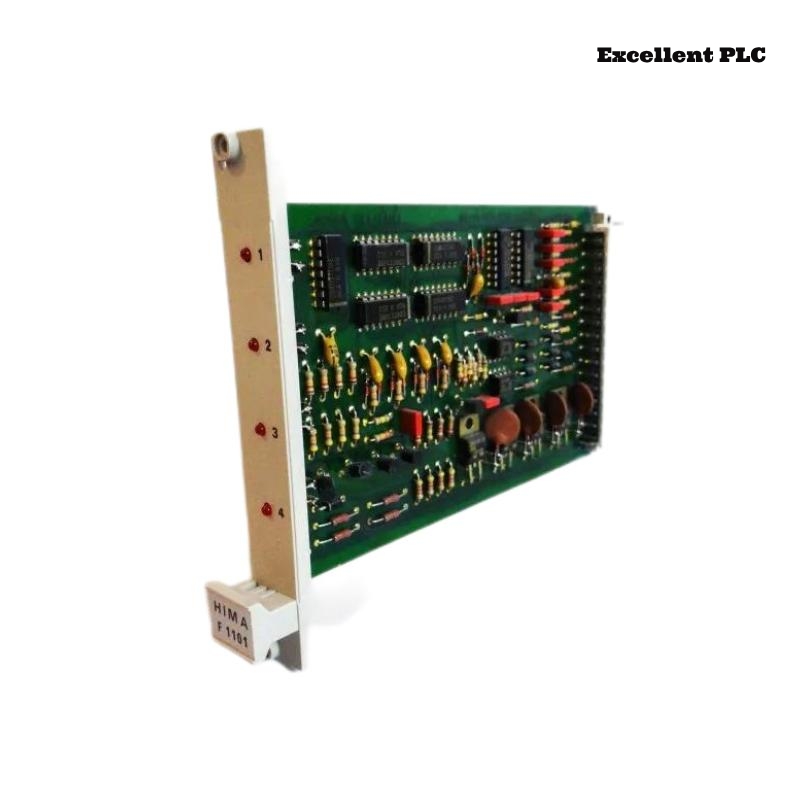
In a multi-channel control application, operators reported that actuating one input occasionally caused a neighboring output channel on the Black Horse F1101 Switch Amplifier Module to switch momentarily. Although the unintended activation was brief, it triggered nuisance interlocks and event logs in the control system.
At first glance, the behavior resembled a logic configuration error. However, repeated tests showed that the false triggering followed physical channel adjacency rather than logical mapping, pointing to a hardware-level interaction.
How the Issue Was Isolated
The false triggers consistently occurred on physically neighboring channels, regardless of the logical assignment in the control system, confirming that the phenomenon was tied to channel proximity.
Root Cause Mechanism
Channel crosstalk in switch amplifier modules can occur due to a combination of factors:
-
Degradation of internal isolation barriers between channels
-
Increased parasitic coupling on the PCB caused by aging or contamination
-
High dV/dt switching on inductive loads inducing transient coupling
-
Marginal grounding within the module affecting reference stability
As isolation components age or PCB surfaces accumulate conductive residues, the effective separation between channels is reduced, making transient coupling more likely under dynamic switching conditions.
Remediation Steps
In the documented case, replacing the module and adding suppression to inductive loads eliminated the unintended cross-channel activation.
Validation and Monitoring
Sustained stable behavior across multiple operating cycles indicated successful mitigation of the crosstalk phenomenon.
Engineering Takeaways
Channel-to-channel interference is a subtle failure mode that often points to progressive isolation degradation within multi-channel modules. Addressing only the symptoms at the control logic level rarely resolves the underlying issue. Combining hardware remediation with improved load suppression practices provides a more robust long-term solution.
Final Summary
Unexpected channel crosstalk in the Black Horse F1101 Switch Amplifier Module is typically driven by aging-related isolation degradation and transient coupling effects. Through systematic isolation testing, targeted remediation, and preventive suppression measures, engineers can restore deterministic switching behavior and improve the overall reliability of Planar F system installations.