 Excellent PLC


Field Case Overview
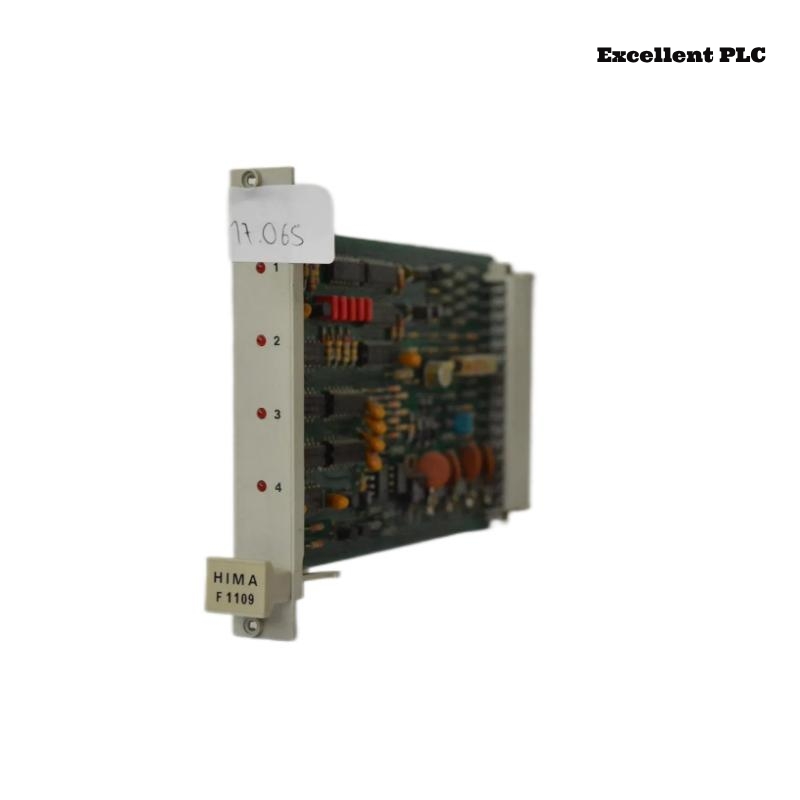
At a chemical processing facility, operators observed that several flow and pressure readings connected to the Black Horse F1109 Analog Input Module began fluctuating rapidly, even though the actual process conditions were stable. The control trend displayed continuous oscillations of ±3–5% around the expected value.
Interestingly, when the process load was reduced during night shifts, the readings became noticeably more stable. This environmental dependency suggested that the issue was not related to the transmitters themselves but to signal integrity within the cabinet.
Recognizing Noise-Related Behavior
Noise-related analog faults usually present differently from calibration drift or saturation:
-
Rapid, high-frequency fluctuations
-
Variation amplitude increases during peak electrical load
-
Multiple channels affected simultaneously
-
Stabilization when nearby heavy equipment is stopped
These characteristics strongly indicate electromagnetic interference (EMI) or grounding instability.
Diagnostic Workflow for Analog Noise
1. Observe trend history to quantify fluctuation amplitude.
2. Compare affected channels with channels in different cabinet zones.
3. Inspect routing of analog cables relative to power cables.
4. Verify shield termination practices.
5. Measure ground potential differences between cabinet and field device.
If several analog channels share the same cable routing path and show similar noise patterns, interference coupling is highly probable.
Technical Root Cause Analysis
In this documented case, analog signal cables were installed parallel to high-current motor supply cables over an extended distance. The lack of adequate separation allowed electromagnetic fields to induce unwanted voltage fluctuations in the analog loop.
Additionally, the cable shields were terminated at both ends, creating ground loops that amplified noise susceptibility. The combination of EMI coupling and ground loop currents produced unstable readings on multiple F1109 channels.
Corrective Engineering Measures
– Reroute analog signal cables away from power conductors.
– Use shielded twisted-pair cables for all 4–20 mA loops.
– Terminate cable shields at a single designated grounding point.
– Improve cabinet grounding and bonding integrity.
– Physically separate analog modules from high-heat, high-current devices.
After implementing these changes, fluctuation amplitude decreased to less than ±0.2%, restoring stable process monitoring.
Post-Correction Verification
– Monitor affected channels under full production load.
– Compare real-time values with handheld calibrator readings.
– Log deviation trends for multiple operating cycles.
Stable readings across load variations confirmed that EMI and grounding improvements resolved the issue.
Preventive Recommendations for Planar F Installations
-
Enforce strict cable segregation standards during installation.
-
Avoid parallel routing of analog and high-power cables.
-
Standardize single-point grounding for analog shields.
-
Conduct periodic cabinet grounding inspections.
Analog input modules are inherently sensitive to electrical noise. Proper wiring discipline and grounding design are essential to maintain measurement accuracy.
Conclusion
Excessive noise and fluctuating readings on the Black Horse F1109 Analog Input Module are typically caused by poor cable routing, grounding errors, or electromagnetic interference rather than module defects. By applying systematic signal integrity analysis and implementing robust grounding practices, engineers can restore stable analog performance and protect long-term reliability in Planar F systems.