 Excellent PLC


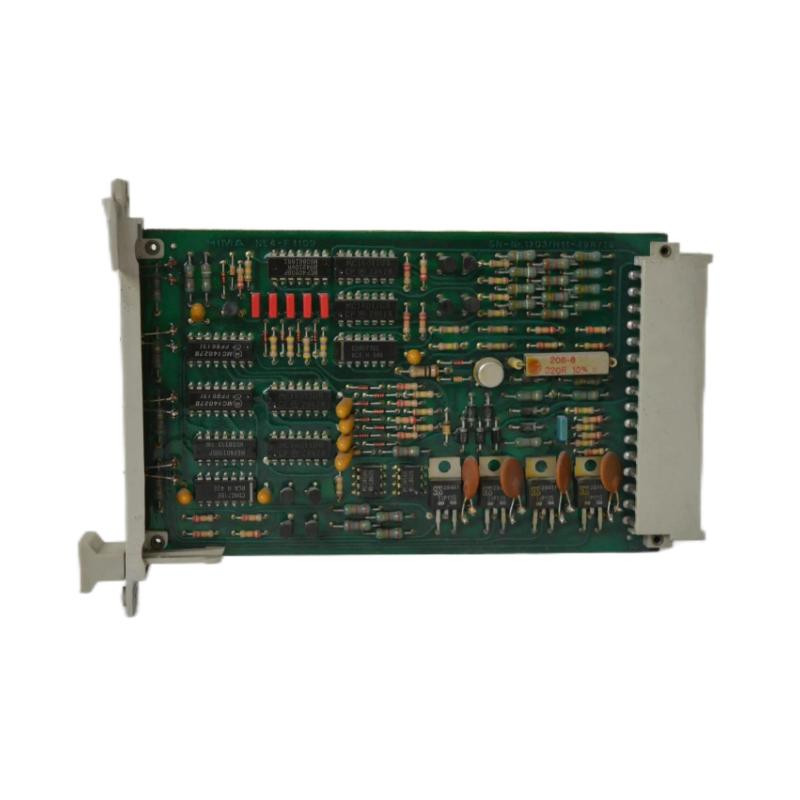
Incident Overview
In a power generation auxiliary system, operators noticed that several analog values connected to the Black Horse F1109 Analog Input Module gradually drifted upward during daytime operation.
Interestingly, during cooler night shifts, the readings returned closer to their expected values. No transmitter recalibration resolved the issue.
Trend data revealed a clear correlation between cabinet temperature rise and analog deviation.
Identifying Thermal Drift Behavior
Thermal-related analog faults typically show:
-
Gradual deviation rather than sudden jumps
-
Multiple channels drifting in similar direction
-
Correlation with cabinet temperature changes
-
Acceptable readings during cold start
Unlike noise or saturation issues, thermal drift follows slow environmental patterns.
Environmental Correlation Verification
Engineers collected cabinet temperature and analog signal trend data over 48 hours.
Record cabinet internal temperature hourly.
Log affected channel readings.
Plot deviation vs temperature.
Look for linear or proportional relationship.
The results showed approximately +0.8% deviation for every 10°C increase.
Technical Explanation
Analog input modules rely on:
-
Precision reference voltage circuits
-
Gain resistors
-
Operational amplifiers
-
Analog-to-digital converters (ADC)
Even with temperature compensation design, aging components may lose thermal stability.
In this case, internal reference voltage drift under elevated cabinet temperature caused proportional scaling deviation across multiple channels.
Isolation Testing Procedure
To confirm module-level thermal sensitivity:
1. Disconnect field inputs.
2. Inject stable 12 mA reference.
3. Monitor reading while gradually warming cabinet (controlled heating).
4. Observe deviation magnitude.
If deviation increases with temperature under controlled injection, internal thermal instability is confirmed.
Corrective Action
– Improve cabinet ventilation and airflow.
– Verify cooling fan functionality.
– Relocate module away from high-heat power components.
– Replace F1109 module if drift exceeds tolerance.
After module replacement and airflow improvement, deviation reduced to less than ±0.1% across operating temperature range.
Preventive Engineering Recommendations
-
Maintain cabinet internal temperature within specified range.
-
Avoid installing analog modules directly above power supplies.
-
Perform annual thermal imaging inspection of control cabinets.
-
Replace aging modules in high-accuracy loops proactively.
Thermal management is often overlooked but plays a critical role in analog measurement stability.
Conclusion
Temperature-induced drift in the Black Horse F1109 Analog Input Module is typically caused by aging reference circuitry or inadequate cabinet thermal control. By correlating trend data with environmental conditions and performing controlled injection tests, engineers can accurately diagnose and eliminate thermal instability in Planar F systems.