 Excellent PLC


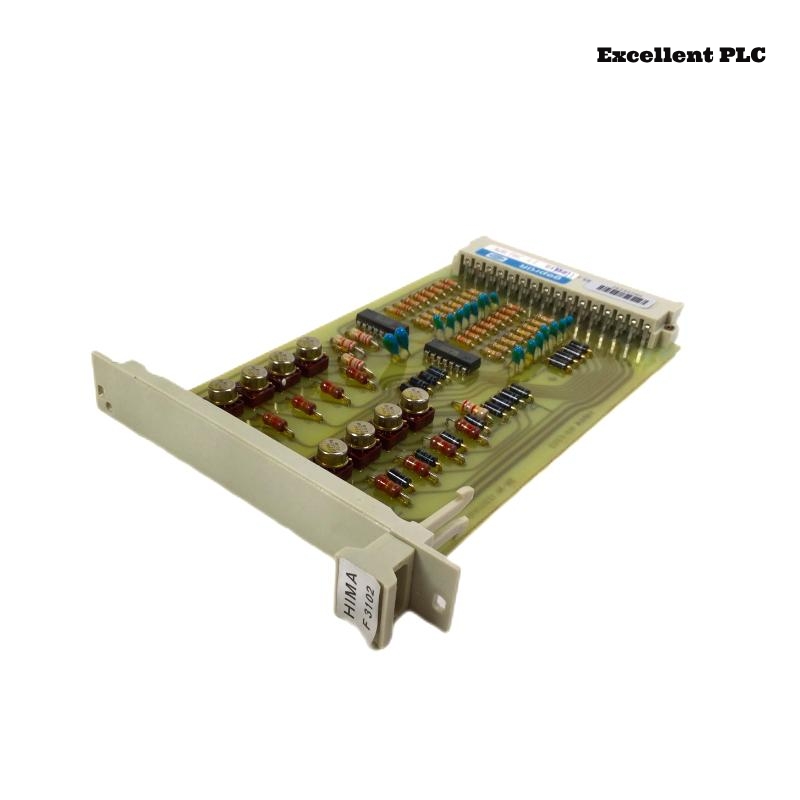
Comprehensive troubleshooting of analog output saturation and intermittent drift in HIMA F3102 buffer amplifier modules (Planar F system) caused by terminal micro-contacts, software alarm conflicts, and environmental stress. Includes detailed repair and preventive measures.
Incident Background
During continuous monitoring at a chemical processing facility, operators reported that several analog output channels on the HIMA F3102 module were saturating intermittently. Channels AO-01 and AO-03 occasionally reached full-scale output (20 mA) even when field devices demanded lower values.
The module is part of the Planar F system and is critical for stabilizing and amplifying analog signals for downstream safety controllers. The HMI displayed frequent “output over-range” warnings, while internal module LEDs remained green except for brief diagnostic flashes.
Fault Phenomena Observed
-
Analog Outputs: AO-01 and AO-03 intermittently saturated at 20 mA, regardless of PLC command signals.
-
HMI Display: Alarms appeared sporadically during batch operations, indicating “output over-range” and “signal deviation detected.”
-
Module Diagnostics: Logged “micro-contact resistance detected” and “software alarm mismatch” events.
-
Environmental Observations: Cabinet temperature rose above 48°C during peak operation, with minor condensation forming near input/output terminals.
The anomalies were highly sporadic, making replication difficult during maintenance testing.
Root Cause Analysis
The investigation revealed multiple contributing factors:
-
Terminal Micro-Contacts: Minor oxidation and slight looseness on output terminals caused intermittent high-resistance contacts. Under high-current operation, this resulted in temporary voltage drops interpreted by the module as output saturation.
-
Software Alarm Logic Conflict: The Planar F system firmware included logic to trigger alarms when outputs deviated from commanded values. Due to terminal micro-contact fluctuations, the software intermittently misinterpreted normal variations as over-range events, generating false alarms.
-
Analog Drift Due to Component Aging: Internal resistors and amplifiers exhibited slight drift from extended operation, making the module more sensitive to terminal inconsistencies.
-
Environmental Factors: Elevated temperature and intermittent humidity increased contact resistance and amplified output instability.
The fault was therefore multi-factorial, with hardware, software, and environmental elements combining to produce intermittent saturation and false alarms.
Step-by-Step Troubleshooting and Repair
1. Power Isolation and Terminal Inspection
-
Shut down cabinet power and isolate affected AO channels.
-
Inspect terminals for oxidation, discoloration, or looseness.
-
Clean with isopropyl alcohol and retighten screws to manufacturer-recommended torque.
2. Module Calibration
-
Connect to the module using Planar F configuration software.
-
Backup existing calibration and configuration:
EXPORT_CALIBRATION>FILE=F3102_AO_BACKUP.CAL
-
Perform calibration for affected analog outputs:
CALIBRATE>CHANNELS=AO-01,AO-03
REFERENCE=4-20mA
SAVE
-
Verify that outputs respond accurately to test commands.
3. Software Alarm Logic Adjustment
-
Review alarm threshold settings to prevent false triggering due to minor voltage fluctuations:
THRESHOLD=±2%
SAVE
RESET_MODULE
-
Confirm that alarms now reflect true output deviations rather than micro-contact-induced anomalies.
4. Environmental Mitigation
-
Ensure cabinet ventilation is clear and operational.
-
Maintain temperature below 45°C and relative humidity below 55%.
-
Install localized shields or routing for wiring to minimize heat exposure and moisture condensation.
5. Validation and Monitoring
-
Restore power and monitor analog outputs over multiple batch cycles.
-
Verify HMI displays, alarms, and module diagnostics for stability.
-
Document calibration, alarm settings, and environmental conditions for future reference.
After completing these corrective actions, analog outputs stabilized, alarms ceased, and the HMI readings accurately reflected PLC commands.
Preventive Recommendations
-
Schedule periodic terminal inspections to prevent oxidation and micro-contact resistance.
-
Conduct regular calibration audits for analog outputs.
-
Align software alarm thresholds with expected output tolerances and environmental conditions.
-
Monitor cabinet temperature and humidity continuously.
-
Maintain logs of calibration, environmental conditions, and firmware versions to ensure traceability.
This incident demonstrates that intermittent analog output saturation and false alarms can result from a combination of hardware contact issues, software logic conflicts, component aging, and environmental stress. Systematic inspection, calibration, and configuration adjustment ensure reliable HIMA F3102 module performance in critical applications.