 Excellent PLC


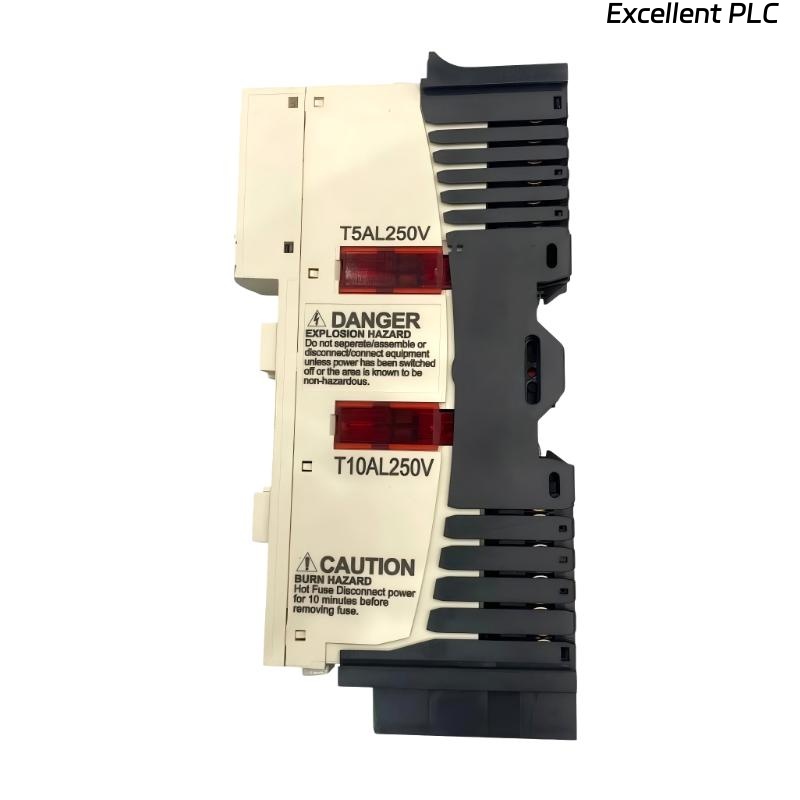
I first encountered solder joint issues on a Schneider STBPDT3100K Standard Power Distribution Kit in a system that had been running reliably for years. There were no dramatic failures, no burnt smell, no obvious alarms—just a pattern of intermittent power-related anomalies that refused to stay consistent.
That inconsistency turned out to be the most valuable clue.
The Symptoms Were Electrical, but the Root Cause Was Mechanical
At the system level, the symptoms looked like unstable power distribution:
-
I/O modules dropping offline briefly
-
diagnostics clearing themselves after restart
-
no repeatable fault location
Nothing pointed directly at the STBPDT3100K at first. Voltage measurements were mostly within tolerance, and replacing downstream modules did not change the behavior.
What raised suspicion was that the issues worsened after cabinet door movement or during temperature changes.
That is almost always a sign to stop looking at logic and start looking at physics.
Visual Inspection Was Not Enough
The STBPDT3100K showed no obvious damage.
No discoloration, no cracked components, no loose terminals.
However, under magnification and proper lighting, several solder joints—particularly on high-current distribution points—showed classic signs of fatigue:
-
dull, grainy solder surfaces
-
micro-cracks around the pin interface
-
slight ring fractures invisible to the naked eye
These were not manufacturing defects.
They were long-term stress failures, likely caused by thermal cycling and mechanical vibration.
Why These Solder Joints Failed
In hindsight, the failure mechanism was predictable.
The STBPDT3100K handles continuous current distribution. Over years of operation, the board experienced:
-
repeated heat-up and cool-down cycles
-
cabinet vibration from nearby equipment
-
slight mechanical stress from connected wiring
Solder joints, especially on heavier terminals, absorbed that stress.
Eventually, electrical continuity became conditional rather than guaranteed.
The board still “worked”—until conditions changed.
The Repair Decision: Replace or Repair
Replacement was the clean solution, but not the fast one.
Given the circumstances, a controlled solder joint repair was chosen, with full understanding that:
-
this was a restoration, not a redesign
-
workmanship quality would define success
-
inspection discipline mattered more than speed
This was not a job for quick reflow with a basic iron.
How the Solder Joint Repair Was Performed
The repair focused on restoring mechanical integrity as much as electrical continuity.
Key points of the process included:
-
complete removal of old solder from affected joints
-
careful inspection of copper pads for lifting or damage
-
controlled re-soldering with proper wetting and fillet formation
-
avoiding excess heat that could weaken adjacent joints
Every repaired joint was treated as a structural connection, not just an electrical one.
After repair, the board was allowed to cool naturally—no forced cooling, no shortcuts.
Post-Repair Validation Was Critical
Reinstallation alone did not prove success.
The system was observed through:
-
multiple cold and warm startups
-
cabinet door movement tests
-
load variation over time
Only after the power distribution behavior stabilized under all these conditions was the repair considered successful.
In this case, the repaired STBPDT3100K returned to stable operation and remained so long after.
What This Experience Reinforced
This repair reinforced several truths that experienced engineers already know but sometimes forget:
-
intermittent power issues often originate in solder, not silicon
-
visual inspection without magnification is unreliable
-
solder joints age, even in well-designed systems
-
movement and temperature reveal what steady-state hides
Most importantly, it reminded me that power distribution hardware ages mechanically before it fails electrically.