 Excellent PLC


By Andrew Collins – Senior DCS Commissioning Engineer
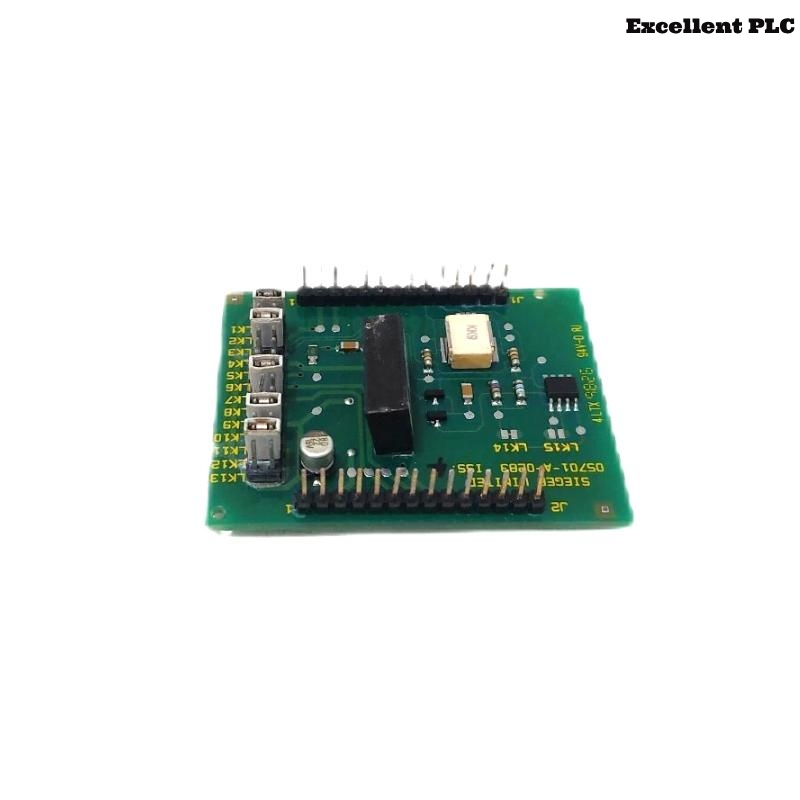
Single-channel control cards don’t usually get much attention. They sit quietly in the rack, execute one task, and most of the time, they just work. That’s exactly why this failure involving a Honeywell 05701-A-0283 single channel control card took longer than it should have.
Nothing failed loudly.
Nothing tripped immediately.
The process just… drifted.
What Operators Noticed First
-
A control loop became sluggish
-
Output responded, but several seconds late
-
No hardware fault alarms in the DCS
-
No I/O communication errors
From the console, everything looked “healthy.” In the field, it wasn’t.
The System Context
-
Honeywell DCS with mixed analog and discrete control
-
05701-A-0283 handling a critical analog output loop
-
Loop controlling a valve with tight response requirements
-
Card installed for over 8 years, never replaced
No recent configuration changes. No maintenance activity. Just gradual degradation.
Initial Checks (And Why They Failed)
We checked the obvious:
-
Field wiring continuity – OK
-
Output signal range – within limits
-
Valve actuator – calibrated and responsive
-
Power supply rails – stable
Every quick test said: “Nothing wrong.”
That’s when we stopped testing hardware and started watching timing.
The Hidden Symptom
We logged the loop execution time at the controller level:
The control logic executed on time.
The output didn’t update on time.
That pointed directly to the single channel control card itself.
Root Cause
The 05701-A-0283 control card had developed internal component aging, specifically:
-
Output driver components showing increased response latency
-
Internal buffering no longer clearing within one scan cycle
-
No outright failure, just slow signal propagation
This type of degradation does not trigger diagnostics. The card still functions — just not fast enough.
Why This Is Dangerous
Single-channel cards don’t fail “on/off.”
They fail quietly.
In this case:
-
Control loop stability degraded
-
Valve oscillation risk increased
-
Process efficiency dropped
-
Operators compensated manually, masking the real problem
Left long enough, this kind of failure becomes a process incident, not a hardware one.
Confirmation Test
We temporarily reassigned the loop to a spare control card:
Result:
-
Output delay disappeared immediately
-
Loop response returned to normal
-
No logic changes required
That confirmed it: the card was aging out.
Corrective Action
-
Replaced the 05701-A-0283 control card
-
Verified loop timing under dynamic conditions
-
Updated maintenance records with installation date
-
Flagged similar-age cards for proactive replacement
No software changes. No field rewiring. Just hardware lifecycle management.
Practical Lessons Learned
-
Aging electronics don’t always fail hard
-
Timing anomalies are often hardware-related, not logic-related
-
Single-channel cards deserve lifecycle tracking just like CPUs
-
If a loop “feels slow” but looks normal, suspect output hardware
Final Thought
The Honeywell 05701-A-0283 didn’t stop working.
It just stopped working fast enough.
And in control systems, that distinction matters more than most people realize.
— Andrew Collins