 Excellent PLC


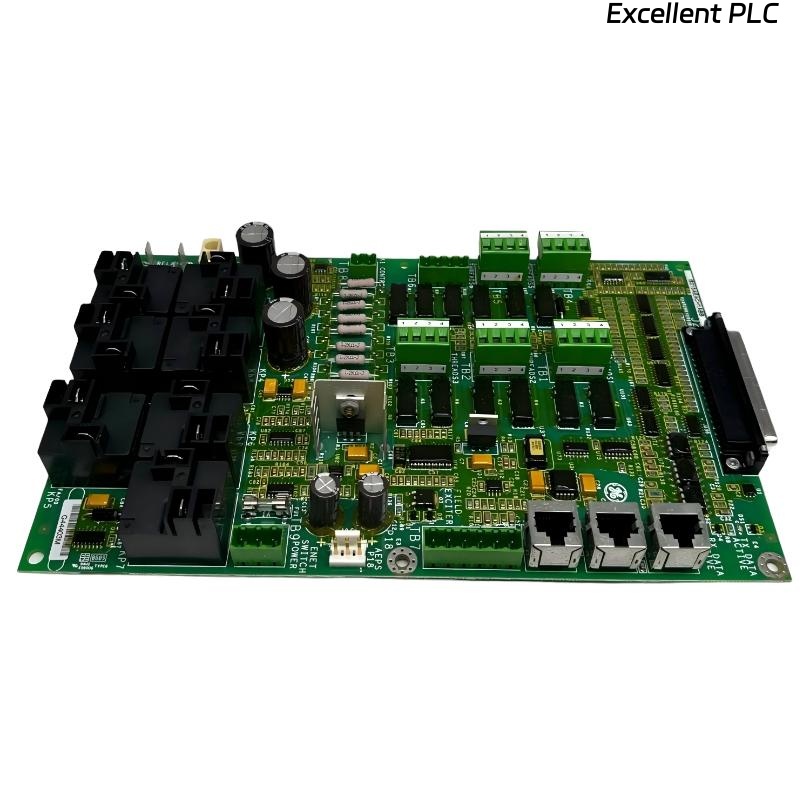
The ABB 07 AA 61 R1 (GJV3074366R1) analog output module is typically deployed in systems where several analog actuators are driven in parallel logic.
In these environments, engineers often assume that identical channels behave identically.
In reality, this assumption is where most long-term problems begin.
How Channel Problems Actually Reveal Themselves
Very few projects experience a clean “channel failed” event.
Instead, what appears is gradual divergence:
-
Two valves commanded to the same value drift apart
-
One output reaches saturation earlier than others
-
Response time varies between channels under load
-
Outputs match during cold start but diverge after hours of operation
Because each channel still “works,” the module is rarely suspected.
Why Multi-Channel AO Modules Age Unevenly
From teardown and long-term field observation, several factors explain this behavior:
-
Uneven thermal distribution across the module
-
Slight differences in output driver stress history
-
Load impedance differences that were never documented
-
Cabinet airflow favoring one side of the rack
The 07 AA 61 R1 does not internally normalize channel behavior over time.
Output Saturation Is Often Misunderstood
When a channel approaches its electrical limit, it does not always fault.
Instead, it flattens.
Engineers interpret this as:
-
valve stiction
-
actuator calibration error
-
process nonlinearity
In reality, the output stage is already compromised.
Once saturation appears, long-term reliability is already lost.
What to Check Before Blaming the Process
Experienced engineers always verify:
-
Each channel’s load impedance individually
-
That no channel shares return paths with others
-
That inductive loads have proper suppression
-
That cabinet temperature remains uniform
A single overloaded channel can age faster and distort the entire control narrative.
Installation Notes That Affect Channel Consistency
During installation or replacement of a 07 AA 61 R1:
-
Power down the I/O rack fully
-
Insert the module without twisting force
-
Tighten terminals in sequence, not randomly
-
Keep high-current wiring physically separated
-
Label channel-to-actuator mapping clearly
Poor installation practices amplify channel-to-channel divergence over time.
Typical Configuration Pattern (Conceptual)
Important engineering note:
“HOLD_LAST” may preserve continuity, but it also hides early channel degradation.
Channel Consistency Monitoring Logic Example
To detect imbalance early:
This simple logic often reveals issues months before operators complain.
Thermal Stress Test (Often Skipped)
After installation:
-
Run system at normal load for several hours
-
Observe output stability over temperature rise
-
Compare cold vs warm output behavior
-
Log any drift beyond engineering tolerance
Modules that only fail “when hot” are common.
Repair or Replacement Guidance
In practice:
-
Single channel drift → replace entire module
-
Output saturation under nominal load → replace
-
Terminal damage only → possible refurbishment
-
Safety-critical outputs → replacement only
Replacing just “the bad channel” is not an option.
Engineering Reality Check
Multi-channel analog output modules do not age gracefully.
They age unevenly.
Ignoring that reality leads to endless actuator tuning and unnecessary mechanical work.
The 07 AA 61 R1 behaves predictably once this is understood.