 Excellent PLC


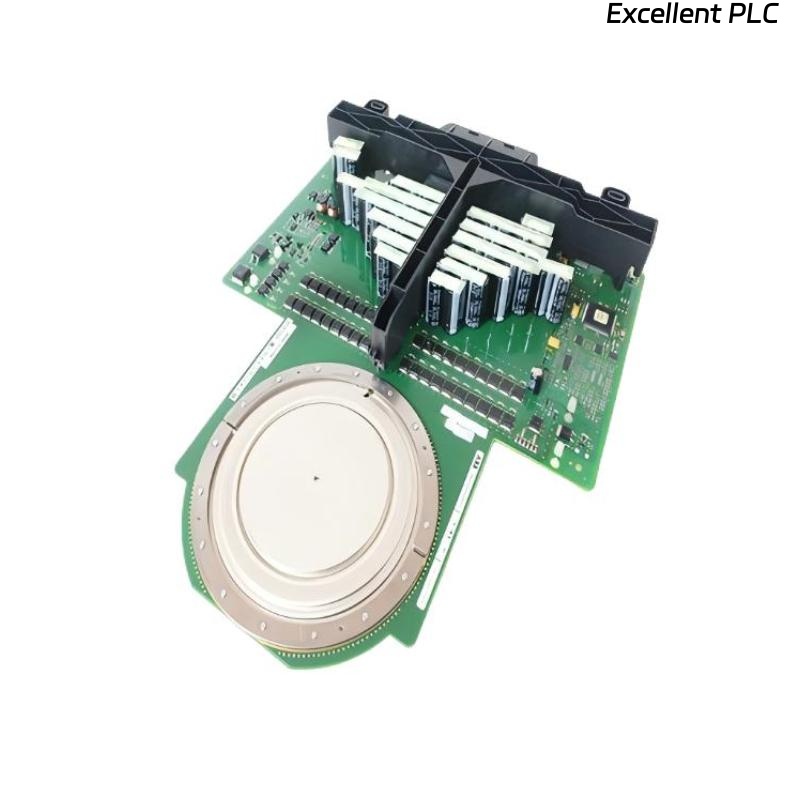
The ABB 07 AA 62 R1 (GJV3074367R1) is often installed in loops that appear electrically calm: steady signals, moderate loads, little switching.
Ironically, this is exactly where hidden failures grow unnoticed.
I’ve seen more long-term AO issues on “easy” loops than on demanding ones.
The Misleading Comfort of Low Load Operation
Many engineers believe that low current draw equals long module life.
With this module, the opposite is often true.
When an output channel operates near the bottom of its dynamic range for years:
-
Reference circuitry ages without visible stress
-
Output linearity degrades silently
-
Calibration assumptions stop being valid
The signal still moves. The process still responds. Accuracy is already gone.
Typical Field Complaint Pattern
No alarms. No red LEDs. No blown fuses.
Instead:
-
Setpoint changes feel “soft”
-
Small output changes no longer affect the process
-
Operators increase gain to compensate
-
Oscillation appears months later
By the time the module is suspected, the control strategy has already been distorted.
What Usually Fails Inside
From repair inspections and field swaps, recurring internal issues include:
-
Reference voltage drift
-
Aging of output buffer components
-
Subtle leakage paths caused by humidity
-
Thermal micro-stress on one side of the PCB
None of these trigger immediate diagnostics.
Installation Details That Matter More Than People Think
When installing or replacing a 07 AA 62 R1:
-
Do not reuse field wiring without inspection
-
Clean terminal contacts before reconnection
-
Avoid routing AO wiring parallel to high-frequency signals
-
Ensure consistent grounding across the I/O rack
Analog output modules remember poor wiring long after installation.
Configuration Choices That Accelerate Aging
A common configuration looks harmless:
But fast update rates on slow processes create unnecessary thermal cycling inside the output stage.
Slower update rates often extend module life without process impact.
A Simple Diagnostic Test Engineers Rarely Run
Instead of testing extremes, test resolution:
Watch whether the actuator responds consistently to each step.
Loss of resolution is an early failure signature.
Repair or Replacement: Be Honest
In controlled environments:
-
Reference drift → replacement
-
Output nonlinearity → replacement
-
Terminal-only damage → refurbishable
-
Safety-related loop → no repair, replace
Component-level repair is rarely stable long-term for this failure class.
A Practical Engineering Perspective
The 07 AA 62 R1 does not fail loudly.
It fails politely, by letting engineers believe the problem lies elsewhere.
If a loop “still works” but no longer behaves predictably, start with the analog output—not the control logic.