Excellent PLC


Product Introduction
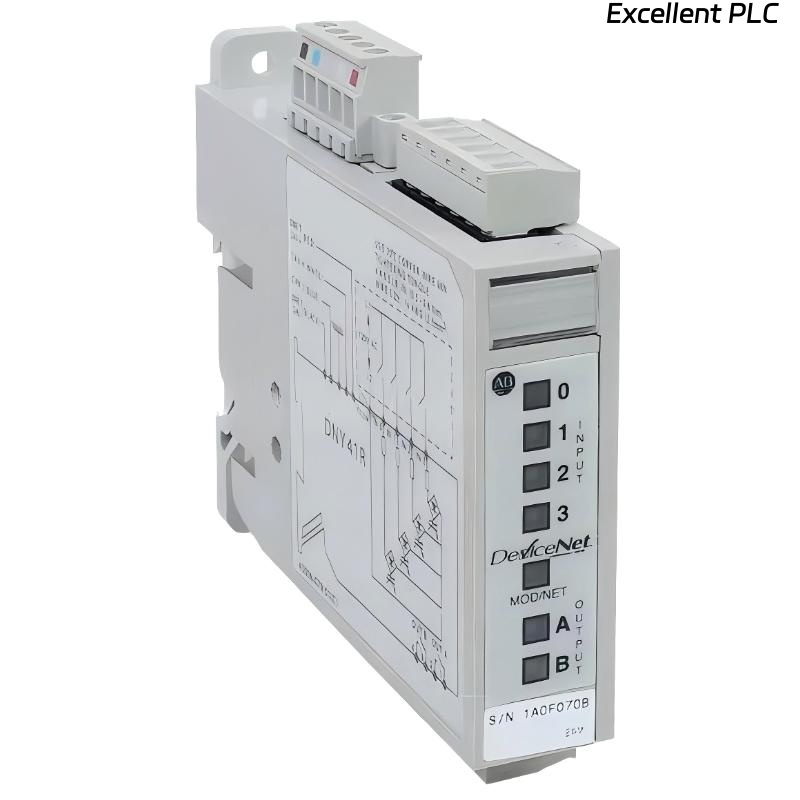
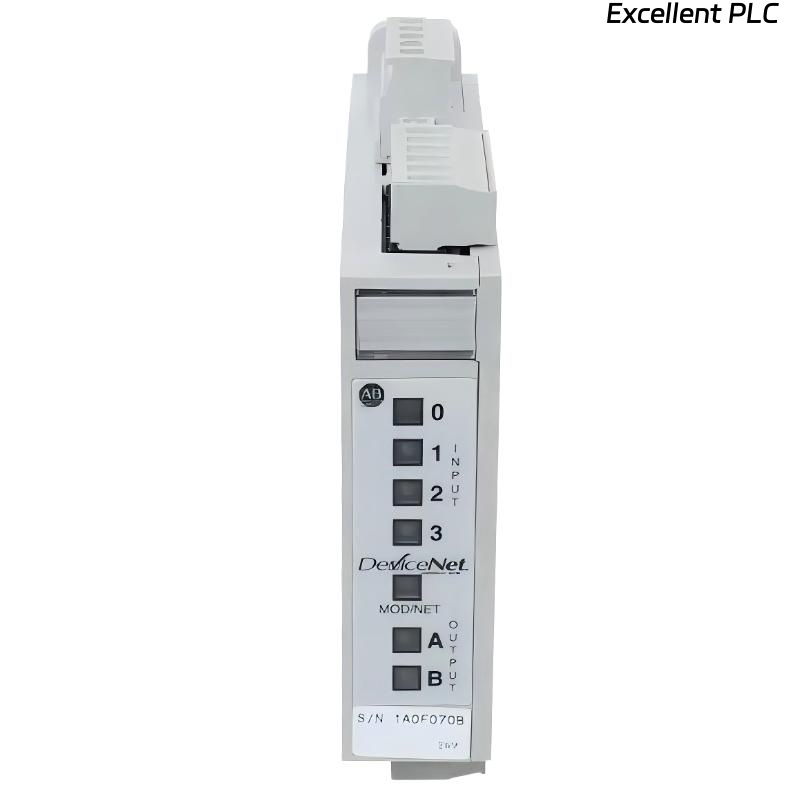
The Allen-Bradley 100-DNY41R DeviceNet Starter Auxiliary is a compact and highly functional module designed as part of the Distributed Starter System (DSS/DSA). Developed by Rockwell Automation under the Allen-Bradley product line, this unit is engineered to extend control and monitoring capabilities for motor starter applications in industrial environments.
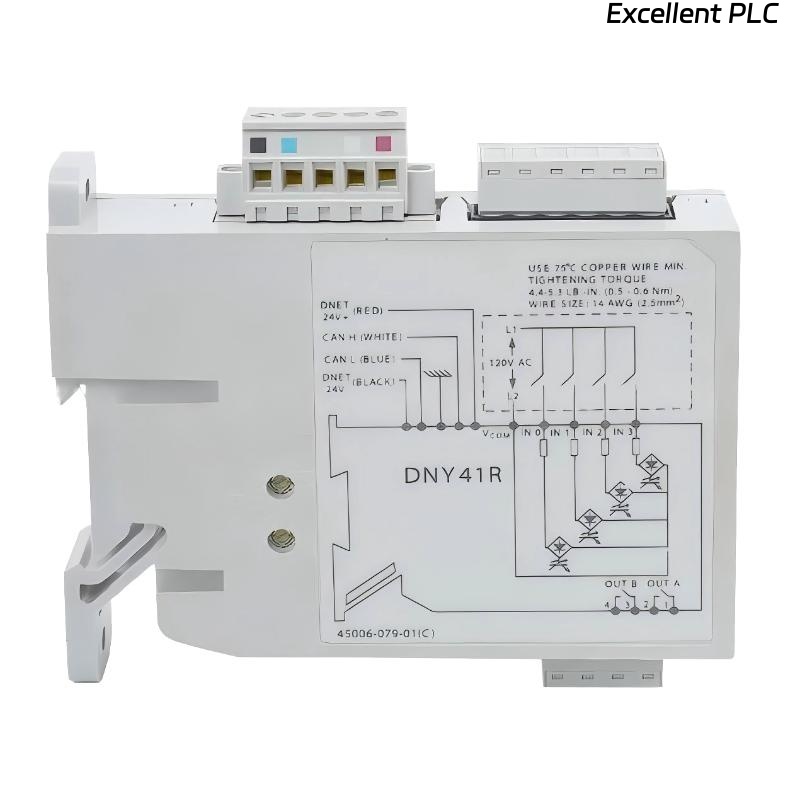
This module integrates seamlessly into DeviceNet networks, enabling efficient communication between field devices and higher-level control systems such as PLCs. With its combination of digital inputs and relay outputs, the 100-DNY41R serves as an interface layer, allowing operators to monitor field signals and execute control commands reliably.
The design focuses on compactness, ease of installation, and robust operation, making it suitable for distributed control architectures where space optimization and modular expansion are essential.
Product Specifications
| Parameter | Description |
|---|---|
| Product Model | Allen-Bradley 100-DNY41R |
| Series | Distributed Starter Auxiliary (DSA) |
| Communication Protocol | DeviceNet |
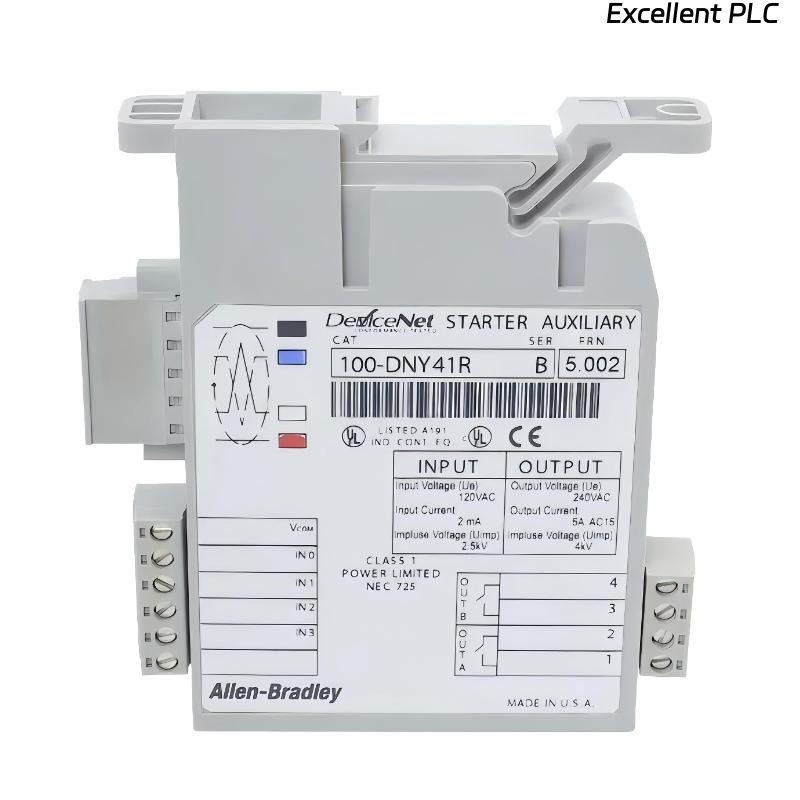
| Input Voltage | 120 VAC |
| Output Voltage | 240 VAC |
| Digital Inputs | 4 × 120V AC inputs |
| Relay Outputs | 2 × relay outputs (250V rated) |
| Mounting Type | DIN rail mountable |
| Function Type | Starter auxiliary / I/O expansion |
| Operating Mode | Distributed control via network |
| Protection Level | Industrial-grade design (panel installation) |
| Dimensions | 114.32 × 22.5 × 110 mm |
| Weight | 0.16 kg |
Applications
• Motor starter control systems
Used as an auxiliary module within distributed motor starter systems, enabling remote control and monitoring of motor operations.
• Industrial automation lines
Ideal for integration into automated production lines where DeviceNet communication is required for real-time signal exchange.
• Process control environments
Supports signal acquisition and relay control in industries such as oil & gas, chemical processing, and water treatment.
• Distributed I/O systems
Acts as a decentralized I/O interface, reducing wiring complexity and improving system scalability.
• Panel-based control systems
Commonly installed in control cabinets where space-saving and modular design are critical.
Advantages
• Compact and space-saving design
Slim housing allows installation in high-density control panels without sacrificing functionality.
• Seamless DeviceNet integration
Ensures reliable communication with PLCs and other networked devices, reducing configuration complexity.
• Flexible I/O configuration
Combination of AC inputs and relay outputs provides versatility for various control scenarios.
• Easy installation and maintenance
DIN rail mounting and modular structure simplify installation and replacement procedures.
• High reliability in industrial environments
Designed to withstand electrical noise and harsh operating conditions typical of industrial sites.
• Reduced wiring complexity
Distributed architecture minimizes traditional point-to-point wiring, improving efficiency and reducing installation time.