 Excellent PLC


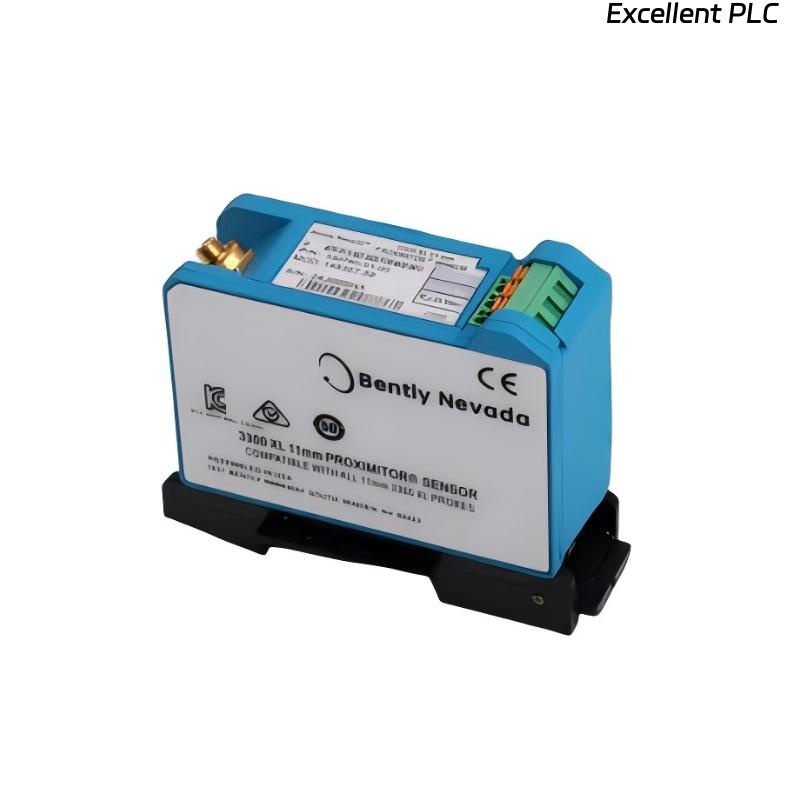
I recently came across a Bently Nevada 128093-00-08-05-02-05 proximity sensor module in the field that had a visibly damaged housing. The module was still powering up, but I wasn’t sure if the crack in the enclosure would affect its performance. Here’s what I found from hands-on experience.
Step 1: Initial Inspection
-
First, I powered down the monitoring system and removed the module from the rack.
-
I examined the housing closely: the crack was minor, but located near the connector end.
-
Checked for signs of moisture ingress, corrosion, or debris inside.
Field note: Even a small crack can allow humidity or dust to reach the PCB over time, potentially causing intermittent faults.
Step 2: Electrical Verification
-
Measured supply voltage at the module terminals — it was within spec.
-
Tested signal output from the connected proximity sensor — readings were normal.
-
Checked LED indicators — power and fault LEDs behaved as expected.
Insight: At this point, a housing crack didn’t immediately impact module function, but risk remained.
Step 3: Environmental Considerations
-
Modules in high-vibration, high-humidity, or high-temperature locations are more susceptible to failure if housing is compromised.
-
For this particular module, the crack was not exposed to direct water or dust, but prolonged exposure could accelerate PCB corrosion or signal degradation.
Step 4: Temporary Mitigation
-
Applied protective epoxy and sealed the crack carefully to prevent moisture ingress.
-
Avoided using excessive mechanical stress or heat during sealing.
-
Reinstalled the module and ran the monitoring system, logging readings over several hours to ensure stability.
Field tip: Small housing cracks can often be mitigated if properly sealed, but long-term replacement is recommended.
Step 5: Long-Term Recommendation
-
Even if the module works now, Bently Nevada recommends replacing physically damaged modules to ensure reliability.
-
Document the issue, repair method (if any), and plan for replacement during next maintenance window.
-
Inspect surrounding modules and cabling — sometimes housing cracks result from improper mounting or stress during installation.
Field Takeaways
-
Minor housing cracks don’t always cause immediate failure, but they are a risk factor for future faults.
-
Proactive sealing and logging of readings can help mitigate risk temporarily.
-
For mission-critical monitoring systems, replacement is the safest long-term solution.
“A crack in the housing may look cosmetic, but in high-speed turbine monitoring, even a small point of moisture ingress can turn into a major headache.”