 Excellent PLC


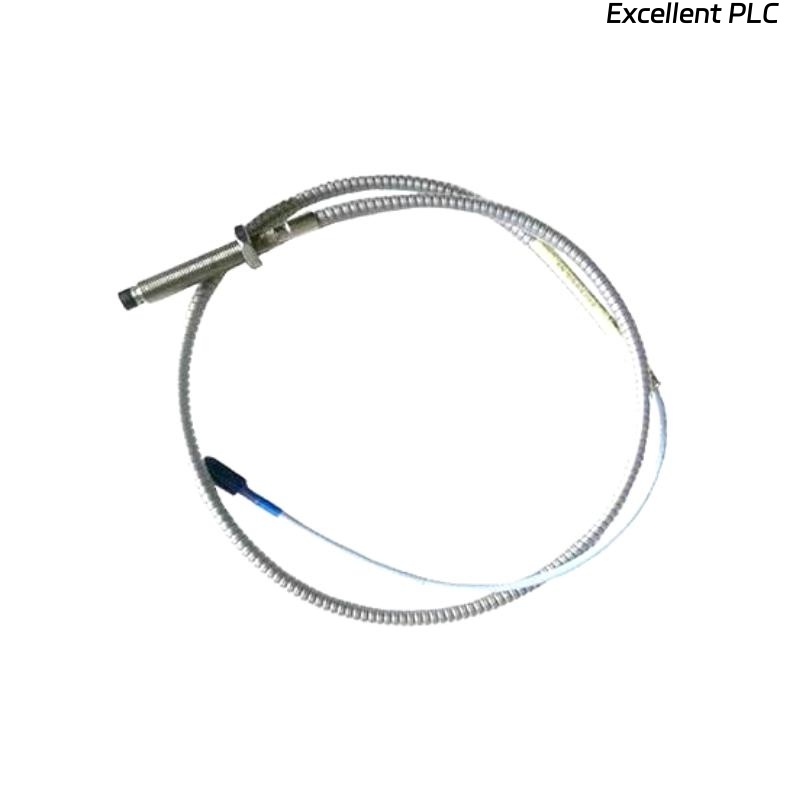
The 109548-01 (P1407030-00100) proximity probe in the Bently Nevada 3300XL NSv series is designed for high-accuracy shaft vibration monitoring on critical rotating assets such as steam turbines, compressors and gearboxes. While the probe hardware is extremely robust, the signal chain between the probe, extension cable, and proximitor is vulnerable to electromagnetic interference (EMI) if shielding integrity is compromised.
This case examines a field failure where damaged cable shielding caused unstable vibration readings and noise spikes, ultimately leading to unnecessary alarms and reduced equipment availability.
1. Field Symptoms
Operators and maintenance engineers reported the following:
-
Vibration trending values drifting ±20–40% without mechanical justification
-
Sharp noise spikes visible in waveform data
-
No corresponding increase in bearing temperature or process load
-
Protection system issuing intermittent “High Vibration” alarms
-
Problem intensified during nearby welding and motor start-ups
These behaviors are extremely indicative of EMI ingress into the signal circuit.
2. System Context
| Component | Specification |
|---|---|
| Probe | 109548-01 (NSv) |
| Extension Cable | Standard 3300XL type |
| Proximitor | 3300XL API670 compatible |
| Monitoring Rack | Bently 3500/42M |
| Asset Type | 18 MW steam turbine |
| Environment | High electrical noise (e.g., VFDs, welding equipment, MCCs) |
The turbine hall featured multiple high-current equipment, making cable shielding integrity critical for signal stability.
3. Diagnostic Process
3.1 Waveform & Spectrum Review
Collected from the 3500 rack via System 1® software:
-
Broadband noise layer visible in time waveform
-
No dominant 1× or 2× shaft speed component change
-
No instability in oil film dynamics
-
Spectrum noise floor elevated by ~10 dB
→ Strong indication of electronic noise, not mechanical vibration.
3.2 Physical Cable Inspection
Inspection findings:
-
Probe extension cable outer jacket partially abraded
-
Shield braid exposed and oxidized
-
Shield termination at junction box slightly loose
-
Cable routed next to VFD output cable feeding condensate pump
This created ideal conditions for EMI coupling.
3.3 Electrical Verification
Using a DMM and insulation meter:
| Test | Result |
|---|---|
| Shield continuity | Fail (intermittent open) |
| Shield resistance to ground | > 25 ohms (should be <1 ohm) |
| Bias voltage at proximitor | Normal (-12.9 VDC) |
| Loop resistance | Within spec |
Bias voltage normal meant probe itself was healthy, isolating failure to cable shielding.
4. Root Cause Analysis
The root causes were identified as:
✔ Shield abrasion due to poor cable routing
-
Cable tied against metal conduit with vibration
✔ Improper grounding / single-end shield termination failure
-
Allowed antenna-like behavior
✔ High local EMI sources
-
VFDs, starter motors, MCCs, and welding equipment
✔ Lack of shielding inspection in preventive maintenance
-
Shield integrity rarely checked in routine rounds
5. Corrective Actions
Maintenance team applied the following corrective measures:
-
Replaced extension cable
-
Ensured full shielding integrity
-
Verified terminations using continuity checker
-
-
Rerouted cable
-
Separated from VFD output cables by >300 mm
-
Used metallic tray with bonding for EMI protection
-
-
Implemented proper grounding
-
Single-point shield grounding verified
-
Eliminated floating shield segments
-
-
Post-repair validation
-
Waveform & spectrum returned to normal
-
Noise floor dropped significantly
-
No further nuisance alarms recorded for 90+ days
-
6. Preventive Recommendations
To avoid shielding-related EMI incidents, implement:
| Recommendation | Benefit |
|---|---|
| Avoid routing near VFD/motor cables | Reduces EMI coupling |
| Use shield continuity tester during PM | Identifies early failures |
| Ground shields at single termination point | Prevents ground loops |
| Repair damaged jackets immediately | Prevents shield corrosion |
| Maintain ≥ 200–400 mm separation | Complies with API & OEM best practices |
| Use metal conduit/tray bonding | Adds EMC protection |
7. Key Takeaways
-
EMI-induced failures frequently mimic true vibration faults.
-
Shield integrity is as important as probe calibration.
-
Cable routing and grounding practices directly affect API 670 compliance.
-
A $150 cable failure can trigger false trips costing tens of thousands.
Conclusion
The Bently Nevada 109548-01 NSv probe itself remains highly reliable under harsh industrial conditions, but signal chain shielding integrity is critical for maintaining accurate vibration data. Proper routing, shielding, and grounding are essential for reducing EMI noise and maintaining machinery protection reliability.