 Excellent PLC


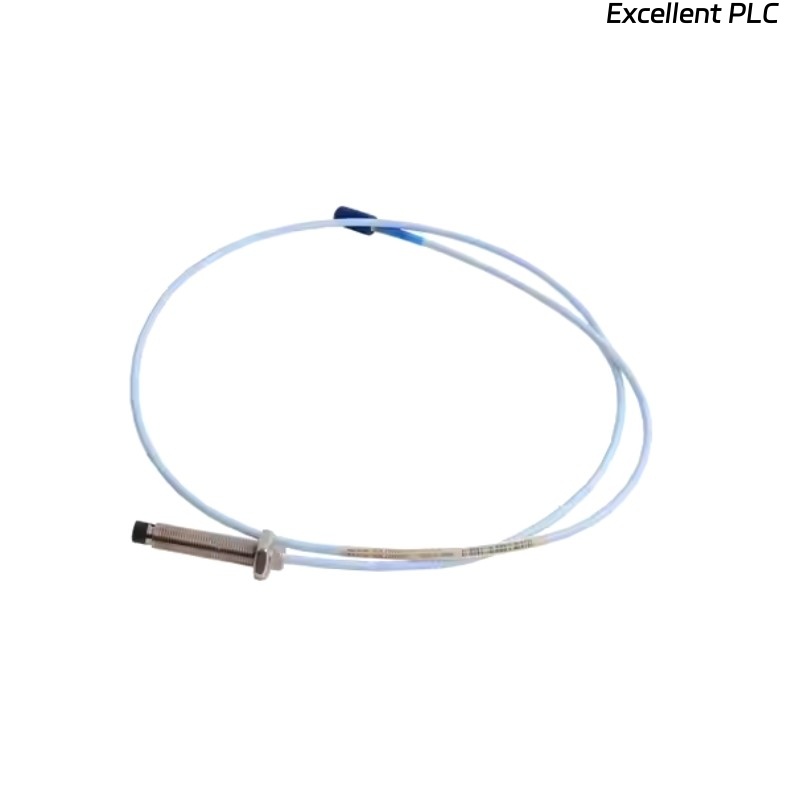
The Bently Nevada 109548-01 / P1407030-00100 (3300XL NSv) proximity probe is widely deployed on steam turbines, compressors, and high-speed rotating machinery for shaft vibration and radial position measurements. Although the probe’s sensing technology is highly reliable, mechanical mounting integrity is crucial for accurate readings. This report documents a field case where probe mounting looseness led to misleading vibration signatures and false protection alarms.
1. Field Symptom Summary
Operators and reliability engineers identified the following unusual behaviors:
-
Vibration trending exhibited sudden step-increases
-
Shaft position readings drifted intermittently without load changes
-
Alarms on 3500/42M vibration cards during ramp-up
-
System 1® plots showed phase instability
-
On-site inspection revealed no mechanical degradation in bearings or rotors
Such symptoms frequently point to sensor-side mechanical looseness, not true shaft instability.
2. System Context
| Category | Details |
|---|---|
| Monitoring Hardware | 109548-01 NSv Probe + 3300XL Proximitor |
| Protection Rack | Bently Nevada 3500 |
| Machine Type | 32 MW Steam Turbine |
| Sensor Location | Radial X/Y proximity probes |
| Plant Environment | High vibration, thermal cycling |
The turbine experienced cyclic thermal expansion during daily startup/shutdown operations, which is known to cause hardware seating issues over time.
3. Diagnostic Investigation
3.1 Time Waveform & Spectrum Analysis
Using System 1® condition monitoring tools:
-
Broadband noise increased by ~6–10 mils pk-pk
-
No corresponding increase at 1×, 2×, or subsynchronous frequencies
-
Phase shift > 40° observed intermittently
-
Shaft centerline plots showed non-physical movement patterns
Interpretation: signal disturbance inconsistent with true mechanical fault.
3.2 Physical Inspection
Shutdown inspection revealed:
-
Probe locking nut was partially backed off
-
Mounting bracket exhibited minor fretting marks
-
Probe seating flange not fully engaged
-
No shaft rubs or oil-film instabilities detected
The probe was essentially moving independently of the bearing housing — a classic cause of erroneous readings.
3.3 Cross-Sensor Verification
To further isolate the issue, engineers compared:
| Sensor Type | Behavior |
|---|---|
| Proximity Probes | Instability present |
| Velocity Sensors | Stable |
| Accelerometers | Stable |
| Process Variables | Normal |
Conclusion: fault isolated to probe mounting, not machinery.
4. Root Cause Analysis
Root causes identified:
✔ Improper torque on locking nut during maintenance shutdown
✔ Thermal cycling causing progressive loosening of hardware
✔ Vibration-induced fretting between bracket and probe body
✔ Lack of mechanical verification in preventive maintenance program
This aligns with common failure modes outlined in API 670 guidelines regarding sensor mounting integrity.
5. Corrective Actions Taken
-
Mechanical Re-seating
-
Probe removed and seating surface cleaned
-
Locking nut torqued according to OEM specification
-
Anti-vibration washer added to mounting assembly
-
-
Thermal Compensation
-
Bracket alignment adjusted to minimize thermal stress
-
Verified probe clearance to rotor after warm-up
-
-
Post-Repair Signal Validation
-
Vibration baseline reduced to normal (1.8–3.1 mils pk-pk)
-
Phase stabilized within ±2° under steady operation
-
No further nuisance alarms after 120 days monitoring
-
6. Preventive Recommendations
To avoid recurrence, engineering teams should adopt:
| Recommendation | Purpose |
|---|---|
| Use calibrated torque tools | Prevents under/over tightening |
| Add anti-loosening hardware | Improves mounting robustness |
| Conduct thermal expansion audits | Prevents stress and drift |
| Perform physical checks each outage | Captures progressive loosening |
| Compare against backup sensors | Confirms measurement validity |
| Include mounting in PM checklists | Ensures high availability |
Plants following these practices report significantly fewer false vibration trips and better long-term reliability.
7. Key Technical Takeaways
-
Loose probe mounting mimics real vibration faults, leading to incorrect shutdown decisions.
-
Vibration protection systems are only as reliable as the mechanical integrity of sensor mounting.
-
Sensor-phase analysis is a powerful diagnostic tool for detecting non-mechanical vibration anomalies.
-
A simple locking nut failure can escalate into unnecessary turbine trips and high economic loss.
Conclusion
The Bently Nevada 109548-01 NSv probe remains electrically reliable in harsh industrial conditions; however, mechanical mounting precision is fundamental to obtaining accurate shaft vibration data. Proper torqueing, thermal considerations, and regular mounting inspections dramatically improve measurement reliability and reduce false alarms in API 670 compliant machine protection systems.