 Excellent PLC


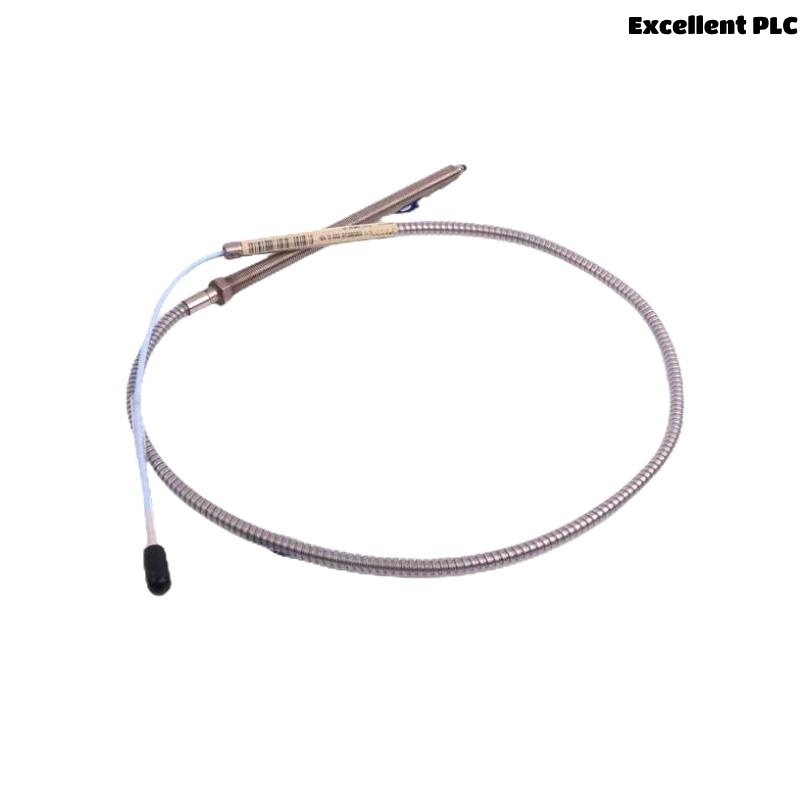
Table of Contents
- Fault Overview
- Common Fault Symptoms
- Troubleshooting Logic
- Typical Root Causes
- Diagnostic Methods
- Corrective Actions
- Real Case Study
- Troubleshooting FAQ
- Final Notes
Fault Overview
Bently Nevada 109548-01 faults are usually caused by incorrect gap setting, cable mismatch, or EMI interference rather than probe failure.
Common Fault Symptoms
- Unstable vibration waveform
- Constant high or low output voltage
- Signal drift over time
- No output signal
Troubleshooting Logic
- Check gap voltage
- Verify cable integrity
- Compare with reference measurement
- Inspect EMI environment
Typical Root Causes
- Improper probe gap setting
- Damaged extension cable
- Incorrect grounding
- Electromagnetic interference
Diagnostic Methods
  // Fault Isolation Logic
  IF Output Voltage Fixed THEN
     Check Cable or Probe;
  ELSE IF Signal Noisy THEN
     Check EMI and Grounding;
  END_IF;
- Measure DC gap voltage
- Use oscilloscope for waveform
- Check cable continuity
Corrective Actions
- Reset probe gap to correct voltage
- Replace damaged cables
- Improve grounding system
- Reroute cables away from interference
Real Case Study
In a turbine system, vibration readings were unstable and exceeded alarm limits.
- Gap voltage fluctuated between -6V and -11V
- Cable routed near high-voltage motor
After fixing gap to -9V and rerouting cable, signal stabilized and alarms disappeared.
Troubleshooting FAQ
Why is the output voltage unstable?
This is usually caused by incorrect gap setting or electromagnetic interference.
How to determine if the probe is faulty?
Check gap voltage and cable first. Probe failure is rare compared to installation issues.
What is the most common issue?
Incorrect gap adjustment, which directly affects measurement linearity.
Final Notes
Troubleshooting Bently Nevada 109548-01 requires focusing on gap control, cable integrity, and interference elimination. Most issues can be resolved without replacing the probe.