 Excellent PLC


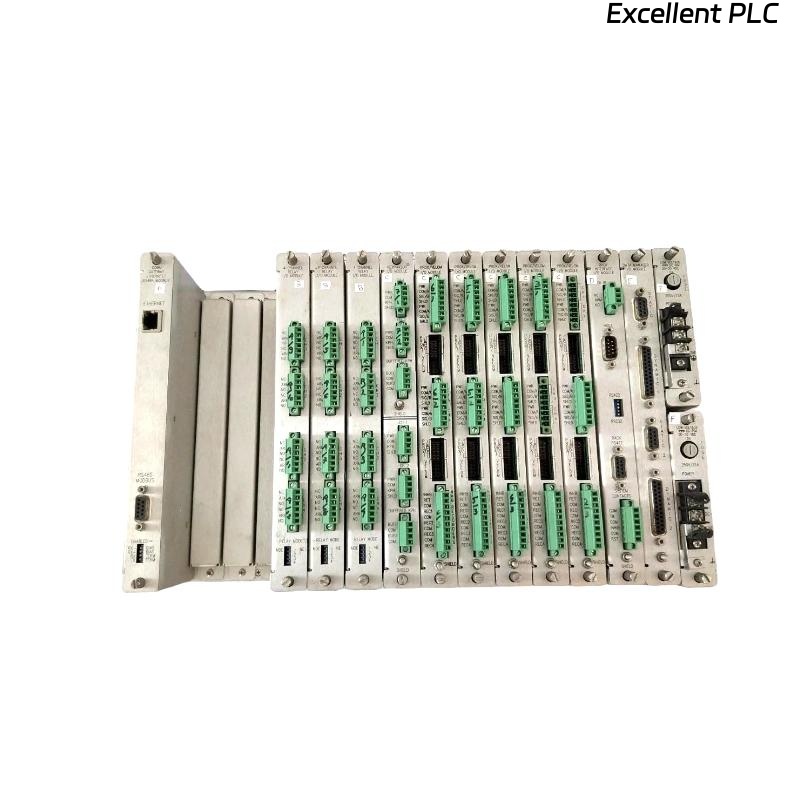
Table of Contents
- Bently Nevada 122M3369‑01 Installation Overview
- Application Scope of 122M3369‑01 Sensor
- Pre‑Installation Preparation
- Mechanical Mounting and Alignment
- Signal Wiring and Shielding
- System Integration and Configuration
- Commissioning and Signal Acceptance
- Real Field Installation Case
- Installation FAQ
- Final Notes on Installation
Bently Nevada 122M3369‑01 Installation Overview
Bently Nevada 122M3369‑01 installation errors are often a source of inaccurate machine condition data rather than sensor hardware failure. This unit—commonly part of the 3500 monitoring family—must be installed with engineering discipline to ensure reliable vibration or proximity measurement.
The focus of this Installation Guide is on the exact mechanical placement, signal integrity, and commissioning validation.
Application Scope of 122M3369‑01 Sensor
The 122M3369‑01 is generally used as a vibration/proximity transducer in rotating machinery protection systems, including:
- Steam turbines
- Gas compressors
- Pumps and motors
- Gearboxes
Its proper operation feeds critical condition monitoring and protection logic.
Pre‑Installation Preparation
- Verify sensor model and sensitivity
- Inspect mechanical integrity of mounting point
- Prepare shielded twisted‑pair signal cables
- Confirm compatibility with controller or monitor module
Engineers should also review vibration targets for the specific machine before proceeding.
Mechanical Mounting and Alignment
The mechanical mount is the foundation of accurate measurement:
- Ensure mounting surface is flat, rigid, and free of paint layers
- Use correct torque specification (typically 6–8 Nm)
- Ensure sensor axis alignment with measurement direction
  // Mounting Verification Logic
  IF Surface_Not_Flat OR Loose_Fastener THEN
     Rework_Mounting;
  END_IF;
Field installation data shows that even 0.2 mm surface deviation can generate false vibration spikes.
Signal Wiring and Shielding
- Use twisted‑pair shielded cable
- Ground shield at one end only
- Avoid routing near power or high‑current cables
In a field turbine installation, improperly grounded shielding resulted in ±2 mm/s reading noise. Correct shielding drastically improved signal quality.
System Integration and Configuration
During setup, ensure:
- Correct signal input type on controller/monitor
- Proper scaling of engineering units
- Alarm and threshold parameters aligned with machine limits
Incorrect configuration is a major cause of commissioning delays, especially when unit settings conflict with controller defaults.
Commissioning and Signal Acceptance
- Apply power and verify sensor warm‑up
- Check baseline readings at machine idle
- Compare readings with portable vibration analyzer
- Monitor signal stability over a defined period (≥30 min)
A stable signal with minimal drift (<±0.5 mm/s) indicates correct installation.
Real Field Installation Case
In one API compressor installation, vibration levels reported were consistently 5–7 mm/s higher than expected.
- Mounting surface had micro‑gaps (∼0.15 mm)
- Cable runs paralleled inverter power lines
After machining the mount and rerouting cables, the stable baseline matched reference readings at ∼1.8 mm/s.
Installation FAQ
Why are initial 122M3369‑01 readings higher than expected?
Often due to poor mechanical mounting or signal interference. Confirm surface flatness and cable routing first.
Can the sensor cable share conduit with power cables?
No. Power cables introduce EMI noise. Maintain separation and use shielded cable correctly.
How is correct installation verified?
Compare readings with a trusted portable analyzer and verify signal stability through commissioning duration.
Final Notes on Installation
Bently Nevada 122M3369‑01 installation demands rigorous engineering discipline: reliable mounting surfaces, shielded signal wiring, and correct commissioning strategy. Attention to these factors prevents false alarms and ensures accurate machinery protection operation.