 Excellent PLC


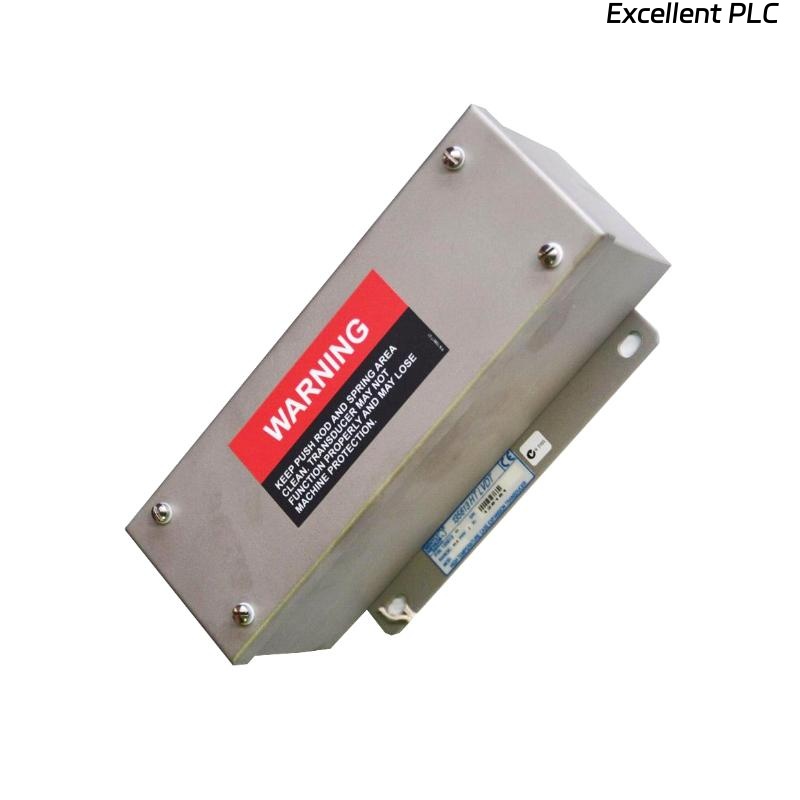
Table of Contents
- Bently Nevada 135613-03-00 Casing Expansion Sensor Installation Guide Entry
- Working Principle of Casing Expansion Sensor
- Mechanical Installation Strategy and Alignment
- Signal Wiring and System Configuration
- Commissioning and Expansion Measurement Validation
- Installation Best Practices for High Temperature Sensors
- FAQ
- Technical Summary
Bently Nevada 135613-03-00 Casing Expansion Sensor Installation Guide Entry
Bently Nevada 135613-03-00 high temperature casing expansion sensor installation errors often lead to incorrect expansion readings, especially when mechanical alignment and mounting reference points are not properly defined during setup.
This Installation Guide focuses on mechanical installation, system configuration, and commissioning practices to ensure accurate thermal expansion monitoring in turbines and large rotating equipment.
Working Principle of Casing Expansion Sensor
This sensor measures axial thermal expansion of machine casing:
- Detects displacement caused by temperature variation
- Provides critical data for turbine protection systems
- Helps prevent mechanical stress and misalignment
Accurate installation is essential for reliable fault diagnosis.
Mechanical Installation Strategy and Alignment
Mechanical installation is the most critical step:
- Install sensor bracket on stable, vibration-free structure
- Align probe tip with expansion target surface
- Ensure measurement direction matches expansion axis
- Avoid mechanical preload or stress on the sensor body
Field Insight: In one turbine project, misalignment of only 2 mm caused expansion error exceeding 20%.
Signal Wiring and System Configuration
- Use shielded cables for signal transmission
- Ground shielding at a single reference point
- Connect sensor output to monitoring module input channel
- Configure measurement range in PLC or monitoring system
Improper wiring can introduce noise and affect measurement accuracy.
Commissioning and Expansion Measurement Validation
During setup and commissioning, validate sensor performance:
- Record baseline measurement at ambient temperature
- Monitor expansion during controlled heating
- Compare data with expected thermal expansion values
IF expansion trend linear:
    installation correct

IF expansion unstable:
    check mechanical alignment
    inspect mounting rigidity

IF expansion offset:
    verify zero calibration
Real Case:
During steam turbine startup, expansion readings fluctuated irregularly. After reinforcing mounting bracket rigidity, readings stabilized from ±0.5 mm variation to ±0.05 mm.
Installation Best Practices for High Temperature Sensors
- Use high-temperature resistant mounting materials
- Ensure thermal isolation where required
- Avoid installation near vibration sources
- Perform periodic mechanical inspection
FAQ
Why is casing expansion measurement inaccurate?
This is usually due to improper mechanical alignment or unstable mounting.
Does temperature affect sensor performance?
Yes, high temperature environments require proper material and installation design.
Is calibration required after installation?
Yes, baseline calibration is essential for accurate measurement.
Technical Summary
This Installation Guide highlights that accurate installation of the Bently Nevada 135613-03-00 casing expansion sensor depends on precise mechanical alignment, stable mounting, and proper system configuration. Engineering-focused commissioning ensures reliable expansion monitoring and supports effective fault diagnosis.