 Excellent PLC


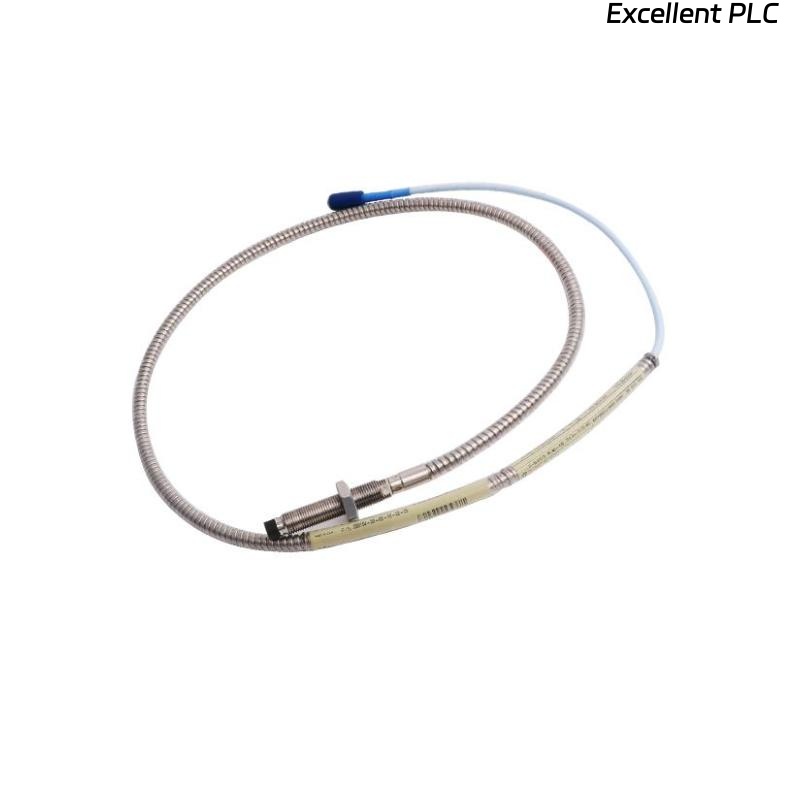
Table of Contents
- Bently Nevada 164517-025-10-02-00 Troubleshooting Entry
- Thermal and Mechanical Fault Symptoms
- Reverse Mount Fault Diagnosis Logic
- Common Causes of Probe Failure in High-Temp Systems
- Real Case: Thermal Drift in Turbine Application
- Corrective Actions and Optimization Strategy
- FAQ
- Technical Summary
Bently Nevada 164517-025-10-02-00 Troubleshooting Entry
Bently Nevada 164517-025-10-02-00 proximity probe troubleshooting often indicates that signal drift and instability are caused by thermal expansion and reverse mounting misalignment rather than sensor failure.
This guide presents a structured fault diagnosis method tailored for high-temperature and reverse mount applications.
Thermal and Mechanical Fault Symptoms
- Gradual signal drift after startup
- Gap voltage deviation during operation
- Unstable readings under load changes
- Intermittent signal loss
Symptoms are typically temperature-dependent.
Reverse Mount Fault Diagnosis Logic
IF signal drifts with temperature:
    check thermal expansion compensation
    verify initial gap setting

IF unstable readings:
    inspect mounting rigidity
    check vibration influence

IF voltage deviation:
    re-measure gap under operating conditions

IF no signal:
    verify complete signal chain
    test probe continuity
This logic supports efficient troubleshooting in complex installations.
Common Causes of Probe Failure in High-Temp Systems
- Incorrect gap setting without thermal compensation
- Mechanical stress from reverse mounting
- Loose installation under vibration
- Cable or connector degradation
Real Case: Thermal Drift in Turbine Application
In a turbine monitoring system, vibration readings increased gradually after reaching operating temperature.
Analysis:
- Gap voltage shifted from -8.5V (cold) to -5.5V (hot)
- No mechanical issues detected
Root Cause: Thermal expansion increased probe-to-target distance.
Solution:
- Reset cold gap to -10V
- Verified stable -8.8V during operation
Result: Signal stabilized and false alarms eliminated.
Corrective Actions and Optimization Strategy
- Adjust installation gap considering thermal effects
- Reinforce mechanical mounting
- Validate system under real operating conditions
- Inspect and maintain cable connections
Proper troubleshooting ensures long-term reliability.
FAQ
Why does signal drift after startup?
Thermal expansion changes the probe gap.
How to handle reverse mounting challenges?
Ensure precise alignment and secure mounting.
Is probe replacement necessary for drift issues?
Usually not; adjustment and recalibration solve most problems.
Technical Summary
This Troubleshooting Guide demonstrates that Bently Nevada 164517-025-10-02-00 probe issues are mainly related to thermal effects, mounting conditions, and installation strategy. Accurate fault diagnosis ensures stable performance in demanding environments.