 Excellent PLC


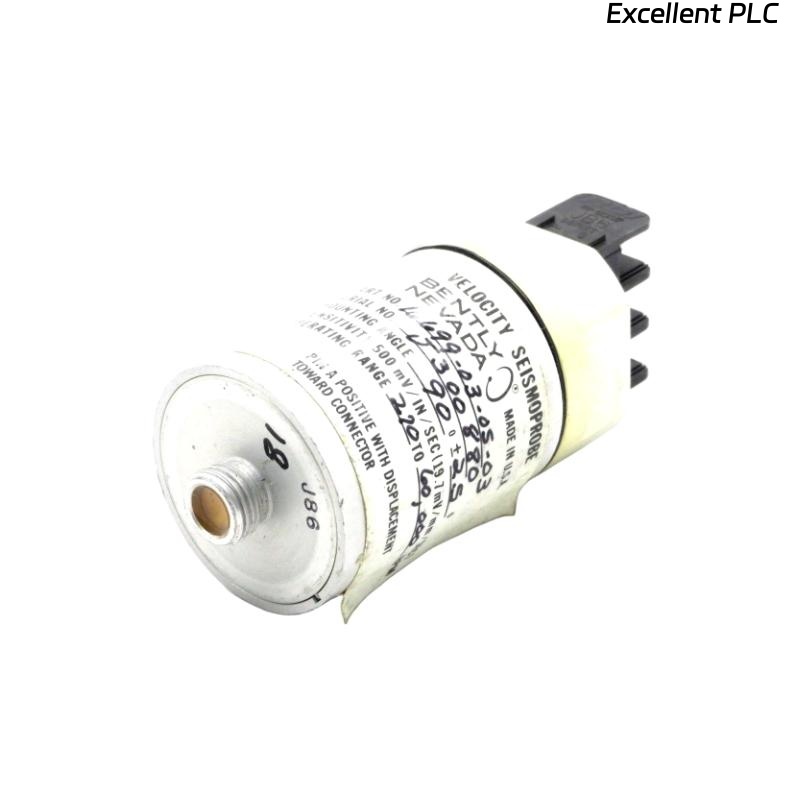
Table of Contents
- Bently Nevada 16699-03-05-03 Seismic Velocity Sensor Installation Guide Entry
- Working Principle of Seismic Velocity Sensor
- Mounting Strategy and Surface Preparation
- Sensor Orientation and Axis Alignment
- Cable Routing and Signal Integration
- Installation Validation and Signal Verification
- FAQ
- Technical Summary
Bently Nevada 16699-03-05-03 Seismic Velocity Sensor Installation Guide Entry
Bently Nevada 16699-03-05-03 seismic velocity sensor installation errors often result in low or distorted vibration readings due to improper mounting rigidity and incorrect axis alignment rather than sensor defects.
This Installation Guide explains how to achieve accurate vibration measurement through proper mounting and configuration.
Working Principle of Seismic Velocity Sensor
- Measures vibration velocity based on internal mass movement
- Generates electrical signal proportional to vibration speed
- Widely used for rotating machinery monitoring
Sensor performance depends heavily on mechanical coupling.
Mounting Strategy and Surface Preparation
- Install on solid, flat, and clean surface
- Use stud mounting for best signal transmission
- Avoid mounting on painted or uneven surfaces
- Ensure firm contact with machine structure
Engineering Insight: Poor mounting reduces signal fidelity and introduces damping.
Sensor Orientation and Axis Alignment
- Align sensor axis with primary vibration direction
- Verify orientation using machine layout drawings
- Avoid cross-axis measurement unless required
- Secure sensor to prevent rotational movement
Incorrect alignment leads to inaccurate vibration analysis.
Cable Routing and Signal Integration
- Use shielded cables to reduce electrical noise
- Avoid routing near high-voltage lines
- Connect to monitoring module or PLC input
IF weak signal:
    check mounting rigidity
    verify surface condition

IF noisy signal:
    inspect cable shielding
    check grounding

IF no signal:
    verify wiring connection
    test sensor output
Real Case:
In a pump monitoring system, vibration readings were significantly lower than expected (2 mm/s vs expected 6 mm/s). Inspection revealed sensor mounted on painted surface. After reinstallation on a machined surface, readings increased to 5.8 mm/s and matched system expectations.
Installation Validation and Signal Verification
- Compare readings with reference sensor
- Verify signal stability under load conditions
- Confirm expected vibration levels
Validation ensures accurate system operation.
FAQ
Why is the vibration reading too low?
This is often caused by poor mounting or surface damping effects.
Does sensor orientation matter?
Yes, incorrect alignment can lead to inaccurate measurements.
Can cable routing affect signal quality?
Yes, improper routing introduces electrical noise.
Technical Summary
This Installation Guide demonstrates that Bently Nevada 16699-03-05-03 seismic velocity sensor accuracy depends on proper mounting, alignment, and signal configuration. Correct installation ensures reliable vibration monitoring.