 Excellent PLC


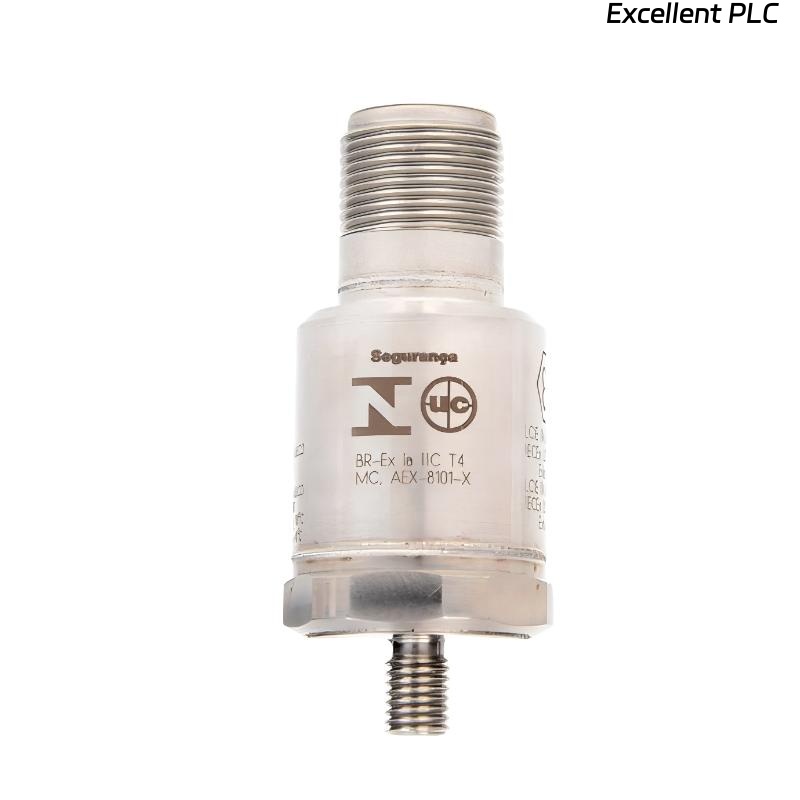
The Bently Nevada 330400-00-00 accelerometer is widely used in rotating machinery vibration monitoring, including turbines, compressors, blowers, and critical bearings. Although designed for harsh industrial environments, improper installation or excessive mechanical vibration can cause signal interference, noise, or false vibration readings, affecting condition monitoring systems such as Bentley’s 3500/3701/ Machinery Protection Systems.
1. Field Application Context
Sensor Model: Bently Nevada 330400-00-00
Monitoring System: 3500/42M Vibration Monitor + Keyphasor®
Installation: OEM-provided bracket on compressor bearing housing
Environment: Continuous operation, high vibration load, moderate temperature
The plant reported unstable vibration trends in the DCS, including sudden spikes and erratic waveform patterns.
2. Symptoms Observed in the Field
Engineers noted several abnormal behaviors:
-
Irregular vibration peaks appearing in time-waveform data
-
FFT spectrum showing random high-frequency noise bands
-
Trend logs fluctuating without correlated process conditions
-
3500 system registering false high vibration alarms
-
HMI trending with intermittent spikes above shutdown limits
Importantly, no corresponding mechanical faults were found during inspection, indicating signal-related interference rather than machine damage.
3. Root Cause Analysis
After investigation, the following contributing factors were identified:
(A) Resonance-Induced Signal Amplification
The mounting bracket had a natural frequency close to machine operating harmonics, causing resonance and amplifying vibration signal noise.
(B) Improper Mounting Torque
Insufficient mounting torque led to micro-movements between sensor and housing, introducing intermittent electrical noise into the 330400-00-00 signal output.
(C) Cable Vibration and Microphonic Noise
The acceleration sensor’s cable was inadequately clamped, allowing:
-
Fretting of cable shielding
-
Triboelectric noise due to cable insulation rubbing
-
Microphonic effects causing false signals in AC path
(D) Mechanical Vibration Transmission Path
Nearby equipment added secondary vibration, including:
-
Motor-induced harmonics
-
Structural resonance from piping
-
Imbalanced fan loads
These additional sources interfered with accurate vibration amplitude and frequency analysis.
4. Diagnostic Process Performed by Field Engineers
-
Waveform & FFT Analysis
-
Noise bands appeared above expected harmonics
-
Wideband random noise confirmed non-mechanical origin
-
-
Cable & Connector Inspection
-
Found loose connectors and unshielded cable segments
-
Detected insulation wear due to continuous vibration
-
-
Mounting Base Resonance Check
-
Modal hammer testing showed bracket resonance near operating frequency
-
-
Comparative Sensor Swap
-
Installing a known-good accelerometer confirmed the issue was installation-related
-
5. Corrective Measures Implemented
Hardware Adjustments:
✔ Replaced mounting bracket with rigid low-resonance adapter
✔ Applied manufacturer-specified mounting torque (typically 2–5 Nm depending on thread type)
✔ Re-routed cables using anti-vibration clamps and shielding
✔ Applied conductive grease to enhance signal grounding
Signal Conditioning Fixes:
✔ Installed proper grounding to reduce EMI noise
✔ Checked impedance matching on input channels
✔ Verified sensor calibration and phase angle alignment
After these corrections, vibration signals became stable, repeatable, and matched mechanical behavior observed during inspection.
6. Preventive Maintenance Recommendations
To avoid recurring issues with 330400-00-00 accelerometers:
| Action | Interval |
|---|---|
| Cable & connector inspection | Quarterly |
| Mounting torque verification | Semi-annual |
| Bracket resonance test | After equipment overhaul |
| Signal integrity waveform check | Quarterly |
| FFT baseline update | Annually |
| Cable shielding and grounding audit | Annually |
7. Engineering Lessons Learned
-
Mechanical installation quality matters as much as sensor quality
-
Cable management is critical, especially on high-vibration assets
-
Resonance must be evaluated when selecting mounting locations
-
False alarms can originate from sensors, not machines
Ignoring these factors may lead to expensive false shutdowns, unnecessary maintenance, and misleading vibration analytics.
Conclusion
The Bently Nevada 330400-00-00 accelerometer provides accurate high-frequency vibration monitoring, but improper installation combined with mechanical vibration can cause signal interference, producing noisy data and false alarms. By improving mounting, cable management, grounding, and conducting routine inspection, reliability teams can maintain accurate machine condition monitoring and prevent costly downtime.