 Excellent PLC


Incident Overview
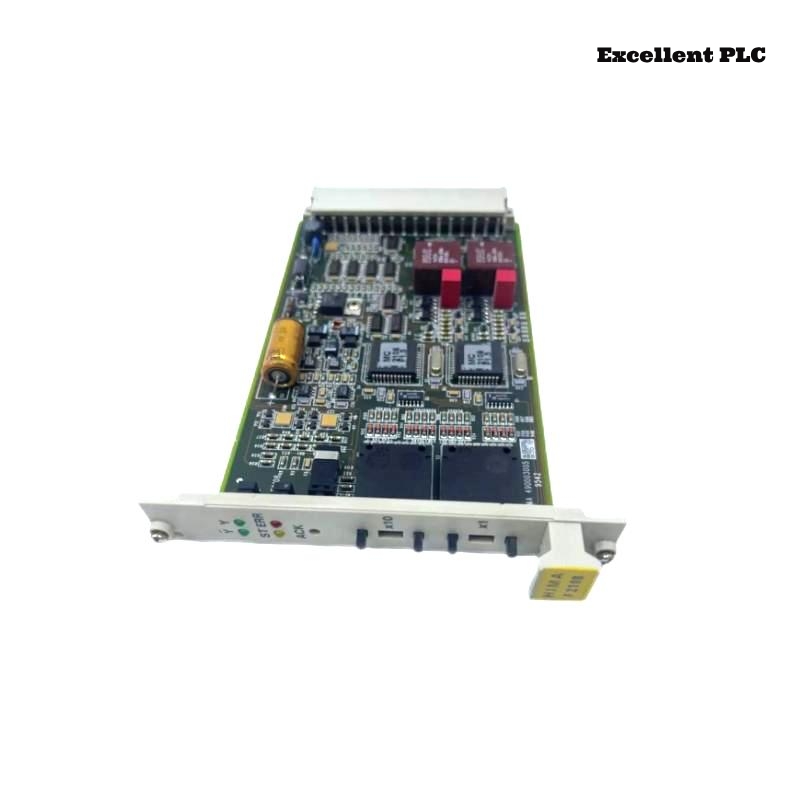
During a conveyor safety system test, the F2108 safety-related multi-function delay module showed unexpected behavior:
-
Two outputs intended for sequential activation overlapped
-
Output A triggered after configured 1 s delay
-
Output B triggered simultaneously instead of 3 s later
-
LED indicators suggested proper countdown individually, but real output timing conflicted
-
PLC logic confirmed input sequence was correct
Symptom indicated cross-channel delay interference rather than single-channel failure.
Step 1 – Verify Configuration of Multi-Channel Delays
-
Channel A: Delay 1 s
-
Channel B: Delay 3 s
-
Multi-function mode: Sequential output activation enabled
-
Cross-channel dependencies enabled in configuration
No misconfiguration detected; all parameters matched safety specification.
Step 2 – Observe Timing with Oscilloscope
1. Connect CH1 to output A terminal.
2. Connect CH2 to output B terminal.
3. Trigger module input.
4. Capture both channels simultaneously.
Findings:
-
Channel A: 1.02 s delay → correct
-
Channel B: 1.05 s delay → unexpectedly early
-
Channel B output pulse width normal, but activation window overlapped A
Step 3 – Investigate Internal Logic Dependency
F2108 internal design:
-
Multi-channel counters share common clock and debounce logic
-
Sequential mode relies on internal flag register to determine next channel activation
-
Race conditions can occur if input triggers are too close or inputs transition during debounce period
Observation: Input transitions occurred within 50 ms, causing flag register to reset prematurely → Channel B activated early.
Step 4 – Field Mitigation
-
Stagger input triggers by at least 100 ms to avoid flag race
-
Reduce wiring capacitance between channels to minimize cross-talk
-
Firmware validation: Check multi-channel sequential mode logic
-
Test multiple cycles under normal operation and peak load
After adjustment:
-
Channel A activated at 1 s
-
Channel B activated at 3 s
-
No overlap observed in 50 consecutive cycles
Step 5 – Root Cause Analysis
-
The cross-channel timing error was due to internal flag register misinterpretation caused by simultaneous input transitions and shared debounce circuitry
-
No hardware failure detected
-
Proper staggering of inputs and verifying sequential logic resolved issue
Engineering Recommendations
-
Avoid simultaneous input transitions for sequential multi-channel delays
-
Use oscilloscope to verify both input and output timing relationships
-
Document timing dependencies for commissioning
-
Consider separate modules if complex multi-channel sequences are critical
Conclusion
In the Black Horse F2108 multi-function delay module, sequential delay errors between channels can occur when inputs transition too closely together, triggering race conditions in internal logic. Understanding internal flag handling and input timing is essential to ensure safe and predictable multi-channel output sequencing in Planar F safety applications.