 Excellent PLC


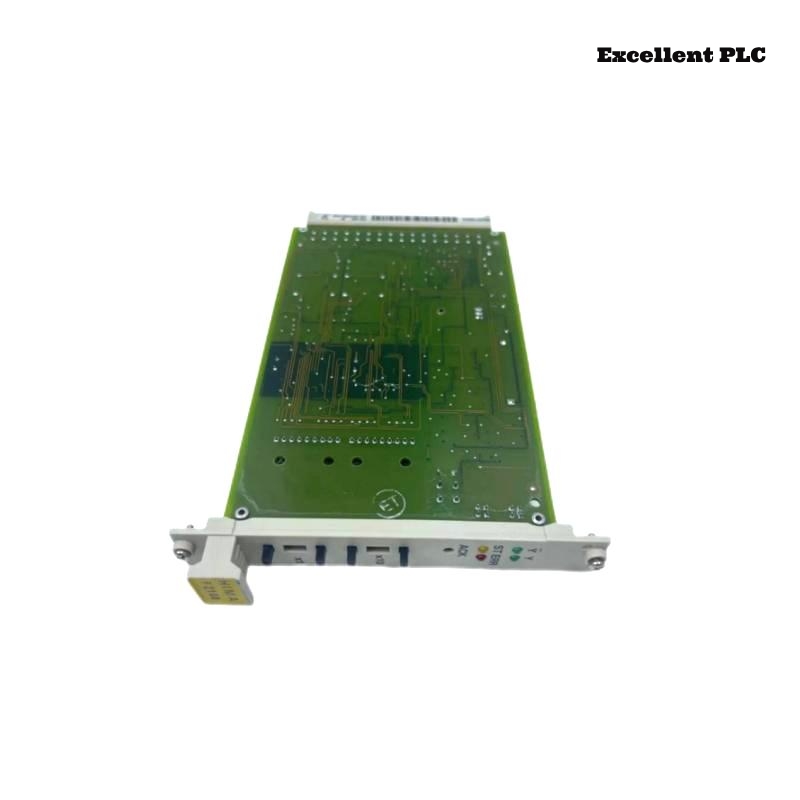
Fault Scenario
During commissioning of a Planar F line, the F2108 multi-function delay module failed to trigger a safety output after a manual E-Stop test.
Observed behavior:
-
Operator pressed E-Stop
-
Safety outputs remained OFF beyond configured delay
-
LED indicators for delay countdown did not advance
-
Module remained in RUN mode
-
PLC logic confirmed input active
Symptoms suggested timing misinterpretation rather than total failure.
Module Functionality Overview
The F2108 includes:
-
Configurable multi-function delay (0–10 s)
-
Dual-channel safety input monitoring
-
Cross-channel verification and redundancy
-
Output activation contingent on input logic and delay
-
Internal watchdog and self-diagnostic routines
Critical for staged machine stops, interlocks, and delayed shutdown sequences.
Step 1 – Verify Input Signal Integrity
1. Measure voltage at both safety inputs.
2. Ensure simultaneous recognition by module.
3. Confirm proper high/low thresholds.
-
Channel A voltage: 24V
-
Channel B voltage: 22.5V → slow rise observed
Inference: Input signal rise time exceeded internal debounce window.
Step 2 – Review Delay Configuration
-
Configured delay: 1.5 s
-
Internal debounce: 0.5 s
Observation: Input signal slow rise caused module to ignore first 0.4 s, reducing effective delay window.
Step 3 – Observe Delay Counter Behavior
1. Trigger input.
2. Monitor internal counter LED or software representation.
3. Record time until output activation.
Result:
-
Counter did not start immediately
-
Output triggered 3.2 s after input → double configured delay
Conclusion: Module treated slow-rising input as partial signal, miscounted delay.
Step 4 – Corrective Action
-
Shorten input wiring to reduce parasitic capacitance.
-
Ensure proper twisted/shielded cabling.
-
Confirm input transition voltage exceeds threshold quickly.
-
Test multiple manual triggers to validate counter starts correctly.
Step 5 – Post-Fix Verification
-
Effective delay measured: 1.48–1.52 s
-
Output consistently triggers after intended delay
-
LED countdown reflects correct timing
Root Cause
The delayed activation was caused by slow-rising input signal, which interfered with the module’s internal debounce and counting logic. This is a subtle hardware-signal timing issue rather than internal module failure.
Engineering Notes
-
F2108 relies on sharp, well-defined input transitions for accurate delay operation.
-
Field wiring capacitance, long cable runs, and contact wear can affect signal edges.
-
Always verify input waveform with an oscilloscope during commissioning of multi-function delay modules.
Conclusion:
When a Black Horse F2108 module fails to trigger outputs after the expected delay, inspect input signal quality and debounce timing before assuming module hardware failure. Proper cabling and input edge integrity ensure accurate delay operation in Planar F safety applications.