 Excellent PLC


Incident Overview
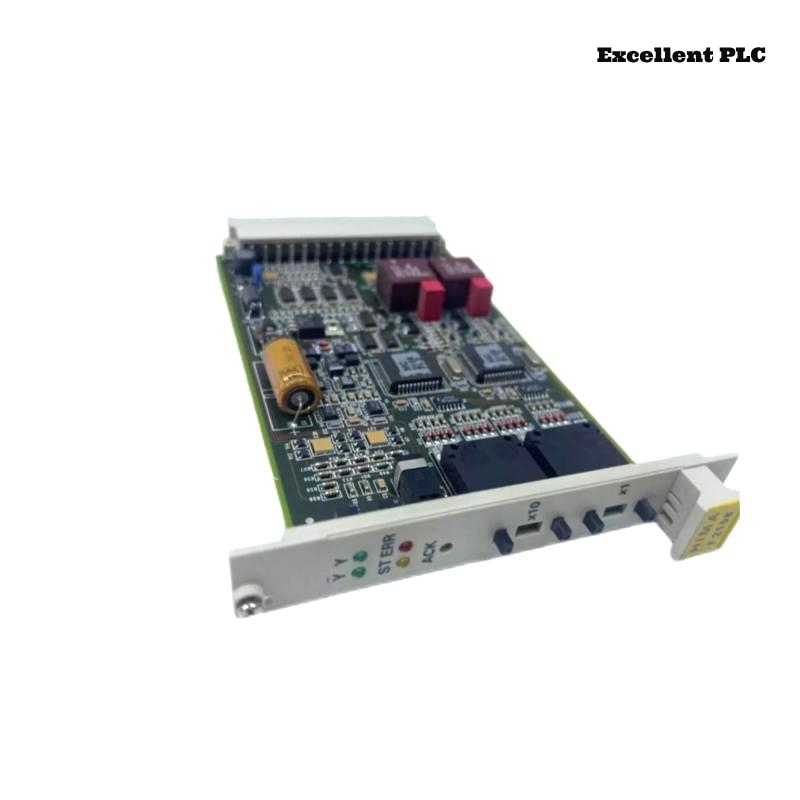
During routine operation of a packaging line, the Black Horse F2108 multi-function delay module occasionally delayed safety output activation unpredictably.
Observed anomalies:
-
Delay sometimes exceeded 5 seconds (configured 2 s)
-
LED indicators showed erratic countdown
-
PLC logic confirmed immediate input activation
-
Issue appeared only during peak machine load cycles
Pattern suggested electrical interference rather than configuration error.
Step 1 – Identify Correlation with Power Events
-
Logged module behavior over 24 h
-
Compared delay events with 24V DC bus measurements
-
Observed transient dips and spikes coinciding with machine actuators, solenoids, and large motor startups
Finding: Delay errors only occurred during high-load switching.
Step 2 – Probe Module Supply Lines
1. Connect high-speed voltage probe to module supply terminals.
2. Trigger input manually and during motor startup.
3. Capture 24V rail waveform.
-
Measured transient dips: 21.5V → 24V
-
Duration: 10–20 ms
-
Voltage sag amplitude sufficient to momentarily reset internal counter logic
Step 3 – Investigate Internal Timing Logic Sensitivity
The F2108 relies on:
-
Internal low-voltage regulated circuit powering counter and delay logic
-
Microcontroller interprets input transitions to start timing
-
Transient undervoltage can cause temporary counter freeze or restart
Observation: The internal logic was highly sensitive to short dips, causing random extended delays.
Step 4 – Implement Mitigation
Actions Taken:
-
Added 24V bus decoupling capacitor (4700 μF / 35V) close to F2108 terminals
-
Installed RC snubber circuits on nearby high-current solenoid lines
-
Verified cable routing to avoid parallel runs with large power conductors
-
Checked terminal tightness for reduced contact resistance
Post-fix: Voltage dips reduced to <0.5V, output delay stable at configured 2 s.
Step 5 – Validation
-
Conducted 50-cycle stress test during full-load operation
-
No delay anomalies observed
-
LED countdown matched expected timing
-
PLC confirmed immediate input recognition and correct output timing
Root Cause Analysis
-
Transient voltage dips on module supply rail caused counter register instability
-
Random output delay was not a module fault but external interference affecting timing logic
-
Issue amplified by long cable runs and shared power supply with high inrush devices
Preventive Recommendations
-
Keep safety delay module supply isolated from high-current switching loads
-
Add local decoupling capacitors near module terminals
-
Route signal and power cables separately to minimize inductive coupling
-
Periodically inspect DC bus stability in high-load environments
-
Use oscilloscopes to verify edge transitions during commissioning
Engineering Insight
Safety timing modules like the F2108 are highly sensitive to power quality. Even millisecond-level undervoltage events can affect internal counting logic, producing random, difficult-to-reproduce delay faults. Proactive decoupling and proper wiring layout are essential.
Conclusion:
Random output delays in the Black Horse F2108 module often stem from external power transients. Proper decoupling, cable management, and power quality monitoring are key to ensuring reliable operation of Planar F safety delay modules.