 Excellent PLC


Incident Overview
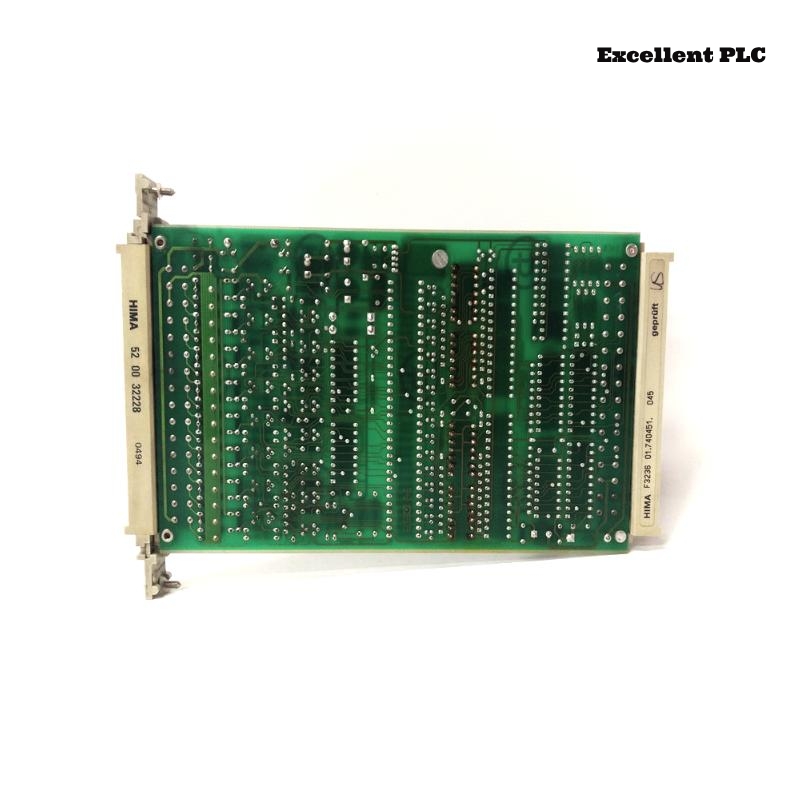
In a machine safety interlock circuit, the Black Horse F1202 Safety Relay Module generated a persistent dual-channel mismatch alarm.
Observed symptoms:
-
Safety inputs CH1 and CH2 wired correctly
-
Both emergency stop contacts physically intact
-
Fault LED indicating channel inconsistency
-
Output blocked despite no visible hardware damage
The system was designed with redundant safety contacts to comply with functional safety standards, yet the module refused to reset.
Why Dual-Channel Symmetry Matters
Safety relay modules require dual-channel inputs to:
-
Detect single contact failure
-
Prevent unsafe restart
-
Identify short circuits between channels
-
Ensure simultaneous switching
Even small timing differences or voltage imbalances can trigger a fault.
Step 1 – Measure Channel Voltage Levels
1. Measure CH1 voltage to reference.
2. Measure CH2 voltage to reference.
3. Compare voltage difference under steady state.
Results showed a slight but consistent 1.8V difference between channels.
Step 2 – Time Synchronization Test
The F1202 monitors whether both safety channels transition within an acceptable time window.
– Monitor CH1 and CH2 switching using oscilloscope.
– Observe transition delay between channels.
– Confirm delay within specified tolerance.
A 120 ms delay was detected between channel transitions.
Root Cause – Unequal Contact Wear in E-Stop Assembly
The emergency stop pushbutton contained two independent contacts.
Due to uneven mechanical wear:
-
One contact switched immediately
-
The second contact had delayed actuation
-
Timing difference exceeded internal safety tolerance
The module correctly interpreted this as unsafe asymmetry.
Controlled Replacement Verification
1. Replace emergency stop device.
2. Retest switching synchronization.
3. Confirm simultaneous channel transition.
4. Attempt manual reset.
After replacement, timing difference dropped below 10 ms, and the module reset successfully.
Other Possible Causes
If contact wear is ruled out, investigate:
-
Different wire lengths causing signal delay
-
Cross-channel leakage
-
Improper shielding
-
Ground reference instability
-
Partial short between channels
Safety modules are intentionally strict in timing validation.
Corrective Action Plan
– Replace worn dual-channel safety device.
– Ensure identical wiring path length.
– Verify shielding and grounding.
– Perform complete safety validation cycle.
Safety Compliance Best Practices
-
Replace dual-contact devices as a single unit.
-
Periodically test emergency stop timing synchronization.
-
Avoid mixing components with different mechanical response characteristics.
-
Document channel transition timing during annual safety audits.
Asymmetry faults are protective mechanisms, not malfunctions.
Conclusion
A dual-channel mismatch fault on the Black Horse F1202 Safety Relay Module is typically caused by timing differences or voltage asymmetry between redundant safety inputs. Through structured voltage comparison and timing analysis, engineers can accurately identify contact wear or wiring imbalance and restore safe operation in Planar F systems.