 Excellent PLC


Written by Jason Moore – Field Service Engineer, Rotating Machinery
This one took longer than it should have, mostly because nothing failed in a clean, obvious way.
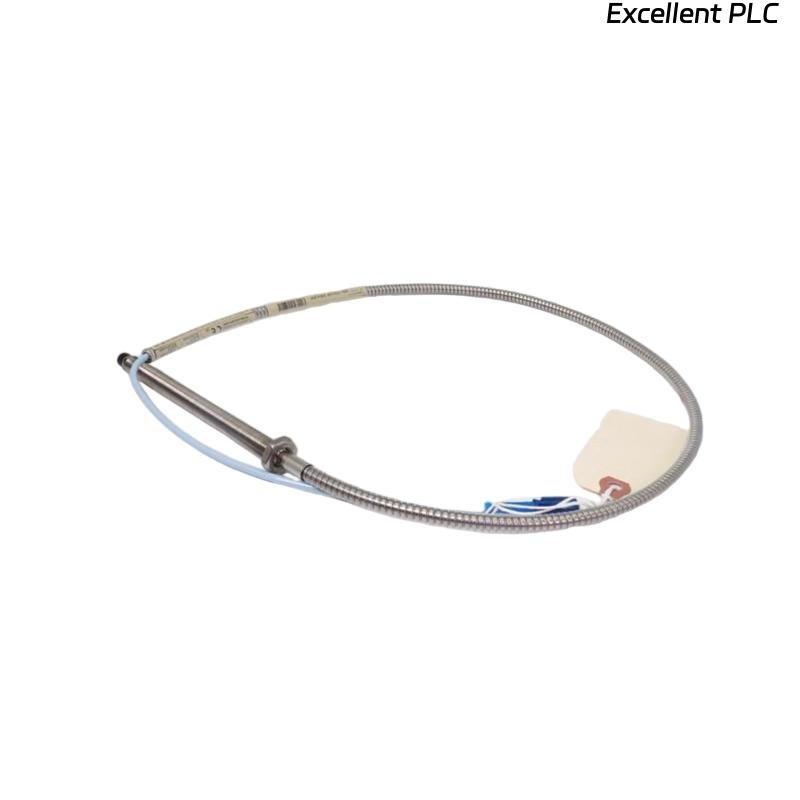
The machine was fine. The rack was fine. The channel never went bad. Yet the vibration plot coming from a Bently Nevada 164517-025-10-02-00 kept showing random spikes that made no mechanical sense.
What the Data Looked Like
-
Normal vibration levels most of the time
-
Sudden upward spikes lasting seconds
-
No repeatable pattern
-
No alarms, no channel fault indicators
If you only glanced at the trend once a day, you’d miss it entirely.
What We Checked First (And Why It Didn’t Help)
Naturally, we went down the usual checklist:
-
Rechecked probe gap
-
Verified target material and surface condition
-
Swapped monitoring channels
-
Reviewed historical vibration data
Nothing changed. The spikes followed the probe, not the channel.
The Breakthrough Moment
The clue came during a physical inspection while the machine was still warm.
When the probe cable was gently moved near the conduit entry, the signal flickered. Not enough to trip a fault—just enough to distort the measurement.
That’s when we suspected internal conductor damage.
Root Cause Identified
After removing the probe assembly, we found:
-
No visible damage on the probe body
-
Ceramic tip in good condition
-
Micro-cracks inside the probe cable insulation, likely from long-term vibration and tight bending radius
As temperature changed and the cable shifted slightly, resistance fluctuated just enough to cause signal jumps.
Why This Is Easy to Miss
The 164517-025-10-02-00 probe itself is robust. The weak point isn’t the ceramic tip—it’s the cable section near mechanical stress points.
Because the signal never fully dropped out:
-
The system never flagged a fault
-
The probe appeared “mostly healthy”
-
The problem masqueraded as process instability
How We Fixed It
-
Replaced the entire probe and cable assembly
-
Improved cable routing to reduce bending stress
-
Added strain relief near the probe mounting point
-
Verified signal stability during heat-up and cool-down
Once replaced, the spikes disappeared completely.
Lessons Worth Remembering
-
Intermittent faults are usually mechanical, not electronic
-
Cable health matters as much as probe health
-
Vibration can damage wiring long before it looks damaged
-
“Almost good” signals are the hardest to diagnose
Final Note
If a 3300 series ceramic tip probe starts producing random, short-lived spikes, don’t overthink the machine behavior. Wiggle the cable—carefully—and watch the trend.
Sometimes the problem isn’t inside the machine. It’s inside the insulation.
— Jason