 Excellent PLC


1. Introduction
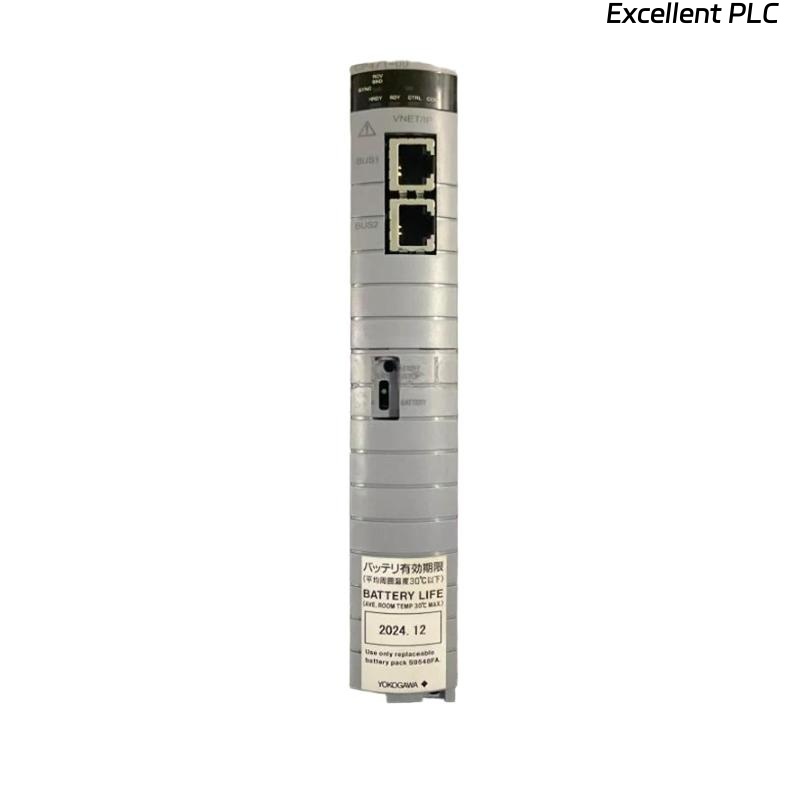
The Yokogawa CP471 processor module integrates with distributed I/O infrastructure to read sensor feedback and drive actuators. While the CP471 itself rarely fails at the hardware level, relay-driven signal interfaces—specifically those within I/O modules and external interposing panels—are subject to degradation, mechanical wear, and thermal stress. This technical report presents an FMEA-based characterization of relay-related signal failures affecting CP471-controlled systems.
2. Observed Failure Scenario
Application Context
-
Industry: Chemical batch processing
-
Signal Type: Dry contact digital feedback (valve open/close status)
-
I/O Interaction: CP471 → Remote DI → Relay Panels → Field Devices
During normal operation, operators observed unexplained loss of valve feedback signals feeding into the DCS.
Symptoms Reported
-
Valve position feedback intermittently disappeared
-
Batch sequencing halted awaiting confirmation bits
-
SCADA screens froze waiting for input transitions
-
Alarm list showed repetitive “INPUT TIMEOUT” conditions
SCADA Log Samples
These symptoms point to discrete input loss rather than CP471 logic or CPU faults.
3. FMEA Analysis of Relay Failure Modes
A structured FMEA was conducted to identify relay-induced failure paths.
Failure Mode #1 — Contact Wear / Mechanical Fatigue
-
Cause: High switching frequency and coil heat
-
Effect: Increased contact resistance → weak or intermittent signals
-
Severity: Medium
-
Occurrence: High in batch or cyclic systems
-
Detection: Poor without periodic current testing
Failure Mode #2 — Contact Oxidation or Corrosion
-
Cause: Humidity, chemical vapors, coastal environment
-
Effect: Open-circuit conditions or partial conduction
-
Severity: High
-
Occurrence: Moderate
-
Detection: Visual inspection or continuity checks
Failure Mode #3 — Coil Thermal Breakdown
-
Cause: Elevated cabinet temperature or duty cycle
-
Effect: Relay fails to actuate, holding last mechanical state
-
Severity: High
-
Occurrence: Low–Moderate
-
Detection: Temperature log correlation
Failure Mode #4 — Back-EMF Interference
-
Cause: Coil collapse producing voltage spikes
-
Effect: DCS DI module registers noise or false edges
-
Severity: Medium
-
Occurrence: Moderate
-
Detection: Oscilloscope transient capture
4. Root Cause Investigation in Field Case
Technicians executed a structured diagnostic sequence:
Step 1 — Input Module Verification
-
DI module LEDs confirmed missing physical transitions
-
Confirmed CP471 logic ladder still waiting for input latching bits
Step 2 — Relay Panel Isolation
Voltage and continuity checks found:
-
Coil voltage present
-
Contacts not closing reliably under load
Contact resistance measured between 18–56Ω, far above expected near-zero values.
Step 3 — Environmental Assessment
Control panel located near:
-
Process vessels releasing vapors
-
HVAC duct with warm moist air
-
No conformal coating on relays
Humidity accelerated oxidation on relay contacts.
5. Corrective Actions
Technicians deployed corrective measures in two layers:
Hardware Corrections
✔ Replaced problematic relays with sealed industrial-grade types
✔ Added flyback diodes to suppress back-EMF
✔ Installed cabinet-mounted fan + dehumidifier packs
Signal Assurance Measures
✔ Added software debounce filtering on DI inputs
✔ Increased input timeout thresholds for batch sequencing
✔ Added SCADA alarm classifiers to differentiate “Lost Input” vs “Stuck Input”
After remediation:
| Metric | Before | After |
|---|---|---|
| Relay Failures/Month | 4–7 | 0 |
| Batch Timeout Events | Frequent | None |
| DI Signal Dropouts | Intermittent | None |
6. Preventive Recommendations
Component Selection
-
Use sealed or hermetic relays in chemical/humid environments
-
Use gold-plated contacts for low-current signal circuits
Environmental Controls
-
Maintain RH < 60% in relay cabinets
-
Avoid mounting near heat or vapor sources
Maintenance Policies
-
Annual contact resistance surveys
-
Replace relays based on operation cycles, not only calendar age
Software & System
-
Implement input plausibility checks in logic
-
Log event counters for contact chatter or noise
7. Conclusion
Relay-induced signal failures can cripple Yokogawa CP471-controlled automation sequences without implicating the processor module itself. By combining proper relay selection, environmental mitigation, and enhanced diagnostic logic, facilities can significantly improve signal reliability and minimize batch disruption and downtime.