 Excellent PLC


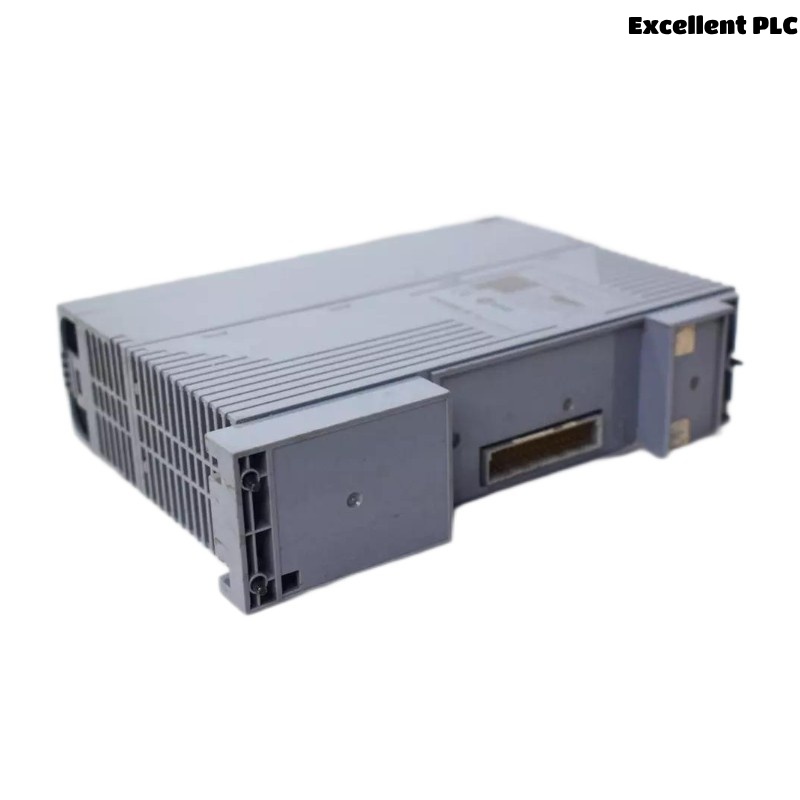
The Yokogawa PW482-10 power supply module is generally regarded as conservative and reliable.
When it starts behaving unstably—voltage fluctuation, intermittent drops, or unexplained resets—it usually indicates a deeper issue than a simple component failure.
In many cases, the PW482-10 is not failing on its own.
It is reacting to conditions that have slowly drifted outside what the system can tolerate.
“Unstable” Power Rarely Means Random Power
One important lesson learned in Yokogawa systems is that power instability is almost never random.
Typical field observations include:
-
output voltage drifting after warm-up
-
momentary drops during load changes
-
oscillation under what appears to be normal load
-
alarms disappearing after a restart, then returning
These patterns usually point to interaction problems between the power module, the load, and the environment.
As one Yokogawa engineer once said:
“If the PW module fluctuates, it’s usually trying to protect itself.”
Load Behavior Matters More Than the Power Module Itself
The PW482-10 is designed to deliver stable power under predictable loading.
Problems often arise when the connected load behaves in unexpected ways.
Common causes seen in the field:
-
downstream modules drawing peak current during startup
-
aging I/O cards with partially shorted components
-
field devices back-feeding voltage into the system
-
uneven load distribution across redundant supplies
In several cases, replacing the PW module only resulted in the new unit showing the same instability within days.
The power supply was never the root cause.
Thermal Stress Is a Silent Contributor
Unlike sudden failures, thermal issues tend to show up as instability rather than shutdown.
Things worth checking:
-
cabinet ventilation and airflow
-
dust accumulation around the PW module
-
elevated ambient temperature during peak operation
-
heat from adjacent modules
Engineers often notice that instability appears only after the system has been running for hours.
That delay is a strong hint that temperature, not electronics, is driving the behavior.
Input Power Quality Is Often Assumed — and Often Wrong
Another recurring theme is input power quality.
In practice, the PW482-10 may be fed by:
-
aging UPS systems
-
shared plant DC buses
-
supplies that sag briefly under load
A handheld meter may show acceptable voltage, while transient dips or ripple go completely unnoticed.
Experienced technicians prefer to observe the input under real operating conditions, not just at idle.
Internal Aging: Not Dramatic, but Real
Over long service life, internal components—especially electrolytic capacitors—gradually lose margin.
This does not always cause total failure.
Instead, it reduces the module’s ability to handle transients and load variation.
Symptoms include:
-
increased output ripple
-
slower recovery after load changes
-
instability only at higher loads
At this stage, the module may still “work,” but no longer comfortably.
What Experienced Teams Do Before Replacing the PW482-10
Rather than immediately swapping the module, seasoned Yokogawa teams typically:
-
temporarily reduce or redistribute load
-
isolate suspect downstream modules
-
verify grounding continuity across the cabinet
-
compare behavior with a known-good supply under the same conditions
If instability disappears when the load changes, the diagnosis becomes much clearer.
A Practical Way to Think About PW482-10 Instability
From long-term field experience, the most useful mindset is this:
-
The PW482-10 is conservative by design
-
Instability is often a warning, not a defect
-
Replacing the module without addressing stress factors invites repeat issues
Or, as one senior Yokogawa engineer summarized it:
“When the PW supply becomes unstable, it’s telling you the system is asking for more than it should.”