 Excellent PLC


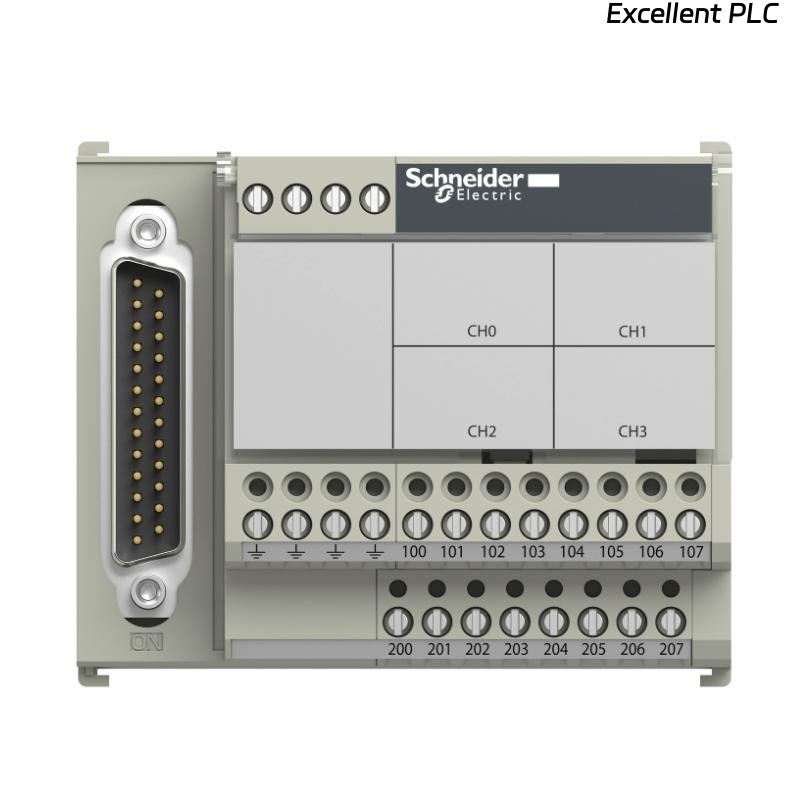
The Schneider ABE7 series is often described as “passive and reliable,” which is mostly true.
However, long-term field operation shows that these sub-bases rarely fail abruptly. Instead, they age quietly, and their failures tend to hide behind symptoms that appear unrelated.
The most common hidden failure mode is progressive contact degradation.
Over years of thermal cycling, vibration, and minor cabinet movement, terminal interfaces slowly lose mechanical tension. Electrical continuity still exists—but only under ideal conditions.
This explains why systems behave normally for months and then suddenly show intermittent I/O loss during startup, load changes, or temperature variation.
Another overlooked mechanism is micro-oxidation at terminal interfaces.
Even in clean cabinets, oxygen and humidity interact with exposed conductive surfaces. The effect is subtle: slightly increased resistance, marginal signal distortion, or delayed transitions. These effects rarely trigger immediate diagnostics, but they erode noise margin over time.
Mechanical stress accumulation is also significant.
ABE7 sub-bases often carry the physical burden of field wiring. Over time, cable weight and routing tension introduce strain into terminals and PCB solder joints. The hardware remains intact, but the margin disappears.
What makes these failures difficult to detect is that replacing I/O modules often appears to “fix” the issue temporarily—until the underlying sub-base continues aging.
From long-term observation, the ABE7 series does not fail because it is weak.
It fails because it faithfully reflects the mechanical and environmental reality around it.