 Excellent PLC


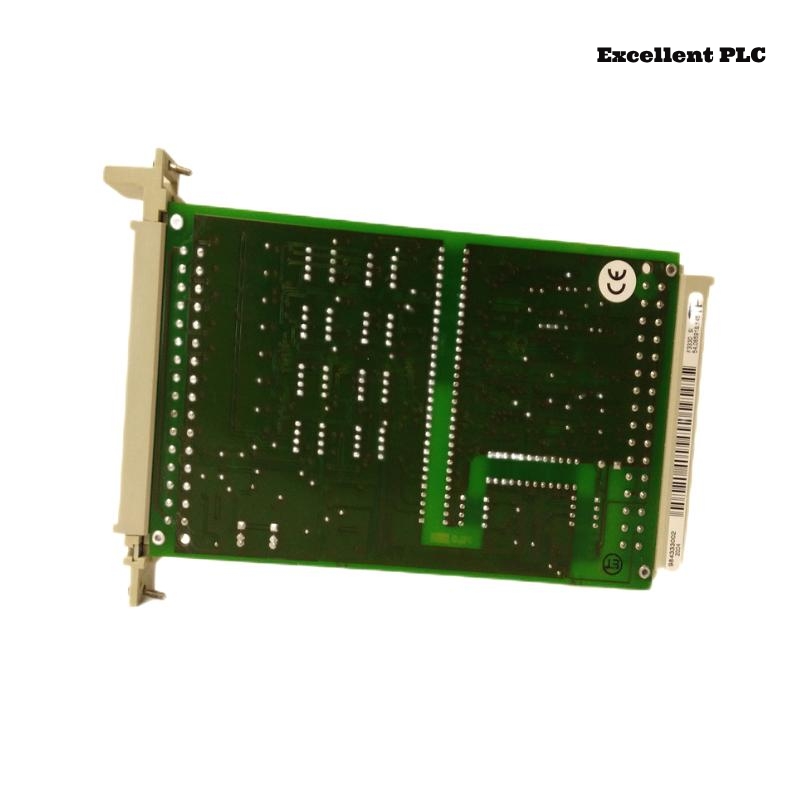
In an age dominated by diagnostics, firmware, and self-checking logic, the HIMA F1202 safety relay module can look deceptively simple.
A relay closes.
A relay opens.
Yet in many certified safety architectures, this mechanical action remains non-negotiable.
The reason is not tradition.
It is certainty.
Safety Systems Are Built on Irreversibility
At the heart of every safety function lies a simple requirement:
once a safe state is demanded, the system must reach it—and stay there.
Electronic logic can calculate intent.
Mechanical relays enforce consequence.
The F1202 exists precisely at this junction.
When power is removed, contacts separate.
No firmware update can change that behavior.
Mechanical Movement as a Safety Proof
The F1202 does not rely on interpretation or estimation.
It relies on physical separation.
This matters because safety certification is ultimately about provable behavior under fault conditions.
A relay contact that opens due to spring force provides a level of assurance that no software routine can fully replicate.
The F1202 turns logical safety decisions into irreversible physical actions.
Why Safety Relays Age Honestly
Unlike semiconductors, relays do not hide their aging.
Contact wear, response time drift, and mechanical fatigue progress gradually and predictably.
In long-running installations, engineers often observe:
-
slightly slower release times
-
increased contact resistance
-
audible changes during operation
These are not failures—they are warnings.
The F1202 gives maintenance teams time to react.
The Difference Between Control Relays and Safety Relays
Not all relays are equal.
The F1202 is designed for:
-
defined failure modes
-
known contact behavior under overload
-
predictable response during loss of power
Generic relays may switch the same loads, but they do not provide the same guarantees.
In safety systems, behavior matters more than capacity.
Why the F1202 Is Often Blamed Incorrectly
When actuators fail to respond, the safety relay is an easy target.
However, field investigations often reveal issues elsewhere:
-
suppressed inductive loads missing proper flyback protection
-
shared power rails causing unintended holding forces
-
field wiring modifications that violate original assumptions
The F1202 simply enforces the consequences.
It does not negotiate with poor design.
Mechanical Determinism Simplifies Fault Analysis
When something goes wrong, mechanical relays simplify the conversation.
Either the contact moved or it didn’t.
Either continuity exists or it doesn’t.
This binary physical reality reduces diagnostic ambiguity—especially during incident investigations.
The F1202 anchors safety behavior in something observable.
Why Removing Relays Often Increases Complexity
Some modern designs attempt to eliminate relays in favor of fully electronic solutions.
While technically feasible, this shifts complexity into:
-
diagnostics
-
redundancy management
-
software validation
The F1202 absorbs this complexity mechanically.
It trades flexibility for certainty.
In safety, that is usually a fair exchange.
Long-Term Field Behavior
Plants with decades of safety operation tend to value modules like the F1202 more, not less.
They appreciate:
-
predictable degradation
-
simple replacement criteria
-
independence from firmware life cycles
The module becomes part of the plant’s safety rhythm.
A Field Engineer’s Reflection
After years of maintaining safety systems across multiple generations, one observation remains consistent:
When everything else becomes abstract, the relay remains real.
As one senior safety engineer once said:
“Software can promise safety.
A relay proves it.”