 Excellent PLC


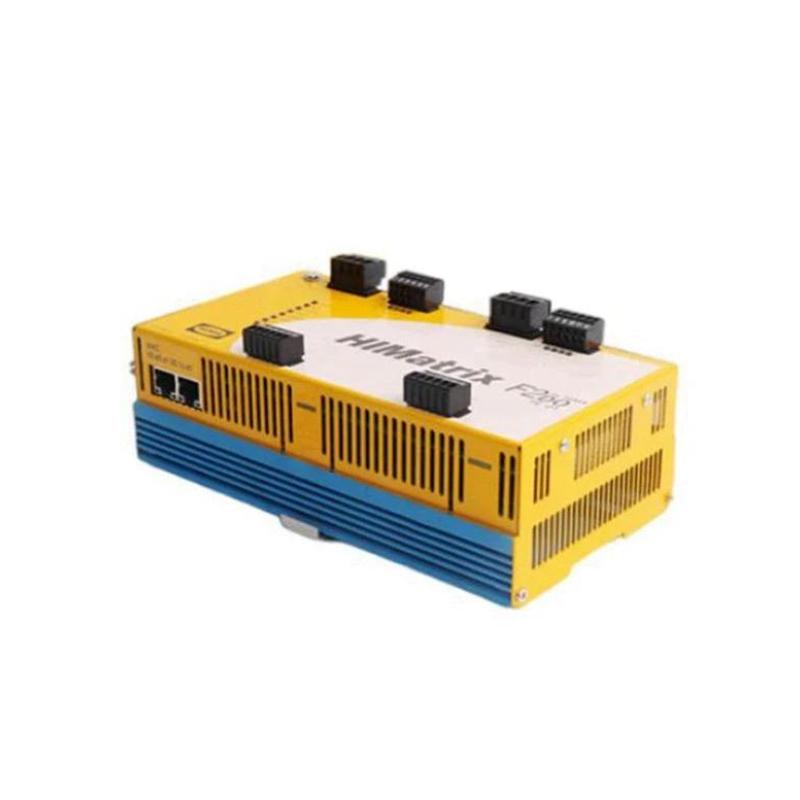
Inside a safety controller, decisions are abstract.
They exist as logic states, permissions, and internal consensus.
The HIMA F2 DO 16 01 remote output module is where those decisions become physical statements.
Once an output changes state here, the system is no longer thinking—it is acting.
Outputs Carry Responsibility, Not Just Signals
An output in a safety system is not equivalent to an output in a standard control system.
It represents a commitment.
When the F2 DO 16 01 energizes or de-energizes a channel, it asserts that all upstream logic, diagnostics, and validations have converged on a conclusion.
There is no ambiguity at this point.
That is why output modules are often the most scrutinized components during audits and incident reviews.
HIMatrix Philosophy: Decentralized, But Accountable
In HIMatrix architectures, remote I/O modules like the F2 DO 16 01 operate closer to the field.
This proximity reduces latency but increases responsibility.
The module must:
-
execute commands precisely
-
tolerate harsh electrical environments
-
maintain predictable behavior under fault conditions
It cannot rely on continuous supervision from a central rack.
Its autonomy is deliberate—and demanding.
Why Output Modules Reveal Design Shortcuts
Field experience shows that output modules often expose compromises made earlier in a project.
Typical examples include:
-
under-specified load suppression
-
mixed safety and non-safety loads
-
assumptions about load symmetry that do not hold
The F2 DO 16 01 does not compensate for these assumptions.
It executes what it is given—and the field reacts accordingly.
Switching Behavior Matters More Than Rated Capacity
Engineers sometimes focus on current and voltage ratings.
In safety outputs, switching behavior is often more important.
How quickly a channel drops out, how consistently it releases under marginal power conditions, and how it behaves during repeated cycles define real-world safety performance.
The F2 DO 16 01 is engineered for repeatability, not brute force.
Fault Handling Is Part of the Message
When a fault occurs, the module’s response is itself a form of communication.
Safe outputs are forced to defined states.
Ambiguity is removed.
From the system’s perspective, this is not a failure—it is the final safety function executing correctly.
Understanding this distinction prevents misinterpretation during troubleshooting.
Long-Term Operation Exposes Load Reality
Over years of operation, loads evolve.
Valves stiffen.
Contactors age.
Actuators draw more current.
The F2 DO 16 01 absorbs none of this silently.
Subtle changes appear as:
-
increased thermal stress
-
slower actuation
-
marginal switching behavior
The module becomes a witness to mechanical aging elsewhere.
Why Output Replacement Should Trigger Review, Not Relief
Replacing an output module may restore operation—but it should also raise questions.
Why did the previous module experience stress?
What changed in the load profile?
Has maintenance altered field wiring?
Experienced engineers treat output replacement as a design audit opportunity.
HIMatrix Outputs in Mature Systems
In well-run HIMatrix installations, output modules are predictable and quiet.
They switch when told.
They fail safe when required.
They attract attention only during planned maintenance.
This quietness is earned—not accidental.
A Practical Observation From the Field
After years of commissioning and maintaining HIMatrix systems, one pattern repeats:
When outputs misbehave, the logic is usually innocent.
The real story is written in the field devices.
As one senior safety engineer summarized it:
“Inputs tell us what the world is doing.
Outputs tell the world what we decided.”