 Excellent PLC


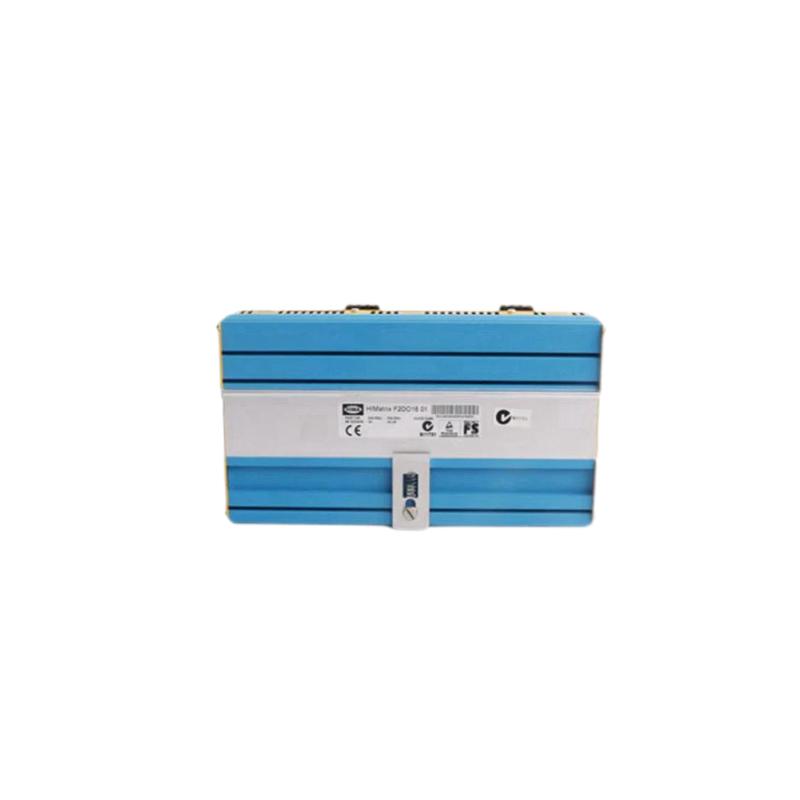
At first glance, the HIMA F2 DO 8 01 appears unremarkable.
It is compact.
It handles a limited number of outputs.
It rarely draws attention during design reviews.
And yet, in long-running HIMatrix installations, it often becomes one of the most telling indicators of system discipline.
Compact Does Not Mean Forgiving
Smaller controllers operate closer to their limits by design.
They have:
-
less thermal mass
-
tighter power margins
-
higher utilization per channel
As a result, they respond more clearly to stress.
The F2 DO 8 01 does not fail easily—but it remembers abuse.
Every Marginal Event Leaves a Trace
Unlike larger systems that absorb transient conditions, compact controllers record them behaviorally.
Repeated near-limit events—such as:
-
marginal load currents
-
brief undervoltage conditions
-
frequent output cycling beyond design intent
do not cause immediate failure.
Instead, they shape how the controller behaves over time.
Engineers often notice:
-
slower response
-
increased sensitivity to environmental conditions
-
reduced tolerance for disturbances
Nothing is “wrong”—but nothing is quite the same.
The Illusion of Normal Operation
One of the most dangerous assumptions in safety systems is that normal operation equals healthy operation.
The F2 DO 8 01 can continue to meet all functional requirements while quietly losing margin.
From the outside, the system looks fine.
From the inside, buffers are shrinking.
This is why experienced engineers pay attention to how easily the controller does its job—not just whether it does it.
Why Small Controllers Punish Poor Load Design
Loads that are oversized, poorly suppressed, or inconsistently wired stress compact controllers disproportionately.
The F2 DO 8 01 does not distribute stress—it concentrates it.
Over time, this leads to:
-
elevated internal temperatures
-
uneven wear across channels
-
increased dependency on ideal power conditions
The controller does not complain loudly.
It simply becomes less tolerant.
Maintenance Activities Matter More Than Expected
Because compact controllers sit close to the field, they feel the impact of maintenance changes immediately.
Cable replacements, temporary bypasses, or undocumented modifications leave fingerprints.
Engineers returning months later often struggle to connect current behavior with past interventions.
The F2 DO 8 01 has not forgotten.
Why Replacement Feels Like a “Reset”
When the controller is replaced, systems often behave better.
This leads to the conclusion that the controller was defective.
In reality, replacement resets accumulated stress—not underlying design issues.
Without addressing those issues, the cycle repeats.
Designing for Memory, Not Just Function
Systems that treat the F2 DO 8 01 as disposable tend to experience recurring issues.
Systems that design conservatively around it enjoy long stability.
That means:
-
realistic load margins
-
disciplined output usage
-
respect for thermal environment
The controller rewards foresight.
A Field Observation Worth Remembering
After years of maintaining HIMatrix-based systems, one insight stands out:
Big systems hide mistakes.
Small controllers remember them.
As one senior maintenance engineer once said:
“It’s not the big rack that tells you the truth.
It’s the small controller that stops forgiving you.”