 Excellent PLC


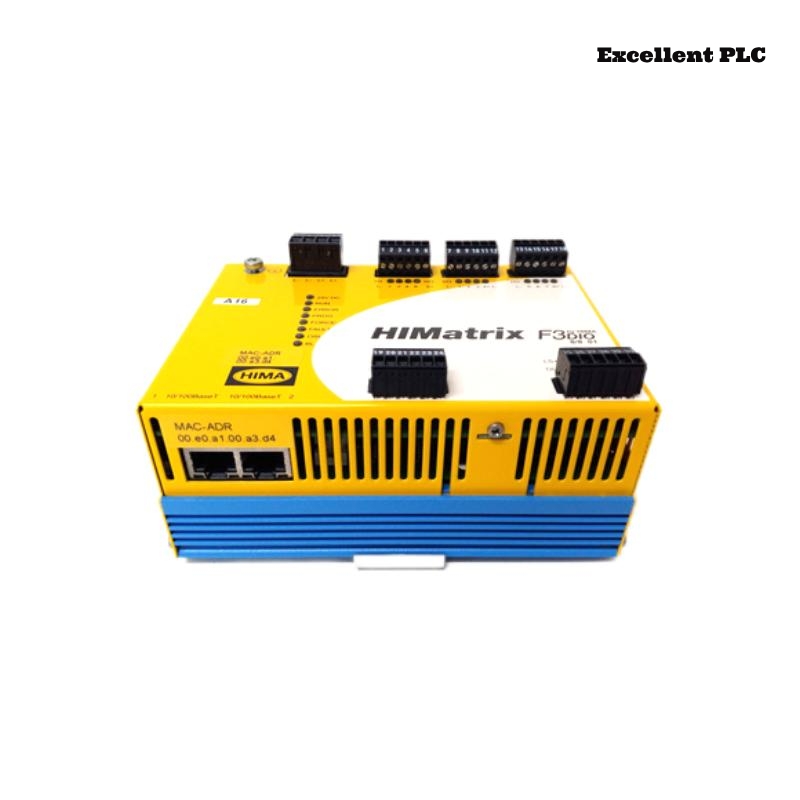
At design stage, the HIMA F3 DIO 20/8 02 looks like a smart choice.
More inputs.
More outputs.
Higher density per node.
Fewer modules, fewer cabinets, fewer drawings.
From a project perspective, it feels efficient.
From a lifecycle perspective, it quietly raises the cost of understanding.
Density Compresses Responsibility
High-density I/O modules concentrate signals.
That concentration does not only affect wiring—it affects thinking.
When 28 channels share one physical and logical boundary, engineers tend to treat them as a group rather than as individual safety elements.
Clarity gives way to convenience.
Channel Identity Becomes Fragile
In long-running systems, channel identity matters more than channel count.
Which signal is truly critical?
Which one is auxiliary?
Which one changed behavior last year?
On the F3 DIO 20/8 02, these distinctions are easy to lose.
Everything looks equally important—and therefore nothing stands out.
Commissioning Success Can Hide Future Risk
During commissioning, dense modules perform well.
Everything is new.
Everything is documented.
Everyone remembers why each channel exists.
Years later, that context is gone.
The module still works perfectly—but human understanding degrades.
This is where dense I/O becomes a liability.
Troubleshooting Slows Down, Not Because of Hardware
When faults occur, the issue is rarely electrical.
It is cognitive.
Technicians must:
-
identify the correct channel
-
confirm wiring assumptions
-
trace logic paths across dense mappings
Each step introduces delay and uncertainty.
The module did nothing wrong.
The system became harder to reason about.
The Illusion of Reduced Complexity
Fewer modules does not always mean less complexity.
The F3 DIO 20/8 02 reduces hardware count but increases conceptual load.
That tradeoff is often underestimated during design.
Especially in plants where maintenance teams change over time.
Channel Swapping Becomes Riskier
With high-density modules, channel swapping is tempting—and dangerous.
A spare channel is always nearby.
But moving a signal can quietly violate grouping assumptions or safety analyses.
What looks like a simple fix can ripple through documentation, testing, and certification.
Aging Systems Expose Density Weakness
As systems age, minor issues accumulate.
A few channels behave oddly.
One device is replaced with a slightly different model.
Noise margins change.
In dense modules, these changes interact.
Problems appear correlated—even when they are not.
How Experienced Engineers Mitigate the Risk
Teams with long-term stability do not avoid dense modules—but they respect them.
They:
-
group channels intentionally
-
document channel purpose aggressively
-
resist “temporary” reuse
They accept that density requires discipline.
A Lesson from the Field
After years of maintaining dense remote I/O systems, one lesson repeats:
You don’t pay for density at installation.
You pay for it during troubleshooting—years later.
As one senior maintenance engineer once put it:
“Nothing was wrong with the module.
We just couldn’t remember what we were thinking anymore.”
The F3 DIO 20/8 02 executes faithfully.
It is human memory that struggles.